30.09.2015
Sacha Harland attempts to give up sugar, alcohol, artificial additives and unhealthy food for one month. How did this effect his physical and mental conditions?
http://www.lifehunters.tv/
The man who trades freedom for security does not deserve nor will he ever receive either. – Benjamin Franklin
Sacha Harland attempts to give up sugar, alcohol, artificial additives and unhealthy food for one month. How did this effect his physical and mental conditions?
http://www.lifehunters.tv/
Bottom line:
Avoid all processed foods!
– Common Food Additives Linked to Bowel Diseases and Metabolic Syndrome, Study Shows (Ready Nutrition, Feb 25, 2015):
A new study revealed some disturbing information about common food additives called emulsifiers: they may promote inflammatory bowel diseases including ulcerative colitis and Crohn’s disease as well as a group of obesity-related conditions.
The study, which was published in the journal Nature today, was led by Georgia State University Institute for Biomedical Sciences’ researchers Drs. Benoit Chassaing and Andrew T. Gewirtz, and included contributions from Emory University, Cornell University and Bar-Ilan University in Israel.
Read moreStudy: Common Food Additives Linked to Bowel Diseases and Metabolic Syndrome
Flashback:
– And Now: One Of The World’s Most Dangerous Chemicals As Pesticide In Strawberry Fields:
…
It’s called methyl iodide, and even some chemists won’t go near it. It’s such a powerful and reliable carcinogen that researchers use it to induce cancer in lab animals.
But go ahead, take a bite. California says it’s OK — and never mind the five Nobel-winning chemists and dozens of other experts who’ve written a letter begging the EPA to keep this poison out of strawberry fields, forever.
Who do you believe — a roomful of Nobel winners and their trusted colleagues, or a bunch of politically motivated bureaucrats?
This toxic monster has been linked to thyroid tumors, nerve damage, and brain and lung problems. It’s also been known to cause miscarriages in lab animals — when it’s not being used to give them cancer.
…

– 7 banned food chemicals still allowed in the U.S. (HLNtv, Oct 30, 2014):
- Also known as ‘7 Reasons to Either Buy Organic or Immediately Move to Europe’
- Other nations taking fewer food chances than America
- Whiskey sold in U.S. just recalled in European nations
Three European nations decided this week they would rather not continue to keep drinking an ingredient that’s also found in antifreeze. Seems reasonable enough.
Cinnamon-flavored Fireball whiskey, owned by a Louisiana-based company, was recalled from shelves in Sweden, Norway and Finland over concerns about the amount of Propylene glycol in it. Consumption of the sweetener/antifreeze component is more tightly regulated in Europe than the United States, so when a U.S. batch of the stuff hit Scandinavia, it had to go.
– 70,000 food additives approved by the FDA – What you don’t know will hurt you (Natural News, June 26, 2014):
(NaturalNews) There are over 70,000 food additives approved by the FDA, from artificial ingredients to genetically modified ones, and from “all natural” to GRAS — generally recognized as safe. Cosmetics and personal care products are even worse, with virtually no regulations on chemicals, and your skin absorbs whatever you put on it, and it ends up in the bloodstream, so add that to the 70,000 other food “criminals.”
The phrases “as a preservative” and “to preserve freshness” mean that chemicals are at work in the items to stave off the mold and fungus, in order to extend the product’s shelf life, which also happens to shorten human life. How? These fungus and mold killers eat through the protective protein covering on your cells and cut off their oxygen supply. This is one definition, a preferred method of operation (M.O.) for cancer cells, which multiply uncontrollably and attack weakened tissue. Remove that roadblock, because it’s a very harmful one, as opposed to the way they make it sound in the ingredients list… “preservative.”
Read more70,000 Food Additives Approved By The FDA – What You Don’t Know Will Hurt You
Aspartame is lethal stuff:
– Exposing The Devastating Health Effects Of Highly Toxic Aspartame
– Diet drinks linked with heart disease, death (NBC News, March 29, 2014):
Women who drink the most diet sodas may also be more likely to develop heart disease and even to die, according to a new study published Saturday.
Researchers found women who drank two or more diet drinks a day were 30 percent more likely to have a heart attack or other cardiovascular “event,” and 50 percent more likely to die, than women who rarely touch such drinks.
The findings, being presented at a meeting of the American College of Cardiology, don’t suggest that the drinks themselves are killers. But women who toss back too many diet sodas may be trying to make up for unhealthy habits, experts say.
“Our study suggests an association between higher diet drink consumption and mortality,” said Dr. Ankur Vyas, a cardiovascular disease expert at the University of Iowa Hospitals and Clinic, who led the study.
“It’s not an extreme risk,” he added.
Read moreDiet Drinks Linked With Heart Disease, Death (NBC News)
– Aspartame: By Far the Most Dangerous Substance Added to Most Foods Today (Dr. Mercola, Nov 6, 2011):
Aspartame is the technical name for the brand names NutraSweet, Equal, Spoonful, and Equal-Measure. It was discovered by accident in 1965 when James Schlatter, a chemist of G.D. Searle Company, was testing an anti-ulcer drug.Aspartame was approved for dry goods in 1981 and for carbonated beverages in 1983. It was originally approved for dry goods on July 26, 1974, but objections filed by neuroscience researcher Dr. John W. Olney and consumer attorney James Turner in August 1974, as well as investigations of G.D. Searle’s research practices caused the U.S. Food and Drug Administration (FDA) to put approval of aspartame on hold (December 5, 1974). In 1985, Monsanto purchased G.D. Searle and made Searle Pharmaceuticals and The NutraSweet Company separate subsidiaries.
Aspartame accounts for over 75 percent of the adverse reactions to food additives reported to the FDA. Many of these reactions are very serious, including seizures and death. A few of the 90 different documented symptoms listed in the report as part of aspartame dangers are:
Headaches/
migrainesDizziness Seizures Nausea Numbness Muscle spasms Weight gain Rashes Depression Fatigue Irritability Tachycardia Insomnia Vision problems Hearing loss Heart palpitations Breathing difficulties Anxiety attacks Slurred speech Loss of taste Tinnitus Vertigo Memory loss Joint pain According to researchers and physicians studying the adverse effects of aspartame, the following chronic illnesses can be triggered or worsened by ingesting of aspartame:
Brain tumors Multiple sclerosis Epilepsy Chronic fatigue syndrome Parkinson’s disease Alzheimer’s Mental retardation Lymphoma Birth defects Fibromyalgia Diabetes Aspartame is made up of three chemicals: aspartic acid, phenylalanine, and methanol. The book Prescription for Nutritional Healing, by James and Phyllis Balch lists aspartame under the category of “chemical poison.” As you shall see, that is exactly what it is.
What Is Aspartame Made Of?
Aspartic Acid (40 percent of Aspartame)
Dr. Russell L. Blaylock, a professor of neurosurgery at the Medical University of Mississippi, recently published a book thoroughly detailing the damage that is caused by the ingestion of excessive aspartic acid from aspartame. Blaylock makes use of almost 500 scientific references to show how excess free excitatory amino acids such as aspartic acid and glutamic acid (about 99 percent of monosodium glutamate or MSG is glutamic acid) in our food supply are causing serious chronic neurological disorders and a myriad of other acute symptoms.
How Aspartate (and Glutamate) Cause Damage
Read moreExposing The Devastating Health Effects Of Highly Toxic Aspartame
– This Is What Happens In Your Stomach When You Consume Packaged Ramen Noodles With a Deadly Preservative (Healthy Debates, Jan 20, 2014):
Ramen noodles contain Tertiary-butyl hydroquinone (TBHQ), which is a byproduct of the petroleum industry and food additive frequently to preserve cheap processed foods. It is one of those chemicals that is neither digestible or beneficial in any way for your body. A gastrointestinal specialist conducted an experiment with a time lapse video inside the stomach, comparing both fresh and preserved ramen noodles. After two hours of digestion, the results were staggering.
The first-of-its-kind experiment by Dr. Braden Kuo of Massachusetts General Hospital wanted to find out exactly what happens to food in the stomach and digestive tract after consuming ramen noodles.
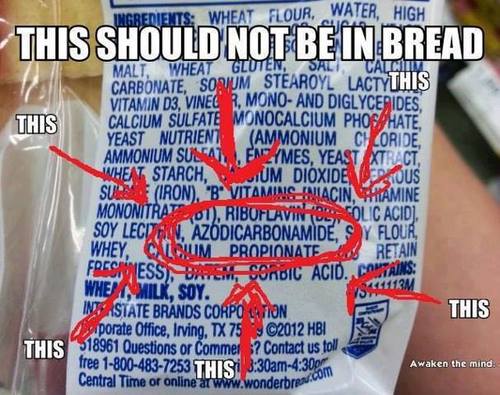
Source: Azodicarbonamide has been banned in most European countries because it has been found to induce asthma. It has been deemed so dangerous that in Singapore, if you are found to use Azodicarbonamide in your products, you will receive a hefty $450,000 fine and up to 15 YEARS IN PRISON.
– This Ingredient Is Found In Most Cereals, Breads, But It’s Also Found In Foamed Plastics and Rubber Too (Waking Times, Sep 11, 2013):
Why would it be necessary for the food industry to use the same additive in breads and cereals as what the chemical industry uses in the production of foamed plastics, synthetic leathers and rubber? We have been assured by our health regulatory agencies that azodicarbonamide is safe for use in our foods. If that’s the case, then why has it been banned in Europe, Australia and the United Kingdom?

– Chick-fil-A sandwiches contain MSG, HFCS and anti-foaming chemicals; eating them is a sin in the eyes of God (Natural News, Aug 2, 2012):
This article is sure to get me in trouble with everybody, but I just had to cringe yesterday when I heard news reports of people lining up at Chick-fil-A restaurants all across the country to protest the attack on the restaurant’s CEO by the LGBT community (and same-sex marriage advocates). (http://abcnews.go.com/Politics/OTUS/chick-fil-supporters-gather-appre…)
To stage an anti-boycott in support of Chick-fil-A, defenders of traditional Christian values and straight marriage lined up all across America to eat — huh? — monosodium glutamate!
Read moreChick-Fil-A Sandwiches Contain MSG, HFCS And Anti-Foaming Chemicals
– USDA green-lights field trials of Monsanto drought-resistant corn after admitting it performs no better than natural corn (Natural News, March 20, 2012):
The U.S. Department of Agriculture‘s (USDA) Animal and Plant Health Inspection Service (APHIS) does not even pretend to legitimately evaluate genetically-modified organisms (GMO) before approving them anymore, having recently green-lighted approval for a new variety of “drought-resistant” GM corn produced by Monsanto that admittedly grows no better under drought conditions than natural varieties do.
According to the Washington Post, APHIS fast-tracked the corn, known as MON87460, without ever conducting an appropriate environmental risk analysis on the crop’s efficacy, which includes determining whether or not the crop is even safe for humans or the environment. In fact, in accordance with the Obama Administration’s new hands-off approach to regulating GMOs, APHIS decided to actually approve MON87460 even after a cursory evaluation of the data exposed it as a complete failure.
– What’s really in the food? The A to Z of the food industry’s most evil ingredients (NaturalNews, July 28, 2011):
Ever wonder what’s really in the food sold at grocery stores around the world? People keep asking me, “What ingredients should I avoid?” So I put together a short list that covers all the most toxic and disease-promoting ingredients in the food supply. These are the substances causing cancer, diabetes, heart disease and leading to tens of billions of dollars in unnecessary health care costs across America (and around the world).
If you want to stay healthy and out of the hospital, read ingredients labels and make sure you avoid all these ingredients:
Acrylamides – Toxic, cancer-causing chemicals formed in foods when carbohydrates are exposed to high heat (baking, frying, grilling). They’re present in everything from bread crusts to snack chips, and because they aren’t intentional ingredients, acrylamides do NOT have to be listed on labels.
Read moreWhat’s Really In Your Food? The A To Z Of The Food Industry’s Most Evil Ingredients
All of my readers certainly know about fluoride, aspartame, MSG etc.
To know about extremely harmful food additives is also life saving knowledge that all of you should have.
Why the elite really fluoridates your drinking water:
Fluoride is THE main ingredient in rat poison.
Fluoride is THE main ingredient in Sarin nerve gas.
Fluoride is THE main ingredient in Prozac.
Fluoride destroys the brain (accumulates the pineal gland), the bones, the organs and causes cancer.
Hitler and Stalin used it in concentration camps and gulags as mass control instrument to make the prisoners docile (and infertile).
For all of you who love organic food:
Food: The Ultimate Secret Exposed
Added: 29. July 2010
Added: 29. July 2010
In German:
Nahrung: Das ultimative Geheimis entlarvt!
Added: 22. January 2011
– Neues aus Monsantos Giftküche: Neotam, das verbesserte Aspartam

Do you put dimethylpolysiloxane, an anti-foaming agent made of silicone, in your chicken dishes? How about tertiary butylhydroquinone (TBHQ), a chemical preservative so deadly just five grams can kill you?
These are just two of the ingredients in a McDonald’s Chicken McNugget. Only 50 percent of a McNugget is actually chicken. The other half includes corn derivatives, sugars, leavening agents and completely synthetic ingredients.
Read moreDr. Mercola: What’s in the Non-Chicken Half of the McNugget?
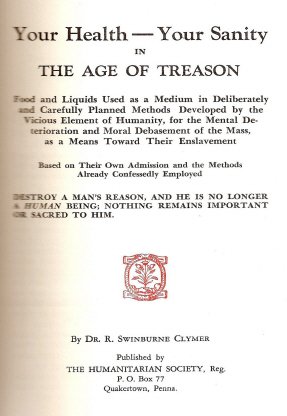
Dr. R. Swinburne Clymer was in many ways a man ahead of his time, and most certainly controversial. He was attacked by the medical establishment for connecting diet with disease and mental health in his 1917 book Dietetics. Dr. Clymer received his medical degree in 1902 from the College of Medicine and Surgery in Chicago and began practicing Osteopathy. Accusations of fraud surround Dr. Clymer’s career, including this 1923 edition of the Journal of the American Medical Association which claims that, “Our records fail to show that this man was ever regularly graduated by any reputable medical college.” What Clymer had to say more than likely had something to do with the denouncement that he received from the medical establishment.
Though Dr. Clymer may be surrounded with controversy, his 1958 book Your Health and Sanity in the Age of Treason exposes toxic food additives and fluoride with documentation – the majority of which are mainstream scientific studies – that can be verified many times over. What makes this book unique is the fact that Dr. Clymer was one of the first to point out that statements by the elite indicated that these toxins were to be deliberately released “…for the mental deterioration and moral debasement of the mass…”
The book is appropriately subtitled; “Food and Liquids Used as a Medium in Deliberately and Carefully Planned Methods Developed by the Vicious Element of Humanity, for the Mental Deterioration and Moral Debasement of the Mass, as a Means Toward Their Enslavement.”
Dr. Clymer introduces readers with a stark warning for the future, writing, “Imagine yourself if you can, becoming conscious that you are gradually losing your manhood; that your mind is rapidly deteriorating so that you are no longer capable of thinking clearly; unable to plan your future actions. Your resistance is becoming so weakened that you are no longer master of yourself. In short, you are rapidly developing into a moron, a robot, a zombie, readily subject to the dictates of others…”
Bertrand Russell’s 1953 book The Impact of Science on Society is cited by Clymer as one example of the elite’s desire to dominate the masses. Russell stated that under scientific tyranny, “Diet, injections, and injunctions will combine, from a very early age, to produce the sort of character and the sort of beliefs that the authorities consider desirable, and any serious criticism of the powers that be will become psychologically impossible.”
Diethylstilbestrol – Endocrine Disruption
Dr. Clymer identified the synthetic estrogen Diethylstilbestrol – developed in 1938 – as a means to achieve the aims of the elite. Clymer explains that some of the toxic additives discussed in the book may not have been employed for the express purpose outlined by the elite, but “…they served their purpose admirably…” Dr. Clymer elaborates,
“The employment of Stilbestrol by the laity with absolutely no knowledge of the dangerous agent they are employing, in conditioning chickens and meats, is mass medication without license, with a dangerous toxic drug that may have universal disastrous results on all who eat such adulterated foods. This is especially true as it concerns children, youths, young women and men, resulting as it may, in their sterilization or cancer – something fervently hoped for by the enemies of mankind.”
Because Stilbestrol is a synthetic chemical, “…the natural protective activity of the bodily organs are ineffective in prohibiting harmful results. Natural Estrogen, on the other hand, is decomposed, and any of its possible harmful effects may be more or less made ineffective,” writes Dr. Clymer. Stilbestrol was used as a treatment for various types of cancer and menopausal symptoms, but as Dr. Clymer states, “Physicians versed in the use of Endocrines agree generally that Stilbestrol is a dangerous drug in all except experienced hands.”
Dr. E. Malcolm Stokes, in an article published in the Western Journal of Surgery, Obstetrics and Gynecology, September 1948, wrote: “Single large doses of [natural] estrogen substances are quickly excreted… long continued, repeated administration in relatively small doses [as in daily consumption of meats permeated with stilbestrol] may intensify tissue response to the hormone.”
Dr. Clymer warns that such chemicals are to feminize men,
“Every vigilant human being should be concerned with several important factors involved: The methods or means by which it is possible to change man’s characteristics as easily as the animal’s. Man is a warrior by nature, the protector of his family, and his own rights and privileges; an individual, a free man… A being who has wrought great things and who, if not interfered with, will do even greater things. This being is to be turned into a lesser female; unable, even unwilling, to defend himself, much less his family or country; becoming a slave…”
Read moreThe Age of Treason: 1958 Book Exposes Current Chemical Attack on Humanity
Recommended: Aspartame: Sweet Misery – A Poisoned World (Documentary)
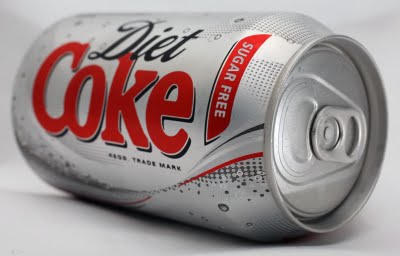
Loaded with Aspartame
(NaturalNews) In response to growing awareness about the dangers of artificial sweeteners, what does the manufacturer of one of the world’s most notable artificial sweeteners do? Why, rename it and begin marketing it as natural, of course. This is precisely the strategy of Ajinomoto, maker of aspartame, which hopes to pull the wool over the eyes of the public with its rebranded version of aspartame, called “AminoSweet”.
Over 25 years ago, aspartame was first introduced into the European food supply. Today, it is an everyday component of most diet beverages, sugar-free desserts, and chewing gums in countries worldwide. But the tides have been turning as the general public is waking up to the truth about artificial sweeteners like aspartame and the harm they cause to health. The latest aspartame marketing scheme is a desperate effort to indoctrinate the public into accepting the chemical sweetener as natural and safe, despite evidence to the contrary.
CALGARY – A Calgary researcher is getting ready to publish a groundbreaking study that links a popular food additive to reduced growth in the brain cells of snails — work that could have major implications for children’s health.
Not bad for a teenager.
Michelle Ah-Seng is a 17-year-old high school student from Cochrane, just west of Calgary. She’s also the lead researcher on a University of Calgary study that offers the first solid proof that high concentrations of MSG, an additive used to boost flavour in everything from fast food to canned soups, can stunt the growth of brain cells.
“It has been shown that (in a pregnant woman), MSG will cross through the placenta and can affect the fetus,” said Ah-Seng.
Related articles:
– MSG: Causes obesity, is toxic and destroys your brain
– Your Food is Toxic and Makes You Sick, Dr. Russell Blaylock, MD
– Chemical Additives – Are They Slowly Killing Our Children?
– Interview with Dr. Russell Blaylock on devastating health effects of MSG, aspartame and excitotoxins
“Fetuses are still developing, and their brain cells are starting to grow and starting to reach out to each other. If MSG has been inhibiting or stunting the growth, then the cells basically won’t reach out to one another.”
Ah-Seng is one of 22 Grade 11 students spending six weeks of their summer vacation in labs and clinics at the University of Calgary as part of the 2008 Heritage Youth Researcher Summer Program, funded by the Alberta Heritage Foundation for Medical Research.
Her project involved directly dosing brain cells culled from snails with a concentration of monosodium glutamate equal to what might commonly be found in human blood or cerebral spinal fluid after eating a meal containing the additive, such as a bag of chips. Not only did the MSG inhibit growth of the snail’s brain cells, it also limited communication between them. The implications for human health aren’t hard to infer.
“There’s no difference between a snail brain cell and a rat or a human brain cell, only that there are fewer of them and (they’re) larger,” said Naweed Syed, Ah-Seng’s supervisor and a neuroscientist with the Hotchkiss Brain Institute at the University of Calgary’s faculty of medicine.
Artificial food colours are set to be removed from hundreds of products after a team of university researchers warned they were doing as much damage to children’s brains as lead in petrol.
Academics at Southampton University, who carried out an official study into seven additives for the Food Standards Agency (FSA), said children’s intelligence was being significantly damaged by E-numbers. After receiving the advice last month, officials at the FSA have advised their directors to call for the food industry to remove six additives named in the study by the end of next year.

Read moreFood additives ‘could be as damaging as lead in petrol’
 Excerpts from the article:
…”The mixtures of the additives had a much more potent effect on nerve cells than each additive on its own. The effect on cells was up to four times greater when Brilliant Blue and MSG were combined, and up to seven times greater when Quinoline Yellow and Aspartame were combined.”….
…”The study shows that when the nerve cells were exposed to MSG and Brilliant Blue or Aspartame and Quinoline Yellow the additives stopped the nerve cells from normal growth and interfered with proper signalling systems.”
( In other words, additives like Aspartame and MSG are exitotoxins and they destroy the brain and they were intentionally designed to do exactly that. And PS: Fighter jet pilots are not allowed to drink soft drinks at all. Hello.)
Read moreChemical Additives – Are They Slowly Killing Our Children?