Aug 16

- This Is America’s Sugar Addiction – An Infographic (ZeroHedge, Aug 14, 2012):

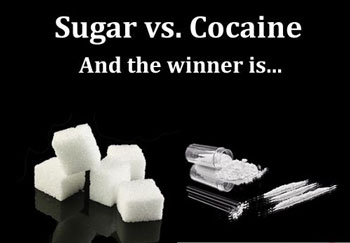
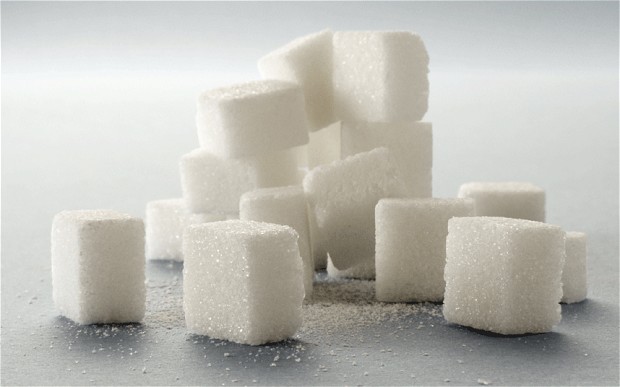
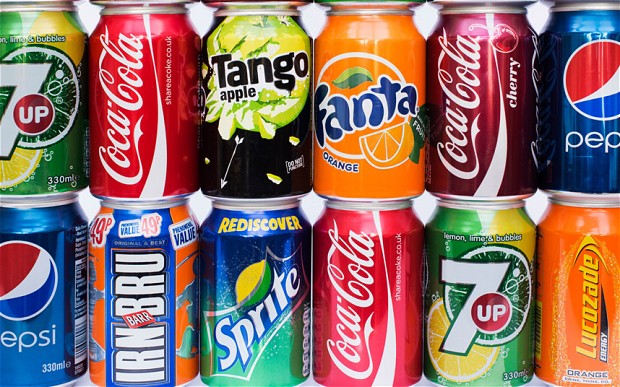
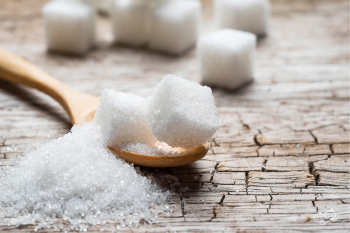
Want to solve the unresolvable issue of America’s $100 trillion in unfunded welfare liabilities? Start with this: America’s sugar addiction, because in 1822 America, the average person consumed 45 grams of refined sugar, or the amount found in one 12-ounce soda can, every 5 days; fast forward to 2012 and in the same period the average American now consumer a whopping 765 grams of sugar – the equivalent of 17 (non-diet) soda cans; also the equivalent of 130 pounds of refined sugar every year! More than anything, this country’s fascination with the sugar high (as well as all other various forms of cheap fast food gratification) coupled with an increasingly sedentary “behind a computer” lifestyle is the leading contributor to obesity, chronic healthcare conditions, and numerous other known and unknown sources of emergency healthcare funds. As always: if one wants change, that change always has to start in the mirror.

Tags: , , , ,

Jul 01

See also:

- Why You Should Avoid Fast Food At All Costs

- Dr. Mercola: What’s in the Non-Chicken Half of the McNugget?

- Study: Dangerous Chemicals in Food Wrappers Migrate Into Food

- What’s in Fast Food Chicken? Hint: It’s NOT Chicken

- Junk Food-Addicted Rats Chose To Starve Themselves Rather Than Eat Healthy Food


- Study of the Day: See Big Mac, Want Big Mac (The Atlantic, June 26, 2012):

PROBLEM: Though previous studies have predictably shown that food advertisements make people think of eating, little research has been done to understand how the brain responds to such visual cues and what feelings they elicit.

METHODOLOGY: University of Southern California researchers led by Kathleen Page used functional magnetic resonance imaging to measure the neurological responses of 13 obese, Hispanic women ages 15 to 25 and see if food reminders trigger hunger and cravings. They chose women for their known responsiveness to food cues and Hispanics because of the high risk of obesity and type 2 diabetes in their community.

RESULTS: Viewing images of high-fat food items stimulated the appetite and reward centers in the respondents’ brains. Interestingly, taking in glucose and fructose through sweetened drinks while inspecting the pictures also led to a desire for savory foods. Continue reading »

Tags: , , , , , , ,

May 16

- Sugar can make you dumb, US scientists warn (AFP, May 15, 2012):

Eating too much sugar can eat away at your brainpower, according to US scientists who published a study Tuesday showing how a steady diet of high-fructose corn syrup sapped lab rats’ memories.

Researchers at the University of California Los Angeles (UCLA) fed two groups of rats a solution containing high-fructose corn syrup — a common ingredient in processed foods — as drinking water for six weeks.

One group of rats was supplemented with brain-boosting omega-3 fatty acids in the form of flaxseed oil and docosahexaenoic acid (DHA), while the other group was not.

Before the sugar drinks began, the rats were enrolled in a five-day training session in a complicated maze. After six weeks on the sweet solution, the rats were then placed back in the maze to see how they fared.

“The DHA-deprived animals were slower, and their brains showed a decline in synaptic activity,” said Fernando Gomez-Pinilla, a professor of neurosurgery at the David Geffen School of Medicine at UCLA.

“Their brain cells had trouble signaling each other, disrupting the rats’ ability to think clearly and recall the route they’d learned six weeks earlier.”

Continue reading »

Tags: , , , , , , ,

Mar 02

Rogers Interview on Commodities, Global Stocks, Feb. 28

“Saudi Arabia has been lying about the reserves for decades.

Saudi Arabia the last two times said they are going to increase production and they couldn’t increase production. Don’t fall for that.

The reason oil is going up is the world is running out of known reserves of oil.”

Feb. 28 (Bloomberg) — Jim Rogers, chairman of Rogers Holdings, talks about his investment strategy for global stocks and commodities. Gold advanced, approaching a record, as tensions in the Middle East boosted oil prices, increasing demand for precious metals as a protector of wealth and hedge against inflation. Rogers also discusses his strategy for the U.S. dollar. He speaks in Hong Kong with Rishaad Salamat on Bloomberg Television’s “On the Move Asia.”

Source: Bloomberg


Tags: , , , , , , , , , , , , , , , ,

Feb 07


Sugar cane being harvested on a farm in Australia. Photographer: Eric Taylor/Bloomberg

Feb. 06 (Bloomberg) — World sugar supplies will probably fall short of demand, said Rabobank Groep NV, after a cyclone with winds stronger than Hurricane Katrina destroyed homes and smashed crops in Australia, driving prices to 30-year highs.

Tropical Cyclone Yasi ripped through northern Queensland, a region growing a third of the country’s cane, cutting output potential in the area by about 50 percent, producers group Canegrowers said Feb. 4. The storm, which the government says may have wiped out at least A$500 million ($507 million) of agricultural production, raised speculation that the world’s third-largest sugar exporter may struggle to match last year’s output that was the lowest in two decades.

Continue reading »

Tags: , , , , , ,

Nov 30

Related information:

- Transplanting Plum Island to Kansas: Is the US food supply at risk? (Yes!)

- USDA: No strategic grain reserves … they sold them!

- UN: Food prices may rise by up to 20%


Every month, JPMorgan Chase dispatches a researcher to several supermarkets in Virginia. The task is to comparison shop for 31 items.

In July, the firm’s personal shopper came back with a stunning report: Wal-Mart had raised its prices 5.8% during the previous month. More significantly, its prices were approaching the levels of competing stores run by Kroger and Safeway. The “low-price leader” still holds its title, but by a noticeably slimmer margin.

Within this tale lie several lessons you can put to work to make money. And it’s best to get started soon, because if you think your grocery bill is already high, you ain’t seen nothing yet. In fact, we could be just one supply shock away from a full-blown food crisis that would make the price spikes of 2008 look like a happy memory.

Fact is,  the food crisis of 2008 never really went away.

True, food riots didn’t break out in poor countries during 2009 and warehouse stores like Costco didn’t ration 20-pound bags of rice…but supply remained tight.

Prices for basic foodstuffs like corn and wheat remain below their 2008 highs. But they’re a lot higher than they were before “the food crisis of 2008” took hold. Here’s what’s happened to some key farm commodities so far in 2010…

  • Corn: Up 63%
  • Wheat: Up 84%
  • Soybeans: Up 24%
  • Sugar: Up 55%

What was a slow and steady increase much of the year has gone into overdrive since late summer. Blame it on two factors…

  • Aug. 5: A failed wheat harvest prompted Russia to ban grain exports through the end of the year. Later in August, the ban was extended through the end of 2011. Drought has wrecked the harvest in Russia, Ukraine and Kazakhstan – home to a quarter of world production
  • Oct. 8: For a second month running, the Agriculture Department cut its forecast for US corn production. The USDA predicts a 3.4% decline from last year. Damage done by Midwestern floods in June was made worse by hot, dry weather in August.

America’s been blessed with year after year of “record harvests,” depending on how you measure it. So when crisis hits elsewhere in the world, the burden of keeping the world fed falls on America’s shoulders.

Continue reading »

Tags: , , , , , , , , , , , ,

Nov 08

Say ‘thank you’ to the BoE for nuking the pound:

- Bank of England Governor Mervyn King warns that Britons face higher inflation for longer

It worked just fine!


Field of wheat Rising wheat costs have pushed up wholesale food prices. Photograph: Graham Turner for the Guardian

Soaring wheat and other commodity costs on world markets have pushed up UK wholesale food prices at the fastest rate in two years, official figures showed this morning.

Prices of food produced in the UK were 9.8% higher last month than a year ago, the biggest annual increase since October 2008, the Office for National Statistics reported. Imported food prices climbed 4.5% on the year, the fastest rate since October 2009.

Food prices are likely to be pushed even higher in coming months, with refined sugar surging to a record peak of $783.90 a tonne today.

Continue reading »

Tags: , , , , , , ,

Aug 10

sugar-cane-field
Farmer Birbal Singh works in a sugar cane field in Asmoli, Aug. 6, 2009. Photographer: Keith Bedford/Bloomberg

Aug. 10 (Bloomberg) — Damaged crops from India to Brazil mean the world won’t have enough sugar for a second straight year.

Global demand will exceed output by as much as 5 million metric tons in the year through September 2010, leading to a record two-year shortfall, according to the International Sugar Organization in London. Parts of Brazil, the largest grower, are drenched by rainfall four times more than normal and too wet to harvest. India, the biggest consumer, had its driest June in 83 years and may double imports.

The number of options to buy sugar for delivery in March at 30 cents a pound, 44 percent higher than the Aug. 7 price in New York, has jumped more than 18-fold in four months. The rally is boosting expenses for food makers from Kellogg Co. to Kraft Foods Inc. and increasing profits for Cosan SA Industria e Comercio, the largest cane processor.

“I haven’t seen sugar fundamentals being so severely unbalanced in my time,” said Adam Leetham, the Gurgaon, India- based director of Czarnikow Group who has been tracking the domestic industry since 1994. “It’s not just India. You see fundamental deficits in a number of large markets. It certainly looks like we will enter uncharted territory.”

Hedge funds and other large speculators more than doubled net-long positions, or bets prices will rise, to 206,330 contracts this year, the most since a record 240,792 in January 2008, U.S. Commodity Futures Trading Commission data show.

40-Cent Option

Sugar surged 76 percent this year, reaching 20.85 cents a pound last week, the highest since April 1981. Bajaj Hindusthan Ltd., India’s biggest producer, predicts it may reach 25 cents by yearend, and Mizuho Corporate Bank Ltd. estimates 30 cents.

The number of 40-cent call options for March 2010 has quintupled to 18,800 contracts in the past four months. A call contract gives the holder the right but not the obligation to purchase a commodity at a given price by a specific date.

Global use may rise 1.3 percent to 161 million tons in the 2009-2010 marketing year, surpassing production of 156.9 million tons and draining inventories, according to Macquarie Bank Ltd. in London.

“Sugar is certainly going to go much, much higher during the course of the bull market,” Jim Rogers, chairman of Rogers Holdings, said in an Aug. 6 interview in Singapore. “Sugar is still 70 percent below its all-time high and not many things in life are 70 percent below what they were in 1974. Sugar has a wonderful future.”

Continue reading »

Tags: , , , , ,