Apr 06

- Sprott: Why SocGen Is Wrong About Gold’s Imminent ‘Demise’ (ZeroHedge, April 5, 2013):

A Retort to SocGen’s Latest Gold Report

Société Générale (“SocGen”) recently published a special report entitled “The end of the gold era” that garnered far more attention than we think it deserved.  The majority of the report focused on SocGen’s “crash scenario” for gold wherein they suggest that gold could fall well below their 2013 target of US$1,375/oz. It also included a classic criticism that we’ve heard so many times before: that the gold price is in “bubble territory”. We have problems with both suggestions.

To begin, the report’s authors appear to view gold as a commodity, rather than as a currency. This is a common misconception that continues to plague most gold market analysis. Gold doesn’t really work as a commodity because it doesn’t get consumed like one. The vast majority of gold mined throughout history remains in existence today, and the total global gold stockpile grows in small increments every year through additional mine supply. This is also precisely why gold works so well as a currency. Total gold supply can only grow marginally, while fiat money supply can grow exponentially through printing programs. This is why gold’s monetary value is so important – it’s the only “currency” in play that is immune to government devaluation.

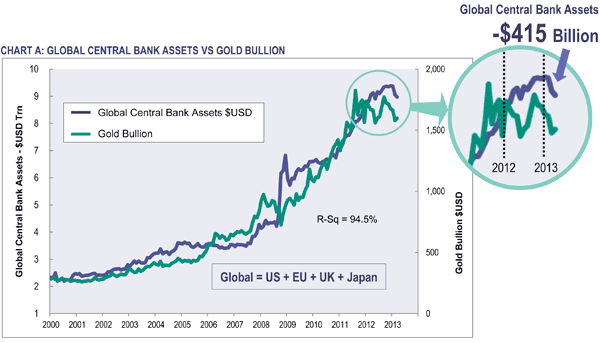
Chart A illustrates the relationship between the growth of central bank balance sheets in the US, EU, UK and Japan and the price of gold. This relationship has an extremely high correlation with an R2 of about 95%. As central banks increase the size of their balance sheets through ‘open market operations’ to buy bonds, mortgage-backed securities (“MBS”) and the like, they inject more fiat dollars into their respective banking systems. As gold has a relatively stable supply, if there are more dollars available, the price of gold should rise in dollar terms. It’s really a very simple and intuitive relationship – as it should be.


Source: Bloomberg and Sprott Asset Management LP

This relationship between central bank printing and gold has existed since the beginning of the gold bull market in 2000. In fact, this relationship shows that for every US$1 trillion increase in the collective central banks’ balance sheets, the price of gold has generally appreciated by an average of US$210/oz.

Continue reading »

Tags: , , , , , , , , , , , , , , , , ,

Mar 25

- Next Up For Cyprus: Depression (ZeroHedge, March 25, 2013):

From SocGen:

Depression for Cyprus: Our Cypriot GDP forecast entails a drop of just over 20% in real GDP by 2017. This forecast had already factored in much what was agreed, but did not account for the additional uncertainty shock generated by the past week’s appalling political mess. Risks are clearly on the downside and Cyprus will in all likelihood require additional financial assistance further down the road. Accounting for less than 0.3% of euro area GDP, any downward revision to Cyprus will be barely visible on the euro area aggregate.

So much for the hope of recreating Iceland, and actually growing in 2-3 years. Congratulations Cyprus – you may have a depression for the next four years, but at least you have the (and helped Merkel win the September election).

Tags: , , , , , , ,

Feb 02

- Who Runs The World? Solid Proof That A Core Group Of Wealthy Elitists Is Pulling The Strings (Economic Collapse, Jan 29, 2013):

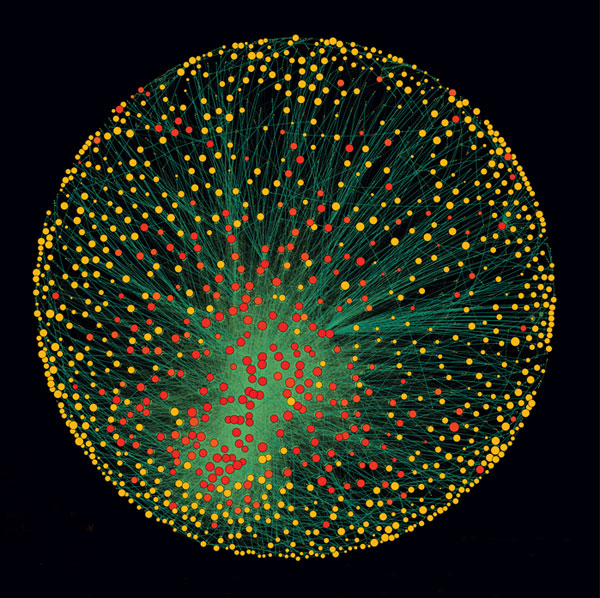
Does a shadowy group of obscenely wealthy elitists control the world?  Do men and women with enormous amounts of money really run the world from behind the scenes?  The answer might surprise you.  Most of us tend to think of money as a convenient way to conduct transactions, but the truth is that it also represents power and control.  And today we live in a neo-fuedalist system in which the super rich pull all the strings.  When I am talking about the ultra-wealthy, I am not just talking about people that have a few million dollars.  As you will see later in this article, the ultra-wealthy have enough money sitting in offshore banks to buy all of the goods and services produced in the United States during the course of an entire year and still be able to pay off the entire U.S. national debt.  That is an amount of money so large that it is almost incomprehensible.  Under this ne0-feudalist system, all the rest of us are debt slaves, including our own governments.  Just look around – everyone is drowning in debt, and all of that debt is making the ultra-wealthy even wealthier.  But the ultra-wealthy don’t just sit on all of that wealth.  They use some of it to dominate the affairs of the nations.  The ultra-wealthy own virtually every major bank and every major corporation on the planet.  They use a vast network of secret societies, think tanks and charitable organizations to advance their agendas and to keep their members in line.  They control how we view the world through their ownership of the media and their dominance over our education system.  They fund the campaigns of most of our politicians and they exert a tremendous amount of influence over international organizations such as the United Nations, the IMF, the World Bank and the WTO.  When you step back and take a look at the big picture, there is little doubt about who runs the world.  It is just that most people don’t want to admit the truth.The ultra-wealthy don’t run down and put their money in the local bank like you and I do.  Instead, they tend to stash their assets in places where they won’t be taxed such as the Cayman Islands.  According to a report that was released last summer, the global elite have up to 32 TRILLION dollars stashed in offshore banks around the globe.

U.S. GDP for 2011 was about 15 trillion dollars, and the U.S. national debt is sitting at about 16 trillion dollars, so you could add them both together and you still wouldn’t hit 32 trillion dollars. Continue reading »

Tags: , , , , , , , , , , , , , , , , , , , , , , , , , , ,

Jun 22

- Here We Go: Moody’s Downgrade Is Out – Morgan Stanley Cut Only 2 Notches, To Face $6.8 Billion In Collateral Calls (ZeroHedge, June 21, 2012):

Here it comes:

  • MOODY’S CUTS 4 FIRMS BY 1 NOTCH
  • MOODY’S CUTS 10 FIRMS’ RATINGS BY 2 NOTCHES
  • MOODY’S CUTS 1 FIRM BY 3 NOTCHES
  • MORGAN STANLEY L-T SR DEBT CUT TO Baa1 FROM A2 BY MOODY’S
  • MOODY’S CUTS MORGAN STANLEY 2 LEVELS, HAD SEEN UP TO 3
  • MORGAN STANLEY OUTLOOK NEGATIVE BY MOODY’S
  • MORGAN STANLEY S-T RATING CUT TO P-2 FROM P-1 BY MOODY’S

But the kicker:

ONLY MORGAN STANLEY, HSBC CUT LESS THAN MOODY’S ORGINAL MAXIMUM.

And there you have it – the reason for the delay were last minute negotiations, most certainly involving extensive monetary explanations, by Morgan Stanley’s Gorman (potentially with Moody’s investor Warren Buffett on the call) to get only a two notch downgrade. And Wall Street wins again.

Recall, from MS’ 10-Q:

“In connection with certain OTC trading agreements and certain other agreements associated with the Institutional Securities business segment, the Company may be required to provide additional collateral or immediately settle any outstanding liability balances with certain counterparties in the event of a credit rating downgrade. At March 31, 2012, the following are the amounts of additional collateral, termination payments or other contractual amounts (whether in a net asset or liability position) that could be called by counterparties under the terms of such agreements in the event of a downgrade of the Company’s long-term credit rating under various scenarios: $868 million (A3 Moody’s/A- S&P); $5,177 million (Baa1 Moody’s/ BBB+ S&P); and $7,206 million (Baa2 Moody’s/BBB S&P). Also, the Company is required to pledge additional collateral to certain exchanges and clearing organizations in the event of a credit rating downgrade. At March 31, 2012, the increased collateral requirement at certain exchanges and clearing organizations under various scenarios was $160 million (A3 Moody’s/A- S&P); $1,600 million (Baa1 Moody’s/ BBB+ S&P); and $2,400 million (Baa2 Moody’s/BBB S&P).”

So instead of $9.6 billion, MS will face only $6.8 billion in collateral calls.


YouTube

Still the firm is not out of the woods: Continue reading »

Tags: , , , , , , , , , , , , , , , , , , ,

Jun 21

- Big Bank Downgrade By Moody’s Imminent (ZeroHedge, June 21, 2012):

Even as Moody is now about a week late on its Spanish bank downgrade where the banks are rated higher than the sovereign (which obviously is kept in check to prevent yields on bonds from soaring even more), here comes the next wholesale bank downgrade:

  • Moody’s expected to announce ratings downgrade for UK banks this evening – Sky Sources
  • Exclusive: Big news – I’m told Moody’s will announce downgrades of some of world’s biggest banks, incl in UK, after US mkts close tonight. – Sky’s Mark Kleinman

Looks like that fabricated 2 notch Margin Stanley downgrade (because 3 notches just won’t do – those 4 months of Gorman-led “negotiations” made that painfully clear) is about to strike. The real question is: What Would Egan Who Do?

From Sky:

Some of Britain’s biggest banks are poised to have their credit ratings downgraded by Moody’s as soon as tonight as part of a wider reassessment of the health of the global banking industry, I can reveal.

Moody’s is expected to outline its verdicts about the creditworthiness of banks including Barclays, HSBC, JP Morgan and Royal Bank of Scotland.

Continue reading »

Tags: , , , , , , , , , , , , , , , , , , , ,

May 30

- RIT Capital Partners, Chaired By Lord Rothschild, And Rockefeller & Co. Announce Strategic Partnership (MarketWatch, May 30, 2012):

LONDON and NEW YORK, May 30, 2012 /PRNewswire via COMTEX/ — RIT Capital Partners plc (“RIT”), chaired by Lord (Jacob) Rothschild, and Rockefeller Financial Services, Inc., the parent company of Rockefeller & Co., Inc., today announced the creation of a strategic partnership that brings together two of the most recognised and respected names in the investing world.

David Rockefeller, honorary director and retired chairman of Rockefeller & Co., stated: “Lord Rothschild and I have known each other for five decades. The connection between our two families remains very strong. I am delighted to welcome Jacob and RIT as shareholders and partners in the ongoing development of our investment management and wealth advisory businesses.”

In acquiring the 37% equity interest previously held by Societe Generale Private Banking, RIT will become a significant minority investor in Rockefeller Financial Services, Inc. alongside the Rockefeller family, related entities and the management team. The firms intend to collaborate on investment solutions and other areas of shared expertise to further serve the needs of their clients and investors.

RIT is a London-listed investment trust with net assets of some 1.9 billion pounds Sterling. In March 2012, RIT announced a partnership with Edmond de Rothschild Group (“EdR”) through which EdR become shareholders in RIT alongside Lord Rothschild’s family interests. Baroness Ariane de Rothschild became Honorary Vice Chairman of RIT, with Lord Rothschild becoming Honorary Vice Chairman of Edmond de Rothschild SA, the French holding company of Edmond de Rothschild Group.

- Rothschilds buy into Rockefeller wealth business (Reuters, May 30. 2012):

Two of the most glamorous names in global finance are linking up, with the Rothschild banking dynasty agreeing to buy a stake in the Rockefeller group’s wealth and asset management business to get a long-sought foothold in the United States.

Rothschild’s London-listed RIT Capital Partners (RCP.L) said on Wednesday it was buying the 37 percent stake from French group Societe Generale’s (SOGN.PA) private banking arm for an undisclosed sum.

The transatlantic union brings together David Rockefeller, 96, and Jacob Rothschild, 76 – two family patriarchs whose personal relationship spans five decades.

Rockefeller & Co traces its origins back to 1882 when it was founded as one of the world’s first family offices by John D. Rockefeller to manage his personal wealth.

Since then it has developed into a wealth advisory group administering assets of $34 billion.

The Rothschild banking dynasty began when Mayer Amschel Rothschild started a business in Frankfurt in the late 18th century.

Continue reading »

Tags: , , , ,

Dec 16

- S&P slaps ten Spanish banks with downgrade (Sydney Morning Herald, Dec. 16, 2011):

Standard and Poor’s downgraded Thursday the credit rating of 10 Spanish banks after applying new criteria, and warned it may lower their short-term scores further.

The 10 banks had their ratings lowered and remained in “creditwatch with negative implications”, indicating the risk of a further downgrade, Standard and Poor’s said in a statement.

- S&P cuts ratings of 10 Spanish banks‎ (Reuters, Dec. 15, 2011):

Standard & Poor’s cut the credit ratings of 10 Spanish banks on Thursday and said they remained on watch for a possible further cut subject to a review of Spain’s sovereign rating.

- Fitch cuts ratings on 8 major banks‎ (AP, Dec. 15, 2011):

NEW YORK (AP) — Fitch Ratings on Thursday downgraded its viability ratings on eight of the world’s biggest banks, citing increased challenges facing the banking sector due to weak economic growth and heightened regulation.

The firm lowered its viability ratings for Bank of America Corp., Barclays PLC, BNP Paribas, Credit Suisse AG, Deutsche Bank AG, The Goldman Sachs Group Inc., Morgan Stanley and Societe Generale.

Continue reading »

Tags: , , , , , , , , , , , ,

Dec 10

Flashback ( on ECB’s Mario Draghi):

- ECB’s Mario Draghi: We Need Fiscal Union (= EUSSR), Not Bank Intervention

- Former Goldman Sachs Managing Director Mario Draghi Appointed European Central Bank President!

- Mario Draghi (Wikipedia):

Draghi was then vice chairman and managing director of Goldman Sachs International and a member of the firm-wide management committee (2002–2005). A controversy existed on his duties while employed at Goldman Sachs. Pascal Canfin (MEP) asserted Draghi was involved in swaps for European governments, namely Greece, trying to disguise their countries’ economic status.


- French banks downgraded by Moody’s (Telegraph, Dec. 9, 2011):

Moody’s has downgraded BNP Paribas, Societe Generale, and Credit Agricole warning their creditworthiness is being damaged by the fragile operating environment for European banks.

The agency cut its ratings on the long-term debt of BNP and Credit Agicole by one notch to Aa3, concluding reviews that began in June and were continued in September. Societe Generale’s long-term debt was cut by one notch to A1.

The downgrades were driven by the increasing difficulties the banks were having in raising funding and the worsening economic outlook, Moody’s said.

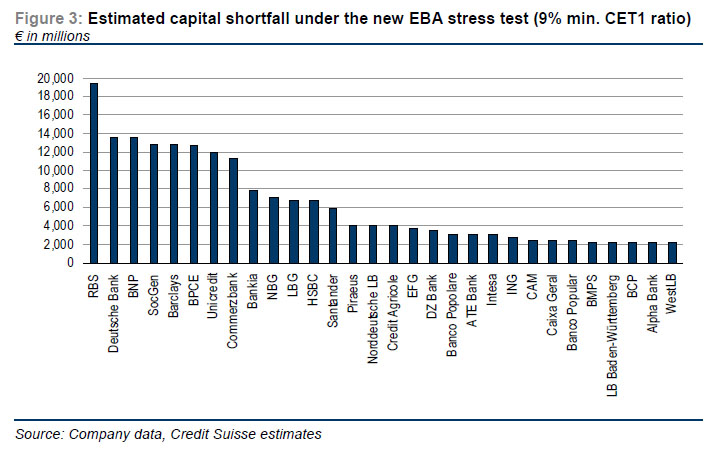
The news comes a day after the European Banking Authority (EBA), warned the region’s banks must find €114.7bn of extra capital in order to withstand the euro zone debt crisis and restore investor confidence.

Moody’s said its ratings did take into account the fact that all three French banks were likely to benefit from state support if the crisis deepened.

“Liquidity and funding conditions have deteriorated significantly,” said Moody’s, adding that the banks have historically relied on wholesale funding markets.

“The probability that the will face further funding pressures has risen in line with the worsening European debt crisis.”

- Eurozone banking system on the edge of collapse (Telegraph, Dec. 9, 2011):

Senior analysts and traders warned of impending bank failures as a summit intended to solve the European crisis failed to deliver a solution that eased concerns over bank funding.

The European Central Bank admitted it had held meetings about providing emergency funding to the region’s struggling banks, however City figures said a “collateral crunch” was looming.

“If anyone thinks things are getting better then they simply don’t understand how severe the problems are. I think a major bank could fail within weeks,” said one London-based executive at a major global bank.

Many banks, including some French, Italian and Spanish lenders, have already run out of many of the acceptable forms of collateral such as US Treasuries and other liquid securities used to finance short-term loans and have been forced to resort to lending out their gold reserves to maintain access to dollar funding.

“The system is creaking. There is a large amount of stress,” said Anthony Peters, a strategist at Swissinvest, pointing to soaring interbank lending rates.

Continue reading »

Tags: , , , , , , , , , , , , , , ,

Dec 04

See also:

- Gerald Celente Endorses Ron Paul For President – ‘The Entire Economic System Is Collapsing’ – ‘Fascism Has Come To America In Every Form’ (Video – Nov. 29, 2011)


- Have You Heard About The 16 Trillion Dollar Bailout The Federal Reserve Handed To The Too Big To Fail Banks? (The Econonomic collapse, Dec. 2, 2011):

What you are about to read should absolutely astound you.  During the last financial crisis, the Federal Reserve secretly conducted the biggest bailout in the history of the world, and the Fed fought in court for several years to keep it a secret.  Do you remember the TARP bailout?  The American people were absolutely outraged that the federal government spent 700 billion dollars bailing out the “too big to fail” banks.  Well, that bailout was pocket change compared to what the Federal Reserve did.  As you will see documented below, the Federal Reserve actually handed more than 16 trillion dollars in nearly interest-free money to the “too big to fail” banks between 2007 and 2010.  So have you heard about this on the nightly news?  Probably not.  Lately Bloomberg has been reporting on some of this, but even they are not giving people the whole picture.  The American people need to be told about this 16 trillion dollar bailout, because it is a perfect example of why the Federal Reserve needs to be shut down.  The Federal Reserve has been actively picking “winners” and “losers” in the financial system, and it turns out that the “friends” of the Fed always get bailed out and always end up among the “winners”.  This is not how a free market system is supposed to work.

According to the limited GAO audit of the Federal Reserve that was mandated by the Dodd-Frank Wall Street Reform and Consumer Protection Act, the grand total of all the secret bailouts conducted by the Federal Reserve during the last financial crisis comes to a whopping $16.1 trillion.

Continue reading »

Tags: , , , , , , , , , , , , , , , , , , , , , , , , , , , , , ,

Nov 29

- SocGen Sees $600 Billion QE3 Starting In March 2012 Sending Gold Up Between $1900 And $8500/Oz (ZeroHedge, Nov. 28, 2011):

SocGen has released its much anticipated Multi Asset Portfolio Scenario/Strategy guide titled simply enough “Patience: bad news will become good news” where, as the insightful can guess, the French bank makes the simple case that the worse things get, the stronger the response by global central banks will be. Here is the key quote for those worried that : “A major liquidity crisis should not occur this time, as we think we are on the eve of major QE in the UK, US and (a bit) later on in the EZ.” We don’t disagree and if there is anything that can send BAC higher it will be the announcement of QE3. Of course, BAC will first drop to a $2-3 handle so question is who has the balance sheet to hold on to the falling knife. The next question is “How big will QE3 be”? Well, according to SocGen, the Fed will preannounce it in the January 2012 FOMC statement, the monetization will last from March 2012 until the end of the year, and will buy a total of $600 billion. We believe the actual LSAP total (not to be confused with the “sterilized” QE3 known as Operation Twist) will be well greater, probably in the $1.5 trillion range as the Fed will finally say “enough” to piecemeal solutions. As to what to do, besides going long some financial stock and hoping it is not the one that is allowed to fail, SocGen has some simple advice: “Buy gold ahead of QE3 as money creation has a strong impact on prices” – in other words just as we suggested yesterday courtesy of the Don Coxe correlation chart. Why gold and not BAC? Because, “Gold is highly sensitive to US QE, as every dollar of QE goes into M0, triggering the debasement of the USD. Gold = $ 8500/Oz: to catch up with the increase in the monetary base since 1920 (as it did in the early 80s). Gold = $1900/Oz: to close the gap with the monetary base increase since July 2007(QE1+QE2).” So go long a bank that may well go bankrupt and return nothing before it at best doubles, or go long a real asset, which will always have value and may quadruple in short notice? The answer seems simple to us…

From SocGen:

Continue reading »

Tags: , , , , , , , , , , , ,