Nov 09

£13m shed-size reactors will be delivered by lorry

Nuclear power plants smaller than a garden shed and able to power 20,000 homes will be on sale within five years, say scientists at Los Alamos, the US government laboratory which developed the first atomic bomb.

The miniature reactors will be factory-sealed, contain no weapons-grade material, have no moving parts and will be nearly impossible to steal because they will be encased in concrete and buried underground.

The US government has licensed the technology to Hyperion, a New Mexico-based company which said last week that it has taken its first firm orders and plans to start mass production within five years. ‘Our goal is to generate electricity for 10 cents a watt anywhere in the world,’ said John Deal, chief executive of Hyperion. ‘They will cost approximately $25m [£13m] each. For a community with 10,000 households, that is a very affordable $250 per home.’

Continue reading »

Tags: , , , , , , , , ,

Nov 09

The U.S. is literally funding Iranian nuclear capabilities.

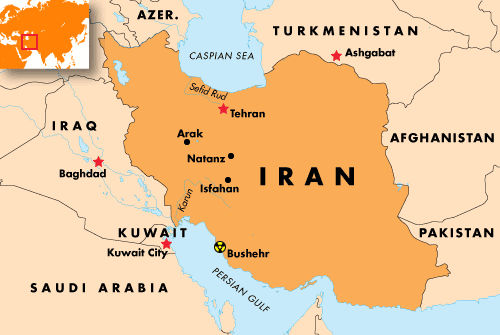
As CNN reports, the U.S. state department has given millions of dollars to two Russian institutes which, in turn, are directly helping to ramp up Iran’s nuke capacity at Bushehr and other facilities.

This is especially ironic given that the U.S. has accused Iran of producing fuel for nuclear weapons at Bushehr.

Here’s the CNN report:

Sunday, November 2, 2008

Source: George Washington’s Blog

Tags: , , , , , , ,

Sep 04

Battered by soaring energy costs and aghast at dwindling fish stocks, Japanese scientists think they have found the answer: filling the seas with giant “eco-rigs” as powerful as nuclear power stations.

The project, which could result in village-sized platforms peppering the Japanese coastline within a decade, reflects a growing panic in the country over how it will meet its future resource needs.

The floating eco-rig generators which measure 1.2 miles by 0.5 miles (2km by 800m) are intended to harness the energy of the Sun and wind. They are each expected to produce about 300 megawatt hours of power.

Continue reading »

Tags: , , , , , , , ,

Sep 02

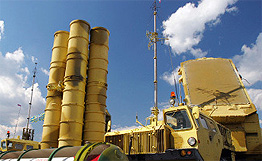
MOSCOW, September 1 (RIA Novosti) - Russia may proceed with plans to sell advanced S-300 air defense systems to Iran under a secret contract believed to have been signed in 2005, a Russian analyst said on Monday. (Russian mobile surface-to-air missile systems - Image gallery)

Commenting on an article in the Sunday Telegraph newspaper saying Russia is using the plans as a bargaining chip in its standoff with America, Ruslan Pukhov, director of Moscow-based Center for Analysis of Strategies and Technologies, said: “In the current situation, when the U.S. and the West in general are stubbornly gearing toward a confrontation with Russia after the events in South Ossetia, the implementation of a lucrative contract on the deliveries of S-300 [air defense systems] to Iran looks like a logical step.”

Continue reading »

Tags: , , , , , , , ,

Aug 31

Related article: De Telegraaf: “Attack on Iran expected”:

“AMSTERDAM - The Dutch intelligence agency AIVD has conducted an ultrasecret operation in Iran with the purpose of infiltrating and sabotaging the weapons industry in the islamic republic.”

“The operation, deemed extremely succesfull, has recently been cancelled because of an imminent aerial attack on Iran. Targets include sites that are connected to the Dutch spying.”

So the attack is already on its way and this is just another excuse to justify it:
_______________________________________________________________________________


Russian S-30 missiles

US intelligence says escalating tensions between Washington and Moscow could prompt Russia to sell the sophisticated S-300 system to Iran.

“If Tehran obtained the S-300, it would be a game-changer in military thinking for tackling Iran. That could be a catalyst for Israeli air attacks before it is operational,” said Dan Goure, a long-time Pentagon advisor.

“This is a system that scares every Western air force,” he said.

Continue reading »

Tags: , , , , , , , , , , , , ,

Jul 09

Waste containing unenriched uranium has leaked into two rivers from a nuclear plant in southern France.

Officials banned people in three nearby towns from fishing, using water from wells, swimming in the rivers or using river water on their crops.

The accident happened at the Tricastin nuclear site at Bollene, some 40km (25 miles) from the city of Avignon.

The French nuclear safety agency said the substance was toxic but the risk to human health was slight.

Uranium concentrations in the Gaffiere river were initially about 1,000 times higher than normal levels but were falling rapidly, spokeswoman Evangelia Petit said.

Some 30,000l (7,925 gallons) of solution containing 12g of uranium per litre spilled from an overflowing reservoir at the facility - which handles liquids contaminated by uranium - into the ground and into the Gaffiere and Lauzon rivers.

Anti-nuclear campaign group Abandon Nuclear Power said it thought the authorities were underplaying the danger posed by the nuclear waste leak.

“It is impossible that such a spill, containing uranium, does not have important consequences for the environment and for health,” it said.

France is one of the world’s most nuclear-dependent countries, with 80% of its electricity coming from nuclear power.Wednesday, 9 July 2008

Source: BBC News

Related articles (uranium):
-The Weapon of Mass Destruction Is Cancer
- Over 70,000 deaths, and over 1 million disabilities among American soldiers attributed to Iraq Wars says U.S. government data
- IRAQ: ‘Special Weapons’ Have a Fallout on Babies
- War-related birth defects in Fallujah
- Cheney can only call Iraq a success if he has a mindset like Hitler

Tags: , , , , ,

Mar 18

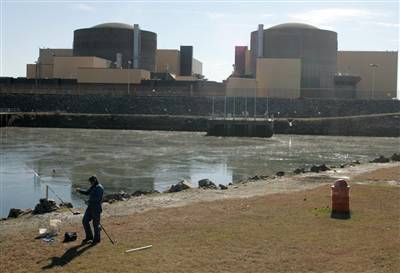
Southeast water shortage a factor in huge cooling requirements

080123nucleardrought-hmed-11ahmedium.jpg

LAKE NORMAN, N.C. - Nuclear reactors across the Southeast could be forced to throttle back or temporarily shut down later this year because drought is drying up the rivers and lakes that supply power plants with the awesome amounts of cooling water they need to operate.

Utility officials say such shutdowns probably wouldn’t result in blackouts. But they could lead to shockingly higher electric bills for millions of Southerners, because the region’s utilities could be forced to buy expensive replacement power from other energy companies.

Already, there has been one brief, drought-related shutdown, at a reactor in Alabama over the summer.

“Water is the nuclear industry’s Achilles’ heel,” said Jim Warren, executive director of N.C. Waste Awareness and Reduction Network, an environmental group critical of nuclear power. “You need a lot of water to operate nuclear plants.” He added: “This is becoming a crisis.” Continue reading »

Tags: , , , , ,