Nov 12


Vehicles are parked at the Jefferson Chevrolet dealership in Detroit on Nov. 7, 2008. Photographer: Jeff Kowalsky/Bloomberg News

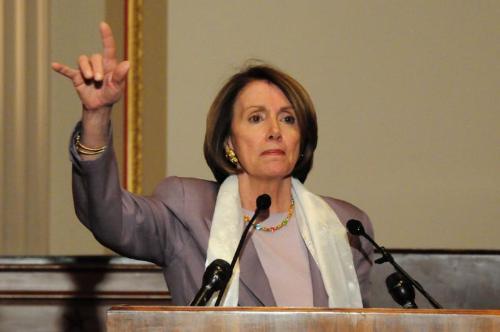
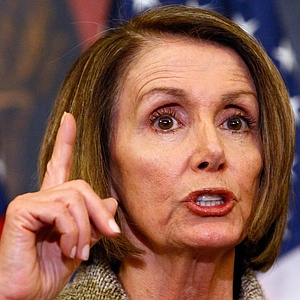
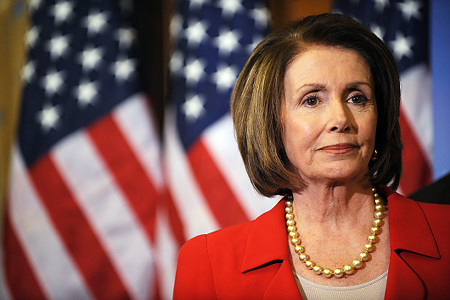
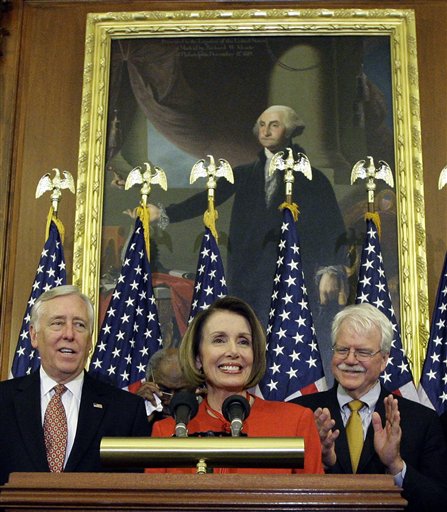
Nov. 12 (Bloomberg) — House Speaker Nancy Pelosi has thrown her support behind the premise that General Motors Corp., the largest U.S. automaker, is too big to be allowed to fail.

In urging Congress to enact emergency aid for the ailing auto industry, Pelosi rejected calls to let GM collapse and sided with the company and its allies in trying to prevent a “devastating” domino effect that would cost millions of jobs.

“Trying to reorganize the auto industry in bankruptcy would be as close to reorganizing the whole U.S. economy as you could get,” said Alan Gover, a bankruptcy lawyer with White & Case LLP in New York. “The vast supply chain involves thousands of businesses, millions of existing jobs and just as many retirees, as well as whole communities and states.”

Passage of an industry bailout plan may keep GM from running out of operating cash by year’s end, which it says may happen without U.S. help. GM is the second-biggest provider of private health-care benefits and was the third-biggest advertiser in this year’s first half.

“It’s truly one of those companies that’s too big to fail, and everybody understands that,” said Nariman Behravesh, chief economist at IHS Global Insight Inc. in Lexington, Massachusetts. “If it does collapse, it could make the recession deeper and longer.”

Behravesh said a GM bankruptcy could send the U.S. jobless rate as high as 9.5 percent, up from a 14-year high of 6.5 percent in October, and produce a recession comparable in length to that of 1980-82.

Continue reading »

Tags: , , , , , , , , , , , , ,

Oct 21


Ron Paul, whose libertarian-leaning candidacy for the Republican presidential nomination spurred millions of supporters, says the federal government could do much to repair the economy short of regulating.

While running for the Republican presidential nomination, Rep. Ron Paul of Texas frequently sounded the alarm regarding the nation’s fiscal health. Years ahead of the current economic crisis, Paul was questioning the nation’s debt level, now an acutely pressing issue amid all the recent stock market volatility.

With the Treasury Department and the Federal Reserve rapidly moving toward more government intervention in the marketplace while trying to stabilize the nation’s banks and shore up its financial institutions, Paul has argued for a hands-off approach. He opposed both versions of the financial rescue plan that came before the House - the first one, which was rejected, and the second, which was passed and signed into law.

Politico’s David Mark interviewed the 10-term congressman, who has still not endorsed Republican John McCain for president. Here are some excerpts.

Q: With the stock market still in flux and the risk of massive financial failures growing, what’s the worst-case economic scenario you envision over the next couple of years?

A: The worst part could be that this would linger for a decade or more. In fact, a very serious recession or depression is on schedule. You cannot avoid it. Eventually it has to come, but it doesn’t have to end badly. We could take our lumps, save money, pay our bills, restore liberty, and in a year we could have the most booming economy ever. But it would take a complete change in attitude.

If we continue to believe it’s freedom, capitalism and private markets that are the problems, we’re in for very bad times.

Continue reading »

Tags: , , , , , , , , , , , , , , , , , , , ,

Oct 19

Ron Paul on The Alex Jones Show”A Global Financial Order”1/2
Added: Oct. 17, 2008

Source: YouTube

Ron Paul on The Alex Jones Show”A Global Financial Order”2/2

Added: Oct. 17, 2008

Source: YouTube

Tags: , , , , , , , , , , , , , , , , , , , , , , , , , , , , , , , , , ,

Sep 21

Sept. 21 (Bloomberg) — The Bush administration sought unchecked power from Congress to buy $700 billion in bad mortgage investments from financial companies in what would be an unprecedented government intrusion into the markets.

Through his plan, Treasury Secretary Henry Paulson aims to avert a credit freeze that would bring the financial system and the world’s largest economy to a standstill. The bill would prevent courts from reviewing actions taken under its authority.

“He’s asking for a huge amount of power,” said Nouriel Roubini, an economist at New York University. “He’s saying, `Trust me, I’m going to do it right if you give me absolute control.’ This is not a monarchy.”

Continue reading »

Tags: , , , , , , , , , , , , , , , , , , , , , , , , , , , , ,

Sep 05

By PAUL CRAIG ROBERTS

Paul Craig Roberts was Assistant Secretary of the Treasury in the Reagan administration. He was Associate Editor of the Wall Street Journal editorial page and Contributing Editor of National Review.

Does the liberal-left have a clue? I sometimes think not.

In his book, “What’s the Matter With Kansas?,” Thomas Frank made the excellent point that the Karl Rove Republicans take advantage of ordinary’s people’s frustrations and resentments to lead them into voting against their best interest.

Frank’s new book, “The Wrecking Crew: How Conservatives Rule,” lacks the insight that distinguished his previous book. Why does Frank think that conservatives or liberals rule?

Neither rule. America is ruled by organized interest groups with money to elect candidates who serve their interests. Frank’s book does not even mention the Israel Lobby, which bleeds Americans for the sake of Israeli territorial expansion. Check the index. Israel is not there.

Continue reading »

Tags: , , , , , , , , , , , , , , , , , , , , , , , , , , ,

Sep 04

*Kakistocracy is government by the very worst, least principled, and most incompetent people. You will be forgiven for thinking that the word, kakistocracy, perhaps derives from the word, “caca”, itself derived from the Latin, “cacare”. In fact, kakistocracy derives from the Greek, kakos, meaning “bad”.)

Continue reading »

Tags: , , , , , , , , , , , , , , , , , , , , , , , , , , , , , , , , , , , , , , , , , , , , , , , , , , , , , , , , , , , , , , , , , , , ,

Jul 23

Salon has uncovered new evidence of post-9/11 spying on Americans. Obtained documents point to a potential investigation of the White House that could rival Watergate.

Excerpts (Full article follows):

“According to several former U.S. government officials with extensive knowledge of intelligence operations, Main Core in its current incarnation apparently contains a vast amount of personal data on Americans, including NSA intercepts of bank and credit card transactions and the results of surveillance efforts by the FBI, the CIA and other agencies. One former intelligence official described Main Core as “an emergency internal security database system” designed for use by the military in the event of a national catastrophe, a suspension of the Constitution or the imposition of martial law. Its name, he says, is derived from the fact that it contains “copies of the ‘main core’ or essence of each item of intelligence information on Americans produced by the FBI and the other agencies of the U.S. intelligence community.”

“An article in Radar magazine in May, citing three unnamed former government officials, reported that “8 million Americans are now listed in Main Core as potentially suspect” and, in the event of a national emergency, “could be subject to everything from heightened surveillance and tracking to direct questioning and even detention.”

Related information:

- The Last Roundup: MAIN CORE

- Homeland Security: Operation Endgame
Why do you think they have called it “Operation Endgame”? That makes no sense if you just want to get rid of some illegal immigrants. The Nazis had the term Endsieg (Sieg = Victory). And here we have Operation Endgame with it’s concentration, ahhhmmm, detention camps. Probably just a coincidence.

- Police State 2008 (Interview with Paul Craig Roberts )
Paul Craig Roberts, a Republican who worked in the Reagan administration: “Homeland that is a Nazi term.”
He is predicting a 9-11 type of attack before the 2008 elections. If that occurs, Bush can declare martial law and begin arresting those who disagree with his foreign policy (based on Executive Orders recently issued by the Bush Administration that grant the president these powers

- G. W. Bush and Adolf Hitler signed a Directive 51
Adolf Hitler signed a Directive 51 (Source: Brittanica.com) and here is Bush’s NSPD 51 (Source: The White House).
National Security Presidential Directive 51 Source: YouTube
If President Bush will declare Martial Law, for the given reasons in NSPD 51, he will hold all power in his hands alone. He has to answer to no-one anymore. Presidential Directive 51 overrides everything.
So both directives were issued to give the Dictator in charge absolute power!

Jul. 23, 2008 | The last several years have brought a parade of dark revelations about the George W. Bush administration, from the manipulation of intelligence to torture to extrajudicial spying inside the United States. But there are growing indications that these known abuses of power may only be the tip of the iceberg. Now, in the twilight of the Bush presidency, a movement is stirring in Washington for a sweeping new inquiry into White House malfeasance that would be modeled after the famous Church Committee congressional investigation of the 1970s.

Continue reading »

Tags: , , , , , , , , , , , , , , , , , , , , , , , , , , , ,

Jul 09

WASHINGTON - More than two and a half years after the disclosure of President’s Bush’s domestic eavesdropping program set off a furious national debate, the Senate gave final approval on Wednesday afternoon to broadening the government’s spy powers and providing legal immunity for the phone companies that took part in the wiretapping program.

The plan, approved by a vote of 69 to 28, marked one of Mr. Bush’s most hard-won legislative victories in a Democratic-led Congress where he has had little success of late. Both houses, controlled by Democrats, approved what amounted to the biggest restructuring of federal surveillance law in 30 years, giving the government more latitude to eavesdrop on targets abroad and at home who are suspected of links to terrorism.

The issue put Senator Barack Obama of Illinois, the presumptive Democratic nominee, in a particularly precarious spot. After long opposing the idea of immunity for the phone companies in the wiretapping operation, he voted for the plan on Wednesday. His reversal last month angered many of his most ardent supporters, who organized an unsuccessful drive to get him to reverse his position once again. And it came to symbolize what civil liberties advocates saw as “capitulation” by Democratic leaders to political pressure from the White House in an election year.

Senator Hillary Rodham Clinton of New York, who was Mr. Obama’s rival for the Democratic presidential nomination, voted against the bill.

The outcome was a stinging defeat for opponents who had urged Democratic leaders to stand firm against the White House after a months-long impasse.

“I urge my colleagues to stand up for the rule of law and defeat this bill,” Senator Russell D. Feingold, Democrat of Wisconsin, said in closing arguments.

Continue reading »

Tags: , , , , , , , , , , , , , , , , , ,

Jun 29

It’s remarkably common for a grandson to take up his grandfather’s major project. This occurred to me when I read recently of Thor Heyerdahl’s grandson taking up his mission to cross the Pacific on a raft.

But what really struck me was the BBC story aired on July 23rd, 2007, documenting President George W. Bush’s grandfather’s involvement in a 1933 plot to overthrow the U.S. government and install a fascist dictatorship.

I knew the story, but had not considered the possibility that the grandson was trying to accomplish what his grandfather had failed to achieve.

Prescott Sheldon Bush (1895 to 1972) attended Yale University and joined the secret society known as Skull and Bones. Prescott is widely reported to have stolen the skull of Native American leader Geronimo. As far as I know, this has not actually been confirmed. In fact, Prescott seems to have had a habit of making things up. He sent letters home from World War I claiming he’d received medals for heroism. After the letters were printed in newspapers, he had to retract his claims.

If this does not yet sound like the life of a George W. Bush ancestor, try this on for size: Prescott Bush’s early business efforts tended to fail. He married the daughter of a very rich man named George Herbert Walker (the guy with the compound at Kennebunkport, Maine, that now belongs to the Bush family, and the origin of Dubya’s middle initial). Walker installed Prescott Bush as an executive in Thyssen and Flick. From then on, Prescott’s business dealings went better, and he entered politics.

Now, the name Thyssen comes from a German named Fritz Thyssen, major financial backer of the rise of Adolph Hitler. Thyssen was referred to in the New York Herald-Tribune as “Hitler’s Angel.” During the 1930s and early 1940s, and even as late as 1951, Prescott Bush was involved in business dealings with Thyssen, and was inevitably aware of both Thyssen’s political activities and the fact that the companies involved were financially benefiting the nation of Germany. In addition, the companies Prescott Bush profited from included one engaged in mining operations in Poland using slave labor from Auschwitz. Two former slave laborers have sued the U.S. government and the heirs of Prescott Bush for $40 billion.

Until the United States entered World War II it was legal for Americans to do business with Germany, but in late 1942 Prescott Bush’s businesses interests were seized under the Trading with the Enemy Act. Among those businesses involved was the Hamburg America Lines, for which Prescott Bush served as a manager. A Congressional committee, in a report called the McCormack-Dickstein Report, found that Hamburg America Lines had offered free passage to Germany for journalists willing to write favorably about the Nazis, and had brought Nazi sympathizers to America. (Is this starting to remind anyone of our current president’s relationship to the freedom of the press?)

The McCormack-Dickstein Committee was established to investigate a homegrown American fascist plot hatched in 1933. Here’s how the BBC promoted its recent story:

“Document uncovers details of a planned coup in the USA in 1933 by right-wing American businessmen. The coup was aimed at toppling President Franklin D Roosevelt with the help of half-a-million war veterans. The plotters, who were alleged to involve some of the most famous families in America, (owners of Heinz, Birds Eye, Goodtea, Maxwell Hse & George Bush´s Grandfather, Prescott) believed that their country should adopt the policies of Hitler and Mussolini to beat the great depression. Mike Thomson investigates why so little is known about this biggest ever peacetime threat to American democracy.”

Continue reading »

Tags: , , , , , , , , , , , , , , , ,

Jun 26

Why it’s a lot worse than you think.


Rep. Steny Hoyer

Sometime today, the Senate is likely to approve the most comprehensive overhaul of American surveillance law since the Watergate era. Unless you’re a government lawyer, a legal scholar, a masochist, or an insomniac, chances are you haven’t read the 114-page bill. Don’t beat yourself up: Neither have most of the 293 House members who voted for it last week. Ditto the mainstream press, who seem to have relied chiefly on summaries provided by the same lawmakers who hadn’t read it.

To be fair, wiretapping is so classified, and the language of the bill so opaque, that no one without a “top secret” clearance can say with any authority just how much surveillance the proposal will authorize the government to do. (The best assessment yet comes from former Justice Department official David Kris, who deems the legislation “so intricate” that it risks confusing even “the government officials who must apply it.”)

Out of the echo chamber of ignorance and self-serving political cant, a number of myths have begun to emerge. We may never know for sure everything that this new legislation entails. But here are a few things that it most certainly doesn’t.

Myth No. 1: This bill is a compromise.

The House bill “is the result of a compromise,” one of its architects, Steny Hoyer, D-Md., maintained the other day. But in truth, Hoyer and his colleagues gave the White House most of what it asked for, dramatically expanding the government’s surveillance capabilities without demanding any serious concessions in exchange. Sen. Russ Feingold, D-Wis., calls the deal “a capitulation,” and he’s right. Why else would the White House express its approval so quickly, after a full year in which President Bush petulantly vowed not to sign any legislation that obliged him to concede too much? Sen. Kit Bond, R-Mo., offered an honest appraisal: “I think the White House got a better deal than even they had hoped.”

Myth No. 2: We need the bill to intercept our enemies abroad.

Continue reading »

Tags: , , , , , , , , , , , , , ,