https://www.youtube.com/watch?v=mMmu0OiM72w&t=2678s
* * *
PayPal: Donate in USD
PayPal: Donate in EUR
PayPal: Donate in GBP
The man who trades freedom for security does not deserve nor will he ever receive either. – Benjamin Franklin
https://www.youtube.com/watch?v=mMmu0OiM72w&t=2678s
* * *
PayPal: Donate in USD
PayPal: Donate in EUR
PayPal: Donate in GBP
A mother went blind in one eye and was diagnosed with multiple sclerosis just weeks after getting the flu shot, she has claimed.
Jennifer Whitney, from Mukilteo, Washington, had the vaccine due to the insistence of her boss – despite being concerned about any side effects.

Neurotherapie dient dem Gehirn
Neuro ( lat.die Nerven /das Gehirn) Therapie (lat. das Dienen)
Sie ist gedacht für alle Störungen des Gehirns, für alle sein Syndrome, Krankheiten und seltenen Phänomene.
– Lipoic acid in nutritional supplements found to help prevent multiple sclerosis, study finds:
The results of a new pilot study showed the efficacy of lipoic acid in the reduction of whole brain atrophy among patients with secondary progressive multiple sclerosis (SPMS) compared with recently approved FDA drug ocrelizumab (brand name Ocrevus). In a randomized, double-blind study, researchers found that a daily dose of 1,200 mg of lipoic acid taken for two years reduced symptoms associated with SPMS, a more severe form of multiple sclerosis. These findings could offer hope for patients with MS, a condition with no recognized cure.
Lipoic acid is a naturally-occurring antioxidant produced by the body. In Europe, it is regulated as drug as a treatment for diabetes-related complications as well as conditions associated with alcoholism. Here, it is marketed as an alternative supplement, aimed at reducing the effects of oxidative stress. While there have been several attempts to link the antioxidant with the prevention or treatment of various diseases, this is the first conclusive study which suggests the potency of lipoic acid with regards to neurological conditions.
…
* * *
PayPal: Donate in USD
PayPal: Donate in EUR
PayPal: Donate in GBP
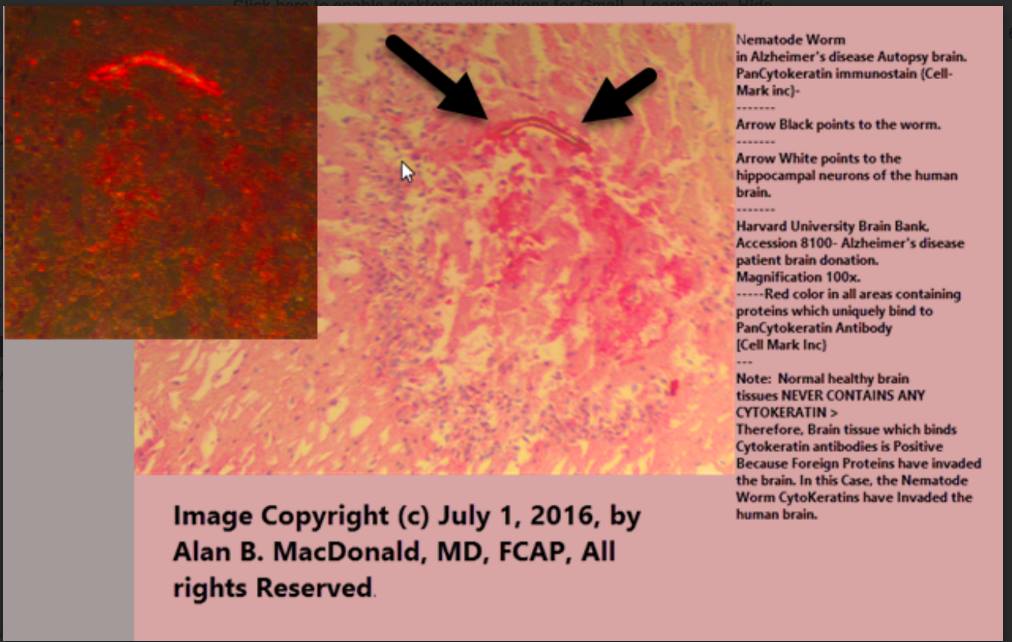
New findings by Dr. Alan MacDonald released today on the Dr. Paul H Duray Website (Pathology Research Fellowship)
Earlier Alan MacDonald reported in over 100 Harvard Alzheimer’s Brain Bank samples (see F1000 site) that Alzheimer’s amyloid plaques are associated with Borrelia biofilms, often with Borrelia miyamotoi a Relapsing Fever Borrelia not picked up with Lyme serology testing.
Then in 2016 Alan showed a high percentage of MS patients had Nematode parasites in their spinal Fluids. (using trichrome stain and Ethidium Bromide blue)
After seeing the nematodes in MS, Alan went back to the Alzheimer’s tissue samples and stained for Nematodes. Alan found Nematodes in Alzheimer’s brains and that the Nematodes contained Borrelia in their gut.
Then Alan showed that Nematodes shed fecal debris in Alzheimer’s brains.
Read moreResearcher Dr. Alan MacDonald Finds Nematode Worms In Alzheimer’s Brains

The stinging nettle (Urtica dioica) is maybe the best herb for supporting the formation of blood. Nettles are also one of the best blood-purifiers, which is why they are part of my spring detox, just like dandelion (Taraxacum officinale) and ramson (Allium ursinum). I use the freshly picked nettles in my regular juices and my smoothies. In a plastic bag they stay fresh in the refrigerator for a few days, but they will lose some nutrient content and vital energy. Still way better than most, if not all, ‘food’ that you can buy in the supermarket. Stinging nettles are unmatched energy & nutrient bombs. And even kale looks like a weakling in comparison. (More info down below.)
Eighteenth donation in 2016.
Infinite Unknown reader J.W. donated $50,00 (CAD).
Thank you for your support!
Very much needed and appreciated.
* * *
Donations In April: $50, $50,00 (CAD)
Donations in March: $30, £25, $10 (AUD)
Read moreDonation & The Many Benefits Of The Stinging Nettle (Urtica Dioica)

– Lack of vitamin D may cause multiple sclerosis, study finds:
Lack of vitamin D may be a direct cause of multiple sclerosis (MS), a study has found. The discovery may have important public health implications since so many people have insufficient levels of the essential vitamin, researchers say.
The findings may help explain why rates of MS, a potentially disabling auto-immune disease that damages nerve fibres, are higher in high-latitude regions such as northern Europe, which have fewer sunny days. Sunshine triggering a chemical reaction in the skin is the primary source of vitamin D.
Read moreLack Of Vitamin D May Cause Multiple Sclerosis, Study Finds
If you do a ‘neurotropic pathogen search’ and examine the blood of a MS patient, at the height of a relapse, you may find a virus, bacteria or several of them to be very active and to be the probable cause of the relapse.
Chlamydia pneumoniae is just one of the usual suspects. Measles, herpes simplex & zoster, mumps, borrelia, Epstein-Barr, rubella, cytomegalovirus, diphtheria, staphylococcus, streptococcus clostridium tetani & difficile, scarlet, etc. have been found.
Alternative medicine offers a lot of different strategies to get rid of these critters and get well again.
Why is it that doctors do not want to do a neurotropic pathogen search and the also (recommended) differential blood count to find out what is really going on?
Sep 17, 2012
It’s widely accepted that Multiple Sclerosis (MS) is an autoimmune disease. The cause of MS is unknown and there is no cure. But some maverick doctors contend that MS is triggered by an infection which can be treated. It’s believed that a common bacterium, http://www.abc.net.au/catalyst/
Chlamydia pneumoniae can infect blood vessels in the brain and spinal cord and ultimately lead to nerve damage. Maryanne Demasi meets the doctors who are at odds with neurologists in proposing that an early diagnosis of MS could be cured with something as simple as antibiotics.
* * *
I had several multiple sclerosis patients and examined their blood under a very good dark field microscope.
My MS patients, just like the cancer patients, had a lot of parasites in their blood.
Read moreIs Multiple Sclerosis Caused By A Parasitic Infection, Like Chlamydia Pneumoniae? (Video)
Flashback:
– Michael Holick M.D.,Ph. D.: Vitamin D and Prevention of Chronic Diseases
https://www.youtube.com/watch?v=la3hthu5BJA
Full interview:
https://www.youtube.com/watch?v=0ZNq7N9QM5A&feature=youtu.be
– Sunlight — It Does Your Body Good:
By Dr. Mercola
Sunlight: we all feel better when we’re exposed to it, but do you know why? Dr. Michael F. Holick, a foremost expert on vitamin D with an impressive list of credentials, is just the right person to explain the healing power of sunlight.
His academic credentials include chief of Endocrinology, Diabetes, and Nutrition at Boston City Hospital and Boston University Medical Center from 1987 until 2000.
Related info:
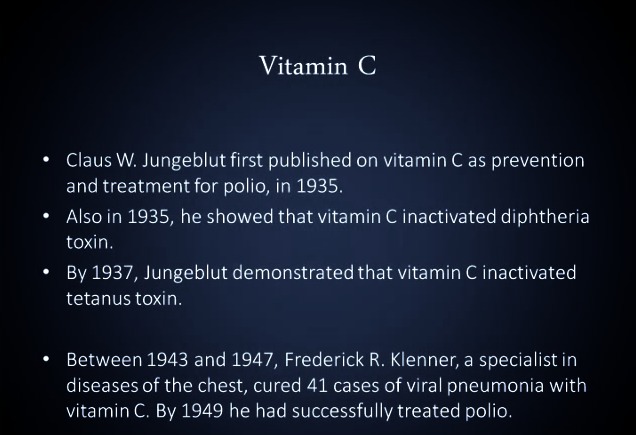
Source: Dr. Andrew Saul, Ph.D. – 6 Proven Ways To Improve Your Health (Video)
After Frederick Klenner died in 1984, his friend (and mine), Arthur Rybeck, a nutritionally-oriented dentist practicing in Wheeling, West Virginia, asked if I would be interested in going over the 27 papers Klenner had written from the early 1940’s to the early 1970’s. The whole idea would be to let the world know how thoughtful and careful a researcher he was, and to encourage others to continue his work. If a compendium of Vitamin C (and other nutritional) therapy could be compiled from the published work of Dr. Klenner, maybe we could get more traditional medicine-oriented doctors to use his methods for the relief of sickness and suffering.
Standard doctors tend to believe studies and reports if published, but tend to disbelieve hearsay stories about treatments that patients have read in a “health” newsletter.
I have used Dr. Klenner’s methods on hundreds of patients. He is right. It helps almost every condition and situation, and my failures were due to inadequate amounts.
Description:
Dr Bergman explains how to reverse arthritis without using dangerous prescription drugs…and, yes, even Advil and Tylenol have detrimental effects on the joint cartilage.
– Could junk food increase your risk of MS, asthma and eczema? Scientists link SALT to autoimmune diseases for first time (Daily Mail, March 6, 2013):
- First time excess salt has been linked to these diseases, say the researchers
- Salt appears to affect how certain cells in the immune system work
- Mice fed a high-salt diet also had higher levels of inflammation
- Humans did not evolve eating high-salt diets, which may be the problem
The modern diet of takeaways and microwave meals could be to blame for a sharp increase in conditions such as multiple sclerosis, say scientists.
Multiple sclerosis is one of a host of autoimmune diseases, including alopecia, asthma and eczema, where a person’s immune system attacks itself in error.
Now a team of scientists from Yale University in the U.S and the University of Erlangen-Nuremberg, in Germany, say salty diets could be partly to blame.
‘This study is the first to indicate that excess salt may be one of the environmental factors driving the increased incidence of autoimmune diseases,’ they said.
Commentary:
To really heal multiple sclerosis combine the knowledge of the following books, …
Dr. Max Gerson:
– The Gerson Therapy: The Proven Nutritional Program for Cancer and Other Illnesses
Dr. Allen E. Banik:
Dr. Norman Walker:
– Fresh Vegetable and Fruit Juices: What’s Missing in Your Body?
… watch these videos, …
– The Beautiful Truth (Video – Full Documentary – The Many Reasons For Chronic Diseases And The Cure)
– ‘Dying To Have Known’ (Video – Full Documentary On A Cure – Not Only – For Cancer That Works!)
– The Gerson Miracle (Video – Full Documentary On A Cure – Not Only – For Cancer That Works!)
– Dr. Terry Wahls: ‘Minding My Mitochondria’ – Healing Multiple Sclerosis And Other Diseases (Video)
– Fat, Sick & Nearly Dead (Documentary – Extended Trailer)
… get yourself a water filter and a water distiller, …
… and a juicer, …
– The Hurom Juicer Is The Best Juicer Out There … And Easily Beats The Green Star Juicer (Video)
… give yourself some time, expect healing reactions and heal yourself.
All of this works for allergies, cancer, diabetes II (modified Gerson diet at first), asthma, arthritis etc.
– Miracle drug for multiple sclerosis pirated from molecules in cordyceps mushrooms (Natural News, March 5, 2013):
A new “miracle” drug for the treatment of multiple sclerosis turns out to have been stolen (“derived”) from cordyceps mushrooms. The drug is called Gilenya and it’s being sold in the USA by Novartis AG — at the monopolistic price of $4,000 / month per person.
The drug is projected to be a blockbuster seller, with estimates putting it in the top 10 drugs by 2018 when it is expected to reach $5.3 billion in sales. A one-year course of Gilenya costs $48,000.
The drug was discovered by studying compounds used in Traditional Chinese Medicine, a 5,000-year-old medical art form that still out-performs western medicine at every level (cost, safety and effectiveness). Japanese researcher Tetsuro Fujita began studying what he calls “Himalayan fungus” in the 1980’s, and his “discovery” (if you can even call it that, as Chinese Medicine has known about this for millennia) looks likely to earn Mitsubishi Tanabe Pharma Corp up to $5 billion.
The drug works by selectively suppressing the immune system, preventing the mechanism of muscular sclerosis from attacking the body’s own tissues.
Read moreMiracle Drug For MS Pirated From Molecules In Cordyceps Mushrooms
See also:
– Cured Too, A Cancer Story (Film By David Triplett)
– Government Study: THC From Cannabis Kills Cancer Cells
– The Reason Hemp Is Illegal: The Marijuana Conspiracy
– Green Car Made From Hemp And Powered By An Electric Motor
– Hedge Fund Manager: Goodbye and F—- You

– Study Indicates Marijuana is Effective in Multiple Sclerosis Relief (Natural Society, Oct 22, 2012):
It seems as if for every study on marijuana uses, there is another revelation that it does, in fact, have worthwhile medical applications. Another such study was recently published in the Journal of Neurology, Neurosurgery, and Psychiatry, where scientists found that a cannabis extract has positive effects on the treatment of multiple sclerosis (MS) symptoms.MS can be a debilitating disease, which has a variety of negative symptoms including muscle stiffness and pain and a subsequent difficulty sleeping. According to Medical News Today, about 90% of people diagnosed with MS have muscle pain and stiffness. It’s this pain, paired with the fact that many pharmaceutical solutions simply can’t relieve it without negative side effects, that “a growing number of MS patients have tried out alternative remedies and therapies, including cannabis.”
Read moreStudy: Marijuana Effective In Multiple Sclerosis Relief
See also:
– Dr. Terry Wahls: ‘Minding My Mitochondria’ – Healing Multiple Sclerosis And Other Diseases (Video)
– High intake of cholesterol shown to actually repair damaged brains (Natural News, June 22, 2012):
Including high-cholesterol foods as part of a healthy diet may not be the poor dietary choice we have all been told it is, suggests a new study published in the journal Nature Medicine. It turns out that cholesterol actually helps increase production of an important component of the nervous system that facilitates proper nerve cell communication, and prevents the onset of brain diseases such as Parkinson’s and Alzheimer’s disease.
The study focused specifically on patients with a condition known as Pelizaeus-Merzbacher disease (PMD), in which nerve cells are unable to properly manufacture protective myelin sheaths. It is these myelin sheaths, which are composed of lipid fats and proteins, that allow nerves to communicate and send appropriate electrical signals that trigger movement and cognition, and that protect nerves from damage.
Cholesterol, which is commonly dismissed as harmful and something that people should avoid, actually contributes to producing and maintaining myelin sheaths. Without it, as evidenced by the recent studies, individuals with PMD — and potentially all individuals — are at a higher risk of developing cognitive illness and brain degradation. And particularly those with PMD, low-cholesterol diets are almost sure to leave them exceptionally prone to nerve damage.
Read moreHigh Intake Of Cholesterol Shown To Actually Repair Damaged Brains
– Chemtrails, Nanoaluminum and Neurodegenerative and Neurodevelopmental Effects (National Health Federation):
By Russell L. Blaylock, M.D.
April 18, 2012The Internet is littered with stories of “chemtrails” and geoengineering to combat “global warming” and until recently I took these stories with a grain of salt. One of the main reasons for my skepticism was that I rarely saw what they were describing in the skies. But over the past several years I have notice a great number of these trails and I have to admit they are not like the contrails I grew up seeing in the skies. They are extensive, quite broad, are laid in a definite pattern and slowly evolve into artificial clouds. Of particular concern is that there are now so manydozens every day are littering the skies.
My major concern is that there is evidence that they are spraying tons of nanosized aluminum compounds. It has been demonstrated in the scientific and medical literature that nanosized particles are infinitely more reactive and induce intense inflammation in a number of tissues. Of special concern is the effect of these nanoparticles on the brain and spinal cord, as a growing list of neurodegenerative diseases, including Alzheimer’s dementia, Parkinson’s disease and Lou Gehrig’s disease (ALS) are strongly related to exposure to environmental aluminum.
See also:
– 6,000-Year-Old Ancient Egyptian ‘WATER OF LIFE’ Papyrus
– 24 Doctors With The Courage To Tell The Truth About Distilled Water
– John W. Armstrong: ‘The Water Of Life’
Recommended & related books:
– Man’s Higher Consciousness (1962)
– Healing the Gerson Way: Defeating Cancer and Other Chronic Diseases
– The Gerson Therapy: The Proven Nutritional Program for Cancer and Other Illnesses
Andrew Norton Webber, on Distilled Liquids part 1
YouTube
Andrew Norton Webber on Distilled Liquids part 2
YouTube
Andrew Norton Webber on Distilled Liquids part 3
YouTube
Embedding disabled by request:
Andrew Norton Webber Distilled Liquids and their Effect on Organic Creatures 2a
YouTube
Andrew Norton Webber: Distilled Liquids and their Effect on Organic Creatures 2b
YouTube
Andrew Norton Webber: Distilled Liquids and their Effect on Organic Creatures 2c
YouTube
Andrew Norton Webber: Distilled Liquids and their Effect on Organic Creatures 2d
YouTube
Andrew Norton Webber: Distilled Liquids and their Effect on Organic Creatures 2e
YouTube
Andrew Norton Webber: Distilled Liquids and their Effect on Organic Creatures 2f
YouTube
Andrew Norton Webber: Distilled Liquids and their Effect on Organic Creatures 2g
YouTube
Andrew Norton Webber Cocreating God with Unlimited Power
YouTube
Andrew Norton Webber on A Fireside Chat – Fluoride & Liquid Therapies – November 12th, 2011
YouTube
Andrew Norton Webber on A Fireside Chat – Distilled Water & Liquid Therapies – November 19th, 2011
YouTube
Andrew Norton Webber on A Fireside Chat – Healing with Distilled Water – February 12th, 2012
YouTube
Andrew Norton Webber on A Fireside Chat – Distilled Water Therapy – March 3rd, 2012
YouTube
Andrew Norton Webber on The Hundredth Monkey Radio March 4 2012 Hour One
YouTube
The Santos Bonacci Show – These Changing Timez Radio – April 5th, 2012 – Andrew Norton Webber
YouTube
– Health Ranger interviews neurosurgeon Dr. Russell Blaylock on MSG and brain-damaging excitotoxins (Natural News, April 13, 2012):
In the following interview, Dr. Russell Blaylock, renowned neurosurgeon, author and researcher, talks to Mike Adams about MSG, aspartame and other brain-damaging excitotoxins that are widely used in our food supply today. Dr. Blaylock is the author of Excitotoxins: The Taste That Kills and other important books on this important topic as well as others. In this interview, find out why Dr. Blaylock was shocked at what he found out about the effects MSG and aspartame have on our brain function and pathology and much more.
Health Ranger: Hello and welcome everyone, this is Mike Adams, the Health Ranger for Natural News.com and today I’m joined by neurosurgeon and author, researcher, Dr. Russell Blaylock. He’s widely regarded as the foremost authority on excitotoxins, and we’re going to be talking about MSG, aspartame, and other issues as we interview him today via Skype video. Dr. Blaylock, thanks for joining me today.
Dr. Blaylock: Well thank you, Mike.
Health Ranger: It’s great to have you on, you know I’m a big fan of your work and your books. In fact, one of your earlier books, Excitotoxins: The Taste That Kills is one of the first books I read that helped get me into the business of teaching people about health.
As a side note: Man-made global warming is a scam.
See also:
– The Beautiful Truth (Video – Full Documentary – The Reasons For Chronic Diseases And The Cure)
– The Gerson Miracle (Video – Full Documentary On A Cure – Not Only – For Cancer That Works!)
https://www.youtube.com/watch?v=a-JMt9ASvJ4
Description:
In Dying To Have Known, filmmaker Steve Kroschel went on a 52-day journey to find evidence to the effectiveness of the Gerson Therapy — a long-suppressed natural cancer cure. His travels take him across both the Atlantic and the Pacific Oceans, from upstate New York to San Diego to Alaska, from Japan and Holland to Spain and Mexico. In the end, he presents the testimonies of patients, scientists, surgeons and nutritionists who testify to the therapy’s efficacy in curing cancer and other degenerative diseases, and presents the hard scientific proof to back up their claims. You will hear from a Japanese medical school professor who cured himself of liver cancer over 15 years ago, a lymphoma patient who was diagnosed as terminal over 50 years ago as well as noted critics of this world-renowned healing method who dismiss it out of hand as “pure quackery.” So the question that remains is, “Why is this powerful curative therapy still suppressed, more than 75 years after it was clearly proven to cure degenerative disease?” The viewers are left to decide for themselves.
The Gerson Therapy:
YouTube Added: 30.11.2011
Description:
Dr. Terry Wahls learned how to properly fuel her body. Using the lessons she learned at the subcellular level, she used diet to cure her MS and get out of her wheelchair.
Additional commentary by Dr. Terry Wahls:
I had only 18 minutes to speak – so I did not cover everything that I discuss in my book MINDING MY MITOCHONDRIA? – or that we do in our research protocol. Vitamin D is very important and so is exercise.
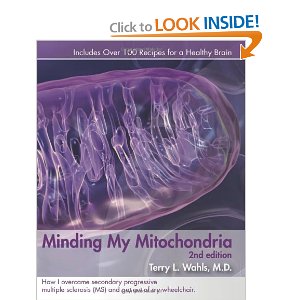
Amazon.com: Minding My Mitochondria 2nd Edition: How I overcame secondary progressive multiple sclerosis (MS) and got out of my wheelchair. Price: $38.00
Book description:
Dr. Terry Wahls links micronutrient starvation to the epidemics of chronic disease that are overtaking modern society. She explains the key roles mitochondria play in maintaining a healthy brain and body. Americans are eating so poorly, something we all know to be true, that the majority of Americans are missing key building blocks that are needed for brain cells to be healthy. The result is an epidemic of depression, aggression, multiple sclerosis and early dementia. She then teaches you how to eat for healthy mitochondria, a healthy brain and a healthy body in language that is clear and concise, even for those without a science background. In this book, Dr. Wahls explains basic brain biology in simple terms. She tells us what vitamin, mineral and essential fat building blocks are needed by the mitochondria and other key structures in the brain. Then she explains what foods are good sources for those key nutrients. Over a hundred recipes are provided to help get you started on this new way of eating. A portion of the proceeds from the sale of this book will be used to fund research into the benefits of these interventions in others.
YouTube Added: Sep 30, 2011
The definitive look into the history of vaccination. From cancer, to autism, to the purposeful sterilization of innocent people around the globe, find out why all of these things are perfectly legal according to U.S. CODE – why the government considers you no different than cattle in their own law.
More information on vaccinations:
– GMO Gardasil DNA Contamination: EMA Steps Up To The Plate, FDA Drops The Ball
– Outrage: 100% Human Papillomavirus (HPV) DNA Contamination In GMO Gardasil Vaccine Reported To FDA
– 3 Girls Dead, Others Hospitalized After Gardasil HPV Vaccine
– 100 Compiled Studies on Vaccine Dangers
Read moreLethal Injection: The Story Of Vaccination (Documentary)

(NaturalNews) Is it true that those who suffer from Multiple sclerosis (MS) just need a little sun? Researchers at the University of Oxford seem to think so. In 2006, a study by the Journal of the American Medical Association suggested higher levels of vitamin D might decrease overall risk of developing MS. Now researchers at the University of Oxford are backing that study with further evidence while also suggesting a link between lack of sunlight and how the body responds when faced with an infection.The research concludes that MS is caused by several factors working in combination but clearly correlates to a lack of vitamin D.
Is it really as simple as soaking up some rays?
Read moreStudy: Multiple Sclerosis (MS) Caused By Vitamin D Deficiency
Vitamin D: The sunshine vitamin
(NaturalNews) The reign of censorship and suppression against vitamin D is now coming to an end. Even though the Institute of Medicine (IOM) and many institutions leading the cancer industry (including the ACS) have intentionally tried to downplay the ability of vitamin D to prevent cancer, a new study appearing in the journal Anticancer Research lays out the simple, powerful truth about vitamin D that we’ve been teaching at NaturalNews for years: A typical adults needs 4,000 – 8,000 IUs of vitamin D each day to prevent cancer, MS and type-1 diabetes, not the ridiculously low 400 – 800 IUs recommended by the U.S. government.
The new research was conducted by scientists at the University of California, San Diego School of Medicine and Creighton University School of Medicine in Omaha. It is groundbreaking research because it establishes the relationship between vitamin D dosage and circulating vitamin D levels in the blood.
This is a first. It is crucial information for the health care revolution that will be necessary to save states and nations from total health care bankruptcy in the coming years. Vitamin D turns out to be one of the simplest, safest and most affordable ways to prevent degenerative disease and sharply reduce long-term health care costs.
Up to 8,000 IUs needed daily
“We found that daily intakes of vitamin D by adults in the range of 4,000 to 8,000 IU [international units] are needed to maintain blood levels of vitamin D metabolites in the range needed to reduce by about half the risk of several diseases — breast cancer, colon cancer, multiple sclerosis and type 1 diabetes,” said Dr. Cedric Garland. (http://health.ucsd.edu/news/2011/02…)
Dr. Garland is the professor of family and preventive medicine at the UC San Diego Moores Cancer Center. He went on to say:
“I was surprised to find that the intakes required to maintain vitamin D status for disease prevention were so high — much higher than the minimal intake of vitamin D of 400 IU/day that was needed to defeat rickets in the 20th century.”