Oct 12
Strauss-Kahn said rich nations had so far failed to restore confidence

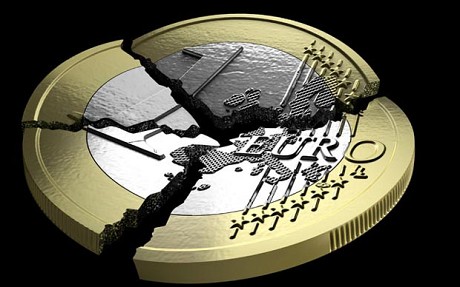
The world financial system is teetering on the “brink of systemic meltdown”, the head of the International Monetary Fund (IMF) has warned in Washington.

Dominique Strauss-Kahn said rich nations had so far failed to restore confidence, but he endorsed a new action plan by the G7 group.

He also said the IMF was ready to lend to countries in dire need of capital.

The 15 eurozone leaders will meet in Paris later to try to establish a common approach to the markets crisis.

French President Nicolas Sarkozy and German Chancellor Angela Merkel said they would present a number of proposals at the summit to ease the credit freeze that has caused the collapse of several leading international banks.

But after meeting in Paris on Saturday, the two leaders said the summit would not result in a joint financial rescue fund for Europe, in the model of a $700bn rescue by the US government.

Continue reading »

Tags: , , , , , , , , , , , , , ,

Oct 11

CNN’s Glenn Beck warns of the New World Order

“There is a global meltdown coming. It is a global depression. And one world currency and one world financial system is the endgame… China said last week they want one global currency. France said yesterday they want one world order - a ‘New World Order’ at the end of this event.”


Added: Oct. 09, 2008

Source: YouTube

Tags: , , , , , , , , , , , ,

Oct 11

Lehman Brothers, the bust investment bank, triggered one of the biggest corporate debt defaults in history yesterday as it emerged that the US Federal Reserve is harbouring grave concerns about whether Washington’s $700 billion (£413 billion) bailout fund will avert a financial meltdown.

An auction of Lehman’s bonds yesterday determined that the bank’s borrowings were worth only 8.625 cents on the dollar. The valuation leaves the insurers of the debt a bill of about $365 billion. It is not clear whether the insurers, which are required to settle the bill in the next two weeks, will be able to pay - a development that could further undermine increasingly stressed capital markets.

The $365 billion default came as stock markets around the world suffered one of their worst days since the crash of 11 years ago. Panicking about the prospect of global recession, the FTSE 100 index of leading shares in London crashed within seconds of opening, losing 8.9 per cent of its value, its worse fall since October 1987.

Continue reading »

Tags: , , , , , , , , , , , ,

Oct 08


A security officer stands outside of the Federal Reserve building in Washington on Sept. 16, 2008. Photographer: Jay Mallin/Bloomberg News

Oct. 8 (Bloomberg) — The Federal Reserve, European Central Bank and four other central banks lowered interest rates in an unprecedented coordinated effort to ease the economic effects of the worst financial crisis since the Great Depression.

The Fed, ECB, Bank of England, Bank of Canada and Sweden’s Riksbank each cut their benchmark rates by half a percentage point. The Bank of Japan, which didn’t participate in the move, said it supported the action. Switzerland also took part. Separately, China’s central bank lowered its key one-year lending rate by 0.27 percentage point.

Today’s decision follows a global meltdown that sent U.S. stock indexes heading for their biggest annual decline since 1937; Japan’s benchmark today had the worst drop in two decades. Policy makers are also aiming to unfreeze credit markets after the premium on the three-month London interbank offered rate over the Fed’s main rate doubled in two weeks to a record. Continue reading »

Tags: , , , , , , , , , , , , , , , , , ,

Oct 04

The French premier, Francois Fillon, today warned that the world was “on the edge of the abyss” as his country moved into an official recession.

Fillon’s comments, blaming an “irresponsible” financial system, came as the Dutch government seized control of bancassurer Fortis’s Netherlands operations in a €16.8bn (£13.06bn) deal greed with the Belgian and Luxembourg authorities.

The effective nationalisation, forced upon the governments by the scale of the financial meltdown, includes Fortis’s interests in Dutch bank ABN Amro.

The shock decision came just days after the three governments injected €11.2bn into Fortis, Belgium’s biggest bank, to keep it afloat.

Continue reading »

Tags: , , , , , , , , , , , , ,

Sep 28

The bailout has already failed, because it cannot not fail. Now nobody will laugh anymore at Ron Paul who predicted all of this chaos a long time ago.

Do you remember this article? Fortis Bank Predicts US Financial Market Meltdown Within Weeks
___________________________________________________________________________

The US stock market could suffer a devastating crash with shares losing a third of their value this week if Hank Paulson’s financial bailout plan fails, US Treasury officials have warned.

The financial system could face a meltdown of 1929 proportions unless US politicians succeed in their efforts for a $700bn rescue scheme, experts added.

The warning came as Republicans and Democrats met in Washington for a rare weekend debating session to attempt to seal agreement on the contentious plan, aimed at preventing a long-lasting recession in the US.

Officials close to Paulson are privately painting a far bleaker portrait of the fragility of the global economy than that advanced by President George W Bush in his televised address last week.

One Republican said that the message from government officials is that “the economy is dropping into the john.” He added: “We could see falls of 3,000 or 4,000 points on the Dow [the New York market that currently trades at around 11,000]. That could happen in just a couple of days.

“What’s being put around behind the scenes is that we’re looking at 1930s stuff. We’re looking at catastrophe, huge, amazing catastrophe. Everybody is extraordinarily scared. It’s going to be really, really nasty.”

Continue reading »

Tags: , , , , , , , , , , ,

Sep 24

WASHINGTON: The FBI is investigating four major U.S. financial institutions whose collapse helped trigger a $700 billion bailout plan by the Bush administration, The Associated Press has learned.

Two law enforcement officials said Tuesday the FBI is looking at potential fraud by mortgage finance giants Fannie Mae and Freddie Mac, and insurer American International Group Inc. Additionally, a senior law enforcement official said Lehman Brothers Holdings Inc. also is under investigation.

The inquiries will focus on the financial institutions and the individuals that ran them, the senior law enforcement official said.

Continue reading »

Tags: , , , , , , , , , , , , , , , ,

Sep 24

“An open, competitive, and liberalized financial market can effectively allocate scarce resources in a manner that promotes stability and prosperity far better than governmental intervention,” Paulson said.

Contemplate that for a moment.
Now add this to your contemplation:

Section 8 of the proposed legislation says it all:
“Decisions by the Secretary pursuant to the authority of this Act are non-reviewable and committed to agency discretion, and may not be reviewed by any court of law or any administrative agency.”
Right; “non-reviewable” supremacy.

Would you trust Mr. Paulson that much???

There are only two possibilities left:
1. Mr. Paulson does not have the foggiest idea what he is talking about.
2. Mr. Paulson is a puppet of the elite and all of this is a  New World (Market) Order conspiracy, which will lead to the the destruction of the Dollar, the destruction of the middle class and the bankruptcy of the US.
___________________________________________________________________________


Henry Paulson, secretary of the U.S. Treasury, gives a speech on Chinese financial markets at the Shanghai Futures Exchange in Shanghai on March 8, 2007. Photographer: Qilai Shen/Bloomberg News

Sept. 24 (Bloomberg) — Eighteen months ago, U.S. Treasury Secretary Henry Paulson told an audience at the Shanghai Futures Exchange that China risked trillions of dollars in lost economic potential unless it freed up its capital markets.

“An open, competitive, and liberalized financial market can effectively allocate scarce resources in a manner that promotes stability and prosperity far better than governmental intervention,” Paulson said.

That advice rings hollow in China as Paulson plans a $700 billion rescue for U.S. financial institutions and the Securities and Exchange Commission bans short sales of insurers, banks and securities firms. Regulators in the fastest-growing major economy say they may ditch plans to introduce derivatives, and some company bosses are rethinking U.S. business models.

“The U.S. financial system was regarded as a model, and we tried our best to copy whatever we could,” said Yu Yongding, a former adviser to China’s central bank. “Suddenly we find our teacher is not that excellent, so the next time when we’re designing our financial system we will use our own mind more.”

The recent moves by Paulson, the former chief executive officer of Goldman Sachs Group Inc., contradict what the U.S. told Asian governments over the past decade. Thailand, South Korea and Indonesia were urged to let unviable banks fail during the 1997-98 Asian financial crisis.

Continue reading »

Tags: , , , , , , , , , ,

Sep 22


Morgan Stanley headquarters in New York

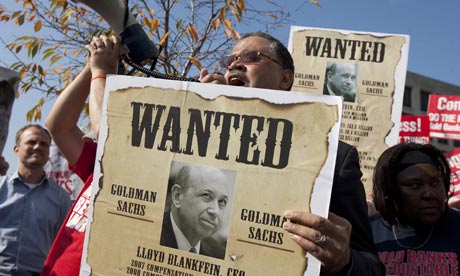
Investment banks Goldman Sachs and Morgan Stanley have been put under Federal control as part of a package aimed at rescuing the US finance system.

The move not only puts the two financial services giants under the direct supervision of bank regulators but also gives the Fed the power to force the banks to raise additional capital.

The US administration wants to prevent the collapse of two of Wall Street’s remaining investment banks after the fall of Lehman Brothers and the government-funded bailouts of Bear Stearns, Merrill Lynch and global insurer AIG.

Continue reading »

Tags: , , , , , , , , , , , , , , , ,

Sep 19

Part I of a three-part series looking at how so-called “credit default swap” derivatives could ignite a worldwide capital markets meltdown.

Are you shell-shocked? Are you wondering what’s really going on in the market? The truth is probably more frightening than even your worst fears. And yet, you won’t hear about it anywhere else because “they” can’t tell you. “They” are the U.S. Federal Reserve and the U.S. Treasury Department, and they can’t tell you what’s really going on because there’s nothing they can do about it, except what they’ve been trying to do - add liquidity.

At the exchange rate yesterday (Wednesday), 35 trillion British Pounds was equivalent to U.S. $62 trillion (hence, the 35 trillion Pound gorilla). According to the International Swaps and Derivatives Association, $62 trillion is the notional value of credit default swaps (CDS) out there, somewhere, in the market.

Continue reading »

Tags: , , , , , , , , , , , , , , , , , ,