Dec 01

The US are broke. The Dow Jones lost 7.7% today. This is going to get much worse.
_________________________________________________________________________


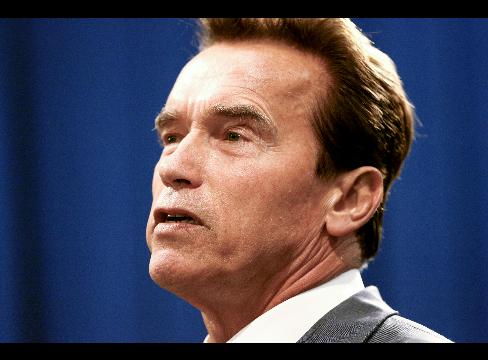
Arnold Schwarzenegger, governor of California, speaks during a news conference in Sacramento, California, on Nov. 6, 2008. Photographer: Ken James/Bloomberg News

Dec. 1 (Bloomberg) — California Governor Arnold Schwarzenegger, saying his state is going broke, declared a fiscal emergency and ordered the incoming class of lawmakers into a special session to fix a widening $11 billion deficit.

Schwarzenegger, a 61-year-old Republican, wants lawmakers to raise taxes and cut spending to narrow the gap that is projected to swell to $28 billion over the next 18 months. He invoked powers granted him in 2004 to declare a fiscal emergency, which gives the Legislature 45 days to plug the shortfall. If they fail to find a solution in that time, they are barred from doing any other legislative work until they do.

“Without immediate action, our state is heading for fiscal disaster,” Schwarzenegger told reporters today in Los Angeles. “I’ve had to make tough choices that I wish I didn’t have to make, and I know this is a terrible time to raise taxes, but it’s also a terrible time to make cuts to very important programs. But in an emergency like this, we have to take quick action to avoid even worse problems, even if they include decisions that we don’t like.”

Continue reading »

Tags: , , , , , ,

Dec 01


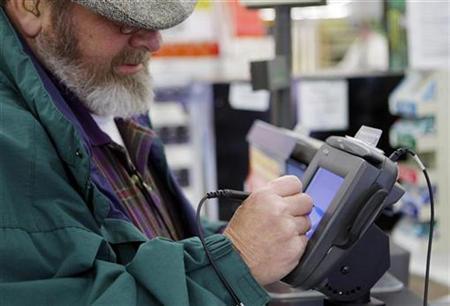
Michael Lipsitz signs his credit card bill for the groceries he purchased at the WalMart in Crossville, Tennessee March 21, 2008. REUTERS/Brian Snyder

(Reuters) - The U.S. credit-card industry may pull back well over $2 trillion of lines over the next 18 months due to risk aversion and regulatory changes, leading to sharp declines in consumer spending, prominent banking analyst Meredith Whitney said.

The credit card is the second key source of consumer liquidity, the first being jobs, the Oppenheimer & Co analyst noted.

“In other words, we expect available consumer liquidity in the form of credit-card lines to decline by 45 percent.”

Bank of America Corp, Citigroup Inc and JPMorgan Chase & Co represent over half of the estimated U.S. card outstandings as of September 30, and each company has discussed reducing card exposure or slowing growth, Whitney said.

Closing millions of accounts, cutting credit lines and raising interest rates are just some of the moves credit card issuers are using to try to inoculate themselves from a tsunami of expected consumer defaults.

Continue reading »

Tags: , , , , , , , ,

Nov 25

Related article: Fed Pledges Top $7.4 Trillion to Ease Frozen Credit


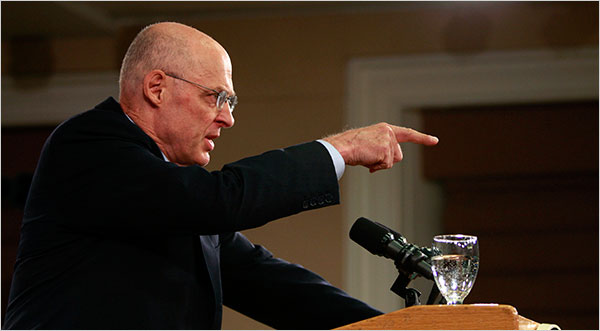
Treasury Secretary Henry M. Paulson Jr. spoke at a news conference at the Treasury Department on Tuesday in Washington.

The federal government unveiled $800 billion in new loans and debt purchases on Tuesday, hoping another infusion of cash can help unfreeze troubled credit markets and make borrowing easier for homebuyers, small businesses and students.

The Federal Reserve said that it would buy up to $600 billion in mortgage-backed assets from the government-sponsored mortgage finance giants Fannie Mae and Freddie Mac. The agency would also buy up to $100 billion in debt directly from the companies and up to $500 billion in mortgage-backed securities.

“This action is being taken to reduce the cost and increase the availability of credit for the purchase of houses, which in turn should support housing markets and foster improved conditions in financial markets more generally,” the Federal Reserve said in a statement.

Separately, the Fed and Treasury Department announced a $200 billion program to ease commercial lending on debts like student loans, car loans or business loans. The Fed would lend up to $200 billion to holders of asset-backed securities supported by car loans, credit card loans, student loans, and business loans guaranteed by the Small Business Administration.

Continue reading »

Tags: , , , , , , , , , , , , ,

Nov 22

The IMF’s chief economist is warning the global financial crisis is set to worsen and the situation will not improve until 2010, a report says.

Olivier Blanchard also warned that the institution does not have the funds to solve every economic problem.

“The worst is yet to come,” Blanchard said in an interview with the Finanz und Wirtschaft newspaper, adding that “a lot of time is needed before the situation becomes normal.”

He said economic growth would not kick in until 2010 and it will take another year before the global financial situation became normal again.

Continue reading »

Tags: , , , ,

Nov 22

  • Market jumps on hopes of new treasury secretary
  • Boost fails to help US banking giant

Wall Street ended a volatile week with renewed confidence last night, after reports that Barack Obama has chosen Timothy Geithner, the head of the New York Federal Reserve, as his treasury secretary.

As speculation mounted over Geithner’s nomination, shares rebounded. The Dow Jones industrial average recorded a 494-point gain on the day as stocks surged by 6.5% to close above the psychologically important 8,000 level at 8046.42. It was still 5% down for the week, however, as worries persist about the global economic slowdown.

Geithner, 47, has always been a favourite to take the top job and his appointment is expected to be announced by the Obama camp in the next 24 hours.

Banking stocks still suffered, though, despite the market’s abrupt recovery.

Citigroup, once the world’s biggest banking group, saw another $5bn (£3.35bn)wiped off its value after an emergency board meeting failed to come up with any initiative to stem the unprecedented flight of investors. Shares fell to $3 after the bank’s chief executive, Vikram Pandit, ruled out selling its retail stockbroking arm, Smith Barney, in an attempt to stop the rout.

Shares in Citigroup have lost more than half their value this week since Pandit announced plans on Monday to sack 52,000 workers. Measures by the bank and its biggest investors to reverse the share price decline, from a level of $54 two years ago, have all failed.

However, a Citigroup source within Pandit’s inner circle, defended the bank last night, saying the sinking share price “has nothing to do with our viability”. The source added that it was of no consequence if the price fell to zero.
(Obviously an expert!…)

“This is all about market perception,” she said, claiming that the market was wrong. “We are the same as everybody else. Our stock price is declining but so is everybody else’s.”
(…and a great observer too!)

Continue reading »

Tags: , , , , , , , , ,

Nov 20


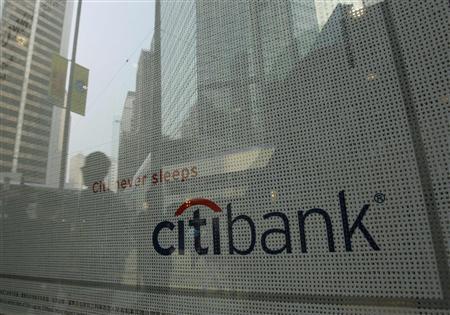
Pedestrians are reflected in the window of a Citibank branch in Hong Kong’s financial Central District November 18, 2008. REUTERS/Bobby Yip

(Reuters) - The U.S. financial system still needs at least $1 trillion to $1.2 trillion of tangible common equity to restore confidence and improve liquidity in the credit markets, Friedman Billings Ramsey analyst Paul Miller said.

Eight financial companies — Citigroup Inc, Morgan Stanley, Goldman Sachs Group Inc, Wells Fargo & Co, JPMorgan Chase & Co, American International Group Inc, Bank of America Corp and GE Financial — are in greatest need of capital, he said.

“Debt or TARP capital is not true capital. Long-term debt financing is not the solution. Only injections of true tangible common equity will solve the current crisis,” he said in a note dated November 19.

Currently, the U.S. financial system has $37 trillion of debt outstanding, he noted.

Combined, these eight companies have roughly $12.2 trillion of assets and only $406 billion of tangible common capital, or just 3.4 percent, the analyst said in his note to clients.

Miller said these institutions need somewhere between $1 trillion and $1.2trillion of capital to put their balance sheets back on solid ground and begin to extend credit again, given their dependence on short-term funding and the illiquid nature of their asset bases.

Continue reading »

Tags: , , , , , , , , , , , , , , ,

Nov 05

Nov. 6 (Bloomberg) — Airbus SAS and Boeing Co. may end up with as many as 200 new planes without buyers next year because airlines are unable to obtain funds to pay for them amid a global credit squeeze, a consultant said.

“There’s a funding gap and we don’t really know where the money is coming from,” Eddy Pieniazek, a director of aviation adviser Ascend, said at a conference in Hong Kong yesterday. “If the money doesn’t arrive, you can quite easily see 200 new aircraft, or whitetails, parked in a desert.”

Airbus and Boeing, the world’s two-biggest airplane makers, will probably deliver about $65 billion of large commercial aircraft next year, according to a report by JPMorgan Securities Inc. Leasing companies and banks, which will account for about 60 percent of the aircraft financing market in 2008, are likely to “pull back substantially,” creating a funding gap as wide as $20 billion, the report said.

“Nobody is getting out of this alive,” said Bill Cumberlidge, director of aviation asset finance at Allco Finance Group, which on Nov. 4 handed over operations to outside managers after warning it may default on its debt. “The debt market is dead.”

“Zero Liquidity”

Continue reading »

Tags: , , , , ,

Oct 28

The International Monetary Fund may soon lack the money to bail out an ever growing list of countries crumbling across Eastern Europe, Latin America, Africa, and parts of Asia, raising concerns that it will have to tap taxpayers in Western countries for a capital infusion or resort to the nuclear option of printing its own money.

IMF's work in countries such as Turkey is only just beginning
IMF’s work in countries such as Turkey is only just beginning

The Fund is already close to committing a quarter of its $200bn (£130bn) reserve chest, with a loans to Iceland ($2bn), Ukraine ($16.5bn), and talks underway with Pakistan ($14.5bn), Hungary ($10bn), as well as Belarus and Serbia.

Neil Schering, emerging market strategist at Capital Economics, said the IMF’s work in the great arc of countries from the Baltic states to Turkey is only just beginning.

“When you tot up the countries across the region with external funding needs, you get to $500bn or $600bn very quickly, and that blows the IMF out of the water. The Fund may soon have to start calling on the West for additional funds,” he said.

Brad Setser, an expert on capital flows at the Council for Foreign Relations, said Russia, Mexico, Brazil and India have together spent $75bn of their reserves defending their currencies this month, and South Korea is grappling with a serious banking crisis.

“Right now the IMF is too small to meet the foreign currency liquidity needs of the larger emerging economies. We’re in a dangerous situation and there is the risk of extreme moves in the markets, as we have seen with the Brazilian real. I hope policy-makers understand how serious this is,” he said.

The IMF, led by Dominique Strauss-Kahn, has the power to raise money on the capital markets by issuing `AAA’ bonds under its own name. It has never resorted to this option, preferring to tap members states for deposits.

The nuclear option is to print money by issuing Special Drawing Rights, in effect acting as if it were the world’s central bank. This was done briefly after the fall of the Soviet Union but has never been used as systematic tool of policy to head off a global financial crisis.

“The IMF can in theory create liquidity like a central bank,” said an informed source. “There are a lot of ideas kicking around.”

Continue reading »

Tags: , , , , , , , , , , , , , , , , , , , , , ,

Oct 10

Stock markets across the world are in a state of hysteria. The tidal wave of sell-offs, which began when Henry Paulson announced the Bush administration’s $700 billion bailout plan for the sinking banking system, has swelled into a global tsunami racing round the globe.

Shares fell sharply across Europe and Asia for the fifth straight day following a 679 drop on the Dow Jones.  Nearly $900 billion was wiped off the value of U.S. equities in just one trading day. The Chicago Board Options Exchange Volatility Index, the “fear index”, soared to a record 64.

Credit markets remain frozen. Libor, the London interbank offered rate, nudged up slightly on Thursday night, signaling even greater resistance to lending between the banks. Until there is relief in the credit markets, stocks will continue to slide. But trust has vanished. The 50 basis points rate cut that was coordinated with foreign central banks has had no effect. The market is being driven by fear and pessimism.

Continue reading »

Tags: , , , , , , , , , , , , , , , , ,

Oct 08

Gordon Brown and Alistair Darling set out a radical £500 billion package today to restore confidence in the UK banking sector and break the crippling logjam in credit markets.

The three-part package includes committing up to £50 billion of taxpayer funds for a partial nationalisation of stricken banks, met from increased public borrowing and with political strings attached that would include reining in executive pay.

In addition, the Bank of England will pump at least £200 billion into the money markets under its existing Special Liquidity Scheme. The Government is also making a further £250 billion available for banks over the next three years to guarantee medium-term debt to help restore confidence and get banks lending to each other again.

Continue reading »

Tags: , , , , , , , , , , ,