– Raytheon’s Laser-Dune-Buggy Blasts Drone-Swarm Out Of The Sky
* * *
PayPal: Donate in USD
PayPal: Donate in EUR
PayPal: Donate in GBP
The man who trades freedom for security does not deserve nor will he ever receive either. – Benjamin Franklin
– China is Building Laser 10 Trillion Times Stronger than the Sun That Could Tear Space:
Chinese scientists are reportedly at work constructing a mega-laser that is so powerful, it could literally tear apart empty space. How can a laser tear apart the absence of matter?
Physicists hailing out of Shanghai, China are building what they refer to as a “Station of Extreme Light,” a device that they claim could be fully functional as early as 2023, about 5 years from now. The Station of Extreme Light appears to be a CERN-level project that could create temperature extremes not typically found on planet Earth. They say the technology it utilizes could one day be used to conduct a particle accelerator similiar to CERN.
Their stated goal is to create a laser so incredibly powerful, it can generate 100-petawatt laser pulses. That is actually 100 million billion watts. For some context, that is 10,000 times the power of the entire Earth’s electrical grids combined. What could even power such a thing?
Read moreChina is Building Laser 10 Trillion Times Stronger than the Sun That Could Tear Space
– Superpowered Chinese Lasers Could Soon Rip Open Raw Vacuum:
Physicists are getting close to building lasers powerful enough to rip matter out of a vacuum.
According to a report published Jan. 24 in the journal Science, a team of Chinese scientists is getting ready to start construction this year on a 100-petawatt laser in Shanghai known as the Station of Extreme Light, or SEL. That puts them at the front of a wide field of scientists around the world who are working to realize a prediction published in the journal Physical Review Letters in 2010 by a team of American and French physicists that a sufficiently powerful laser could cause electrons to appear out of a vacuum.
It might seem weird to imagine that electrons could appear out of empty space. But it makes a lot more sense in light of a strange claim of quantum electrodynamics: “Empty” space isn’t empty at all, but rather is made up of densely packed pairs of matter and antimatter. Those pairs tightly fill up the gaps between everything, quantum electrodynamics states — they just don’t interact in any noticeable way with the rest of the universe, because they cancel one another out. [The 18 Biggest Unsolved Mysteries in Physics]
Read moreSuperpowered Chinese Lasers Could Soon Rip Open Raw Vacuum

The extremely intense X-ray flash knocks so many electrons out of the iodine atom (right) such that it pulls in the electrons of the methyl group (left) like an elecetromagnetic version of a black hole, before finally spitting them out.
– The world’s most powerful X-ray laser beam creates ‘molecular black hole’:
When scientists at the Department of Energy’s SLAC National Accelerator Laboratory focused the full intensity of the world’s most powerful X-ray laser on a small molecule, they got a surprise: A single laser pulse stripped all but a few electrons out of the molecule’s biggest atom from the inside out, leaving a void that started pulling in electrons from the rest of the molecule, like a black hole gobbling a spiraling disk of matter.
Read moreThe world’s most powerful X-ray laser beam creates ‘molecular black hole’
– US Navy To Begin Testing Powerful 150-Kilowatt Laser Weapon System:
It’s always good advice to be preparing for the future, especially in the case of the United States military as the US continuously provokes other nations.
As Popular Science reported back in 2014, the US Navy had developed a 30-kilowatt laser and mounted it on the USS Ponce, which was stationed in the Persian Gulf at the time. The laser was part of the US Navy’s new Laser Weapon System (LaWS) program, and with a videogame-like controller it had been successfully tested.
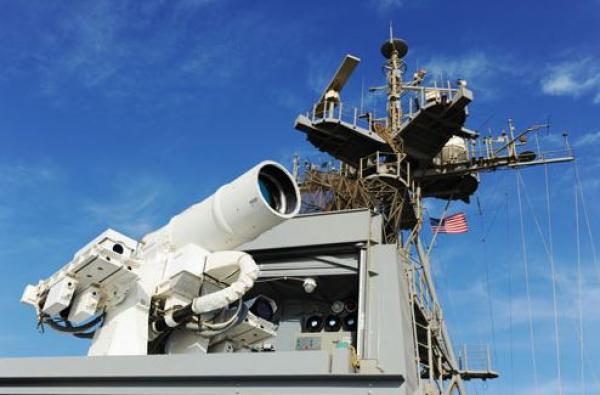
In this video, the laser will engage and destroy multiple targets including a drone in mid-air.
* * *
“Laser weapons are powerful, affordable and will play a vital role in the future of naval combat operations. We ran this particular weapon, a prototype, through some extremely tough paces, and it locked on and destroyed the targets we designated with near-instantaneous lethality.” Rear Adm. Matthew L. Klunder said at the time.
Read moreUS Navy To Begin Testing Powerful 150-Kilowatt Laser Weapon System
Over the past few weeks, a new piece of equipment has been spotted hanging off the NYSE primary microwave tower. Here it is…

– Meanwhile, Over At The “New York” Stock Exchange… Lasers (ZeroHedge, March 1, 2015):
The last time we looked at the most important tower in the world, about 4 months ago, it looked as follows:
Read moreMeanwhile, Over At The ‘New York’ Stock Exchange … LASERS
– US Navy deploys laser weapon to Persian Gulf for first-ever combat mission (RT, Nov 15, 2014):
The US Navy has deployed its first ever combat laser. The futuristic weapon has boosted the arsenal of the Fifth Fleet’s command vessel in the Persian Gulf. The laser is said to be effective against numerous small targets, such as Iran’s gunboats.
A 30-kilowatt-class Laser Weapon System has been equipped on the USS Ponce amphibious transport ship since late August, Navy officials told Bloomberg.
Read moreUS Navy Deploys Laser Weapon To Persian Gulf For First-Ever Combat Mission
– Army’s New Laser Cannon Blasts Drones Out of the Sky, Even in Fog (Wired, Sep 5, 2014):
Boeing is building a laser cannon for the U.S. Army, and the new weapon has now proved it will be as capable at sea as on land. The High Energy Laser Mobile Demonstrator (HEL MD)—basically a high-energy laser mounted on top of a big truck—was successfully used to blast some UAV drones and 60mm mortars out of the Florida sky earlier this year, Boeing announced Thursday.
Read moreArmy’s New Laser Cannon Blasts Drones Out of the Sky, Even in Fog
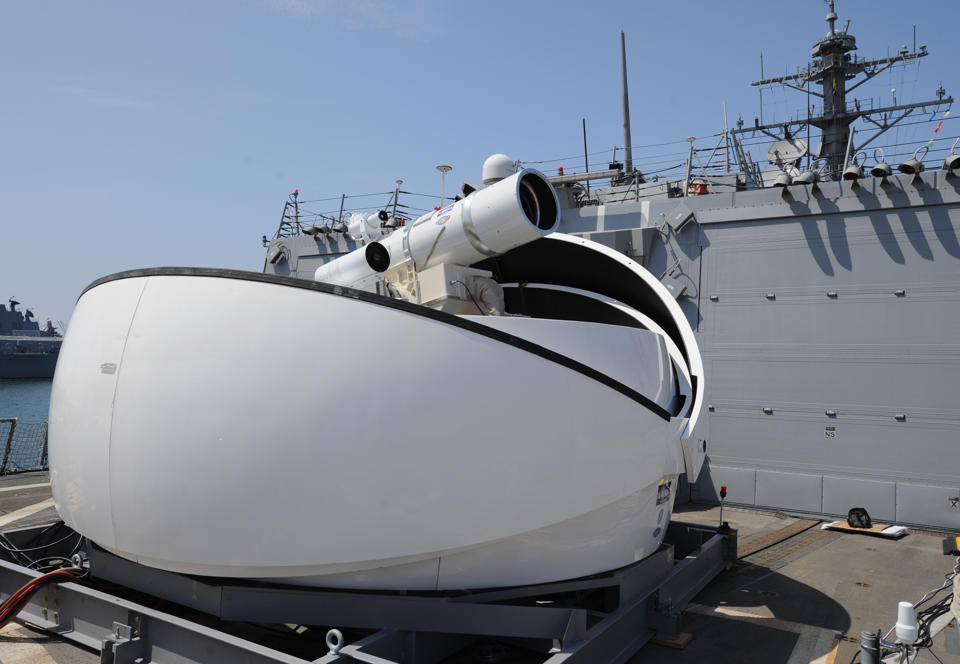
– ‘Star Wars’ at sea: Navy ready to deploy laser system this summer (AP, Feb 17, 2014):
Some of the Navy’s futuristic weapons sound like something out of “Star Wars,” with lasers designed to shoot down aerial drones and electric guns that fire projectiles at hypersonic speeds.
That future is now.
The Navy plans to deploy its first laser on a ship later this year, and it intends to test an electromagnetic rail gun prototype aboard a vessel within two years.
Read more‘Star Wars’ At Sea: US Navy Ready To Deploy Laser System This Summer
Start watching from 03:50 into the video.
For my German speaking readers: The translation is terrible, but still better than nothing.
Related info:
I’ve been told in 1999 that cancer cells turn within 48h back into normal cells after being treated shortly with a laser. A certain frequency (wavelength) has to be used to achieve this result.
Back then I didn’t know if this info could be possibly true or not.
– World’s Most Powerful Laser Beams to Zap Nuclear Waste (Bloomberg, Oct 26, 2012):
The European Union will spend about 700 million euros ($900 million) to build the world’s most powerful lasers, technology that could destroy nuclear waste and provide new cancer treatments.
The Extreme Light Infrastructure project has obtained funding for two lasers to be built in the Czech Republic and Romania, Shirin Wheeler, spokeswoman for the European Commission on regional policy, said in a phone interview. A third research center will be in Hungary.
The lasers are 10 times more powerful than any yet built and will be strong enough to create subatomic particles in a vacuum, similar to conditions that may have followed the start of the universe. Eventually, the power of the light beams could be used to deteriorate the radioactivity of nuclear waste in just a few seconds and target cancerous tumors, the projects’s Romanian coordinator Nicolae-Victor Zamfir said in an interview.
Read moreWorld’s Most Powerful Laser Beams To Zap Nuclear Waste And Provide New Cancer Treatments
– Navy’s Top Geek Says Laser Arsenal Is Just Two Years Away (Wired, Oct 23, 2012):
Never mind looming defense cuts or residual technical challenges. The Navy’s chief futurist is pushing up the anticipated date for when sailors can expect to use laser weapons on the decks of their ships, and raising expectations for robotic submarines.
“On directed energy” — the term for the Navy’s laser cannons, “I’d say two years,” Rear Adm. Matthew Klunder, the chief of the Office of Naval Research, told Danger Room in a Monday interview. The previous estimate, which came from Klunder’s laser technicians earlier this year, was that it will take four years at the earliest for a laser gun to come aboard.
“We’re well past physics,” Klunder said, echoing a mantra for the Office of Naval Research’s laser specialists. Now, the questions surrounding a weapon once thought to be purely science fiction sound almost pedestrian. “We’re just going through the integration efforts,” Klunder continued. “Hopefully, that tells you we’re well mature, and we’re ready to put these on naval ships.”
Read moreU.S. Navy’s Top Geek: Laser Arsenal Is Just Two Years Away
How many people are on food stamps in the US and can’t feed themselves anymore?
What could be more important than a new stealth bomber???
The Air Force’s new stealth bomber might do more than just drop bombs, top generals said in recent days. The so-called “Long-Range Strike” plane — likely to be designated B-3 — could also carry bunker-busting, rocket-boosted munitions, high-powered lasers for self-defense and datalinks, and consoles for controlling radar-evading drones.
These add-ons, described by Air Force generals Philip Breedlove, William Fraser and David Scott, are meant to make the new bomber more lethal and harder to shoot down, even in the face of rapidly-modernizing air defenses such as China’s. “The purpose of this aircraft is to survive in an Anti-Access Area Denial environment,”Scott said, using the latest Pentagon term for defended airspace.
To that end, the bomber’s lasers might zap incoming missiles and fighters; the drones could fly ahead to scout and disable air-defense radars; the bunker-busters should ensure the bomber can actually destroy the enemy’s facilities once it breaks through the defenses.
With just $3.7 billion budgeted over the next five years to develop the bomber, lasers, bunker-busters, and drone-controls might seem unaffordable. And risky, considering the Air Force has said it must stick with “proven” technologies to keep the new bomber on-budget.
Read moreNew Air Force Stealth Bomber Could Control Drones, Fire Lasers, Bust Bunkers
Non-lethal: The Assault Intervention Device emits invisible laser-like beam to trigger a brief burning sensation and is set to be installed at a detention centre
It looks like something out of a video game, but this monstrous machine could come in very handy for breaking up prison fights.
The Assault Intervention Device (AID) emits an invisible laser-like beam to trigger a brief but painful burning sensation and has been touted as a new type of Taser gun.
Officials plan to set up the machine in a detention centre dormitory in Castaic, California, although it has not yet been given the green light by its federal sponsor.
The AID was first unveiled last summer, but its federal backers – the National Institute of Justice (NIJ) – have decided to review the project further before moving forward.
Non-lethal weapons such as ‘pain rays’ and Tasers are controversial and human rights groups fear they can be misused and may even be fatal on vulnerable people.
Read moreCalifornia Prison To Use New ‘Burning Laser Beam’ On Inmates

Targeted: Protesters use a laser pen to track a riot police officer during violent protests in Keratea, Greece, where locals are opposing a planned rubbish tip

Dazzling: The officers are caught in the beam as they attempt to protect the town’s police station

Explosive situation: A petrol bomb is thrown at riot police, who responded with tear gas

Defiant: A protester walks among the burning barricades
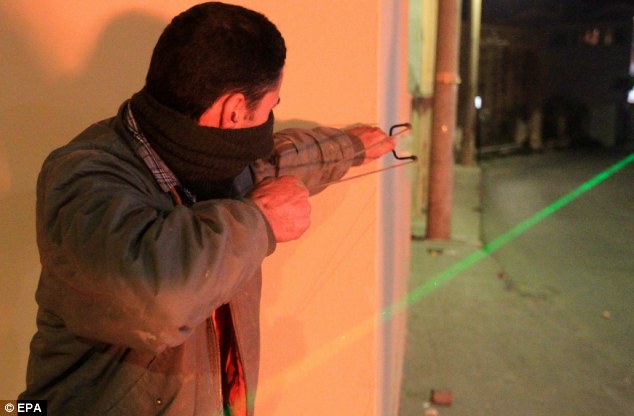
Laser-guided: A protester uses a beam to help aim his catapult
It looked like a scene from a science fiction film featuring forces of the future in an apocalyptic battle zone.
But these images were captured during a riot in Keratea, Greece, where residents opposing a decision to establish a new landfill rubbish tip nearby took to the streets.
They used laser pens to dazzle riot police officers and then attacked them with catapults, stones and petrol bombs.
Three people were arrested and two officers injured during the violent clashes which began when people in a crowd attacked the town’s police station.
They were objecting to the detention of a local man suspected of involvement in previous clashes.
Police responded with tear gas.
Residents of the town, 25 miles south east of the capital Athens, have clashed repeatedly over the past two months with riot police guarding the site of the planned rubbish dump.
By Daily Mail Reporter
Last updated at 11:46 AM on 9th February 2011
Source: Daily Mail
Several months ago I hosted a GitHub meetup in Boston to which tons of local geeks attended and drank free beer. During that meeting, I talked to a local graduate student in biophysics at Harvard named Andrew Leifer who told me that he loved GitHub and was in fact using it to collaborate on a program that accomplished mind control. with lasers. on worms.
Well, it turns out that I had not in fact been drinking too much and the project is real. Andrew’s research is called CoLBeRT: Controlling Locomotion and Behavior in Real-Time and works by running real-time analysis on video of a 1mm long specially bred light-sensitive C. elegans worm. The CoLBeRT system tracks the worm as it moves and shines laser light on specific neurons as the worm is moving to stimulate or inhibit those neurons.
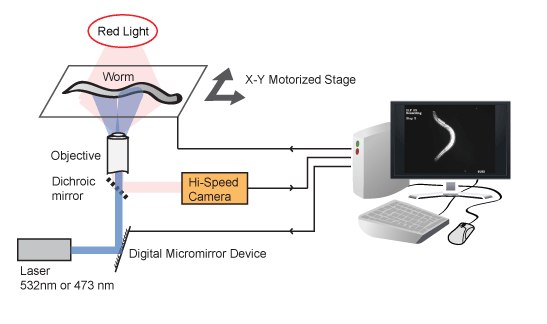
The system can make the worm paralyzed, lay eggs, back up, speed up or sense touch in different areas of its body, all by directing laser light into specific neurons. That’s right, I said lay eggs. Check out this kick-ass laser:
If you aimed that at me, I’d probably lay eggs too.
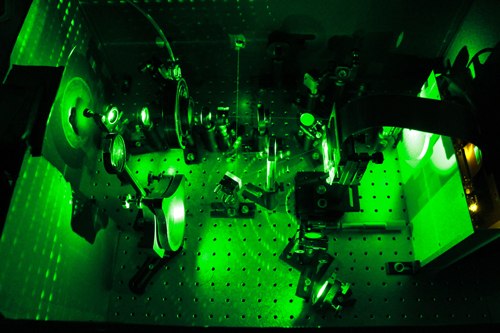
Andrew’s research has recently been published in Nature Methods and covered in Science News and Scientific American and true to his word the source code for laser worm mind control is on GitHub, aptly named MindControl, and is open source.
Related info:
– Scientists Move Objects 5 Feet Using Tractor Lasers
– Laser beams used for the first time in naval warfare to shoot down planes
– US Air Force Zaps Drones in Laser Test
– Pentagon’s portable ‘thermal laser’ pain weapon may end up in police hands
– Military Laser Hits Battlefield Strength
– Boeing: We zapped a UAV with a laser

British engineers are developing a new type of defence system that uses lasers to incapacitate pirates by dazzling them
British engineers are developing a new type of defence system that uses lasers to incapacitate pirates by dazzling them as they approach a ship.
The non-lethal weapon, which has been developed by defence company BAE Systems, is effective against moving targets more than a mile away.
The company has started developing the laser in response to the growing threat from pirates to commercial vessels, particularly off the coast of Somalia where there have been several high profile hijackings.
Ramesh Raskar explains how the camera can shoot around corners
A camera that can shoot around corners has been developed by US scientists.
The prototype uses an ultra-short high-intensity burst of laser light to illuminate a scene.
The device constructs a basic image of its surroundings – including objects hidden around the corner – by collecting the tiny amounts of light that bounce around the scene.
The Massachusetts Institute of Technology team believe it has uses in search and rescue and robot vision.
“It’s like having X-ray vision without the X-rays,” said Professor Ramesh Raskar, head of the Camera Culture group at the MIT Media Lab and one of the team behind the system.
Read moreUS Scientists Develop Laser Camera That Takes Photos Around Corners
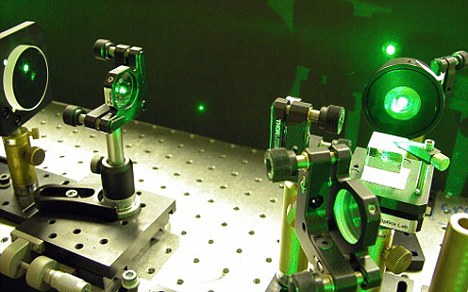
Breakthrough: The machine used to create the tractor beam which brought the art of molecular transportation closer
Scientists have invented a tractor beam which is able to move large objects longer distances than ever before by using a laser light.
A team of researchers at the Australian National University in Canberra have brought the art of molecular transportation, made famous by the catchphrase ‘Beam me up, Scotty’ from the TV series Star Trek, a fraction closer.
Using what they call tractor beams – rays of energy that can move objects – they have managed to move tiny particles up to 59 inches from one place to another.
While physicists have been able to manipulate tiny particles over minuscule distances by using lasers for years, Andrei Rhode, one of the Canberra researchers, says his team’s technique can move objects one hundred times that size over a distance of almost five feet.
The method involves shining a hollow laser beam around tiny glass particles which heats up the air around them.
Read moreScientists Move Objects 5 Feet Using Tractor Lasers
The film about war crimes using microwave weapons to neutralize and kill political activists and whistleblowers.
The author has interviewed 200 targets who have been turned into human guinea pigs to perfect electromagnetic weapons and the science of behavior modification. ( 2hrs and 15 minutes.)
The weapon, mounted on a warship’s missile, shot down four unmanned aerial vehicles (UAV) in secret testing carried out off the California coast, The Daily Telegraph has learnt.
In a joint enterprise between US Navy and Raytheon Missile Systems the technology has now got to the stage where lasers will be deployed on warships as part of their short-range defence.
For the first time a ‘solid state’ 32 mega watt laser beam of directed energy has been fired from a warship to a distance of more than two miles burning into a drone travelling at about 300mph.
The laser is mounted on a Phalanx close in weapons system that has a radar detection system. The targeting system was used in Iraq, to train fire from a Gatling onto rockets and mortars raining down on British bases.
Raytheon developed the system after buying six off-the-shelf commercial lasers from the car industry and joining them to make a single, powerful beam guided by the Phalanx’s radars. Unlike other tests which have been conducted on aircraft it uses a solid state laser rather than a chemical generated beam.
Mike Booen, vice president of Directed Energy Weapons at Raytheon, said the tests off San Nicolas Island were “a great day for the laser”.
“This is more real than Star Wars,” he said, speaking at the Farnborough Air Show. “Our lasers destroyed the UAVs lighting them on fire.
“This is the first successful shoot down over water. We are now on the path to deliver the first battlefield lasers integrated into real weapons systems.
Read moreLaser beams used for the first time in naval warfare to shoot down planes
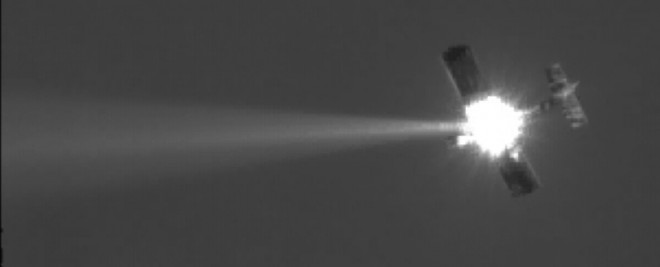
In a recent series of tests at the Naval Air Warfare Center, China Lake, Calif., a trailer-mounted laser was able to knock five unmanned aircraft out of the sky.
The demo, sponsored by the Air Force Research Laboratory, was a test of the Mobile Active Targeting Resource for Integrated eXperiments (MATRIX), an experimental system developed by Boeing Directed Energy Systems. According to a company news release, the test showed the ability to take down a hostile unmanned aircraft with a “relatively low laser power” weapon. According to AFRL, MATRIX uses a two and a half kilowatt-class high energy laser.
While ballistic missile defense may get all of the press, some homeland-security experts worry about a more low-tech threat: drone technology. Bill Baker, chief scientist of the Air Force Research Laboratory’s Directed Energy Directorate, said in a statement that the shootdowns “validate the use of directed energy to negate potential hostile threats against the homeland.”
It’s not clear, exactly, how the lasers shot down the drones: Whether they disrupted the aircraft controls, or burned a big hole in them. (An AFRL news release said the drones were “acquired, tracked and negated at significant ranges” but offered few additional details.)
