Dec 31

‘Hellhouse’ of personal data will be created, warns former DPP

The private sector will be asked to manage and run a communications database that will keep track of everyone’s calls, emails, texts and internet use under a key option contained in a consultation paper to be published next month by Jacqui Smith, the home secretary.

A cabinet decision to put the management of the multibillion pound database of all UK communications traffic into private hands would be accompanied by tougher legal safeguards to guarantee against leaks and accidental data losses.

But in his strongest criticism yet of the superdatabase, Sir Ken Macdonald, the former director of public prosecutions, who has firsthand experience of working with intelligence and law enforcement agencies, told the Guardian such assurances would prove worthless in the long run and warned it would prove a “hellhouse” of personal private information.

“Authorisations for access might be written into statute. The most senior ministers and officials might be designated as scrutineers. But none of this means anything,” said Macdonald. “All history tells us that reassurances like these are worthless in the long run. In the first security crisis the locks would loosen.”

Continue reading »

Tags: , , , , , , , , ,

Dec 06
  • Retention of unconvicted citizens’ samples criticised
  • Home secretary promises report on how to comply


The judges said DNA profiles could be used to identify relationships which amounted to an interference with their right to respect for their private lives. Photograph: Science photo library

The fingerprints and DNA samples of more than 857,000 innocent citizens who have been arrested or charged but never convicted of a criminal offence now face deletion from the national DNA database after a landmark ruling by the European court of human rights in Strasbourg.

In one of their most strongly worded judgments in recent years, the unanimous ruling from the 17 judges, including a British judge, Nicolas Bratza, condemned the “blanket and indiscriminate” nature of the powers given to the police in England, Wales and Northern Ireland to retain the DNA samples and fingerprints of suspects who have been released or cleared.

The judges were highly critical of the fact that the DNA samples could be retained without time limit and regardless of the seriousness of the offence, or the age of the suspect.

The court said there was a particular risk that innocent people would be stigmatised because they were being treated in the same way as convicted criminals. The judges added that the fact DNA profiles could be used to identify family relationships between individuals, meant its indefinite retention also amounted to an interference with their right to respect for their private lives under the human rights convention.

The case provoked an expression of disappointment from the home secretary, Jacqui Smith, and the promise that a working party, including senior police officials, will report back to Strasbourg by next March on how the government will comply with the judgment.

“The government mounted a robust defence before the court and I strongly believe DNA and fingerprints play an invaluable role in fighting crime and bringing people to justice. The existing law will remain in place while we carefully consider the judgment.”

Continue reading »

Tags: , , , , , , , , , , ,

Nov 23

Jacqui Smith, the home secretary, is to arm police with 10,000 Taser stun guns in an escalation of the government’s fight against violent crime.

Smith will unveil plans tomorrow that will enable all 30,000 front-line response officers to be trained in firing the electric guns at knife-wielding thugs and other violent suspects.

Smith said yesterday that £8m will be made available to all 43 police forces in England and Wales to buy the new 50,000-volt weapons.

She said their use will be extended from small units of dedicated firearms officers to up to 30,000 police response officers across the country.

Continue reading »

Tags: , , , , , , , ,

Nov 18


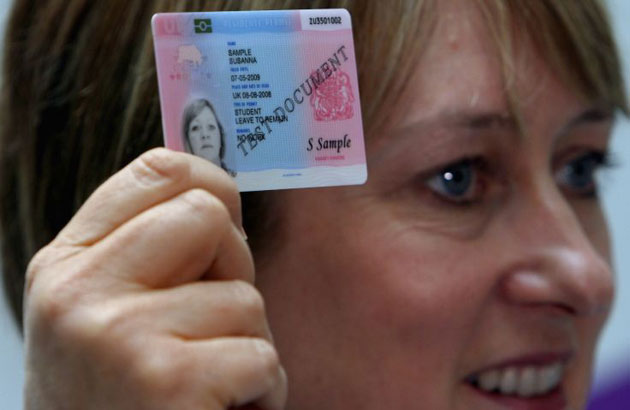
The Home Secretary Jacqui Smith insists the cards will improve security

The first wave of ID cards to be issued to British citizens has prompted airline pilots to threaten a strike rather than accept the documents.

Aviation workers have warned that proposals to make airport staff register for the cards from next year would do little to improve security. The British Airline Pilots Association (Balpa), which represents 10,000 of the 12,000 commercial pilots and flight engineers in Britain, said its members were being treated as “guinea pigs”. Jim McAuslan, Balpa’s general secretary, said the Government’s “early warning system should be flashing” over opposition to the plans.

The Home Office insists the scheme will help airport workers improve security and streamline pass applications when staff move jobs. Ministers will publish draft regulations on Friday to set up a trial requiring airside staff at Manchester airport and London City airport to sign up for an ID card before they can get security passes allowing them to work there. If the regulations are approved, the first ID cards will be issued at the two airports from autumn next year as part of an 18-month trial.

Under the proposals, airport workers will be the first British citizens to be given ID cards, which are due to be introduced for young people from 2010.

Continue reading »

Tags: , , , , , ,

Oct 21

Centuries of British civil liberties risk being broken by the relentless pressure from the ‘security state’, the country’s top prosecutor has warned.

Outgoing Director of Public Prosecutions Sir Ken Macdonald warned that the expansion of technology by the state into everyday life could create a world future generations “can’t bear”.

In his wide-ranging speech, Sir Ken appeared to condemn a series of key Government policies, attacking terrorism proposals - including 42 day detention - identity card plans and the “paraphernalia of paranoia”.

Instead, he said, the Government should insist that “our rights are priceless” and that: “The best way to face down those threats is to strengthen our institutions rather than to degrade them.”

The intervention will be seen as a significant setback to Home Secretary Jacqui Smith who last week saw her plans to lock up terror suspects for 42 days before being charged thrown out by the House of Lords.

It is also a blow to Miss Smith’s plans for a super-database to record the details of millions of people’s online presence, including emails, SMS messages and Facebook profiles as well as the controversial identity card programme.

Sir Ken chose to issue his tough warning about the perils of the “Big Brother” state in his final speech as DPP, days before he leaves his post at the end of this month.

He warned that MPs should “take very great care to imagine the world we are creating before we build it. We might end up living with something we can’t bear”.

Sir Ken, who has held the post for the past five years, said: “We need to take very great care not to fall into a way of life in which freedom’s back is broken by the relentless pressure of a security State.

“Technology gives the State enormous powers of access to knowledge and information about each of us, and the ability to collect and store it at will.”

Continue reading »

Tags: , , , , , , , , , , , , , , , , , , ,

Oct 16

Labour MPs join opposition parties in attack on Home Secretary’s ‘Orwellian’ plans

Jacqui Smith faces a parliamentary backlash over “Orwellian” plans to intercept details of email, internet, telephone and other data records of every person in Britain. Labour MPs joined opposition parties in expressing doubts about plans announced by the Home Secretary which could lead to a vast database of information about Britons’ calls and internet habits.

They warned that MPs, emboldened by the Government’s decision to ditch plans to hold terrorist suspects for up to 42 days without charge, would not accept this extension of state power.

The scale of the Government’s ambitions to hold data on email, internet and phone use emerged as government sources made it clear they needed new powers to obtain details of social networking sites on the internet, video sites, web-based telephone calls and even online computer games.

Continue reading »

Tags: , , , , , , , , , ,

Sep 01

Ministers are bracing themselves for a rise in violent crime and burglaries and a shift to far-right extremism as the effects of the economic downturn take their toll, a leaked Home Office report to the Prime Minister says.

In a series of warnings, the Home Secretary, Jacqui Smith, says that Britain also faces a “significant increase” in alcohol and tobacco smuggling, hostility towards migrants and even a potential rise in the number of people joining terrorist groups.

Continue reading »

Tags: , , , , , , , , ,

Jun 05

Police should stop routine surveillance of reporters and photographers covering demonstrations in London, the National Union of Journalists has told Home Secretary Jacqui Smith.

NUJ general secretary Jeremy Dear made the call in a letter to Smith after receiving complaints that journalists, particularly photographers, were facing what amounted to harassment by members of the Metropolitan Police Forward Intelligence Team (FIT).

Dear said the NUJ had serious concerns about the FIT’s activities in monitoring and recording the activities of bona fide journalists, especially photographers.

“A number of members have alleged that the police’s surveillance action amounts to virtual harassment and is a serious threat to their right to carry out their lawful employment,” he said. Continue reading »

Tags: , , , , ,

May 23

Schools are being told today to monitor possible gang members by examining pupils’ computer accounts and taking photographs of graffiti “tags”.

New guidelines say teachers must intervene to stop pupils - including primary children - from joining gangs.

They emerged as the Government also announced sweeping new measures to combat gang violence in a bid to halt the wave of stabbings and shootings on Britain’s streets.
Gang kids


Threat: The new guidelines are released amid fears that gang members are getting younger. (Picture posed by models)

Teachers are being told to gather proof about gang membership from computers and evidence such as photographs, it is claimed.

The guidelines advise them to look out for tell-tale signs of gang membership such as the wearing of certain colours, jewellery or clothing - including weapon-proof clothes - or the drawing of graffiti “tags” in books and on walls, according to a report in The Guardian newspaper.

The guidelines - which supplement previous advice on searching pupils for weapons and dealing with bullying and drug-taking - also provide emergency advice on what to do if gang violence breaks out.

Continue reading »

Tags: , , , , , , , ,

Apr 21

Routine journeys carried out by millions of British motorists can be monitored by authorities in the United States and other enforcement agencies across the world under anti-terrorism rules introduced discreetly by Jacqui Smith.

The discovery that images of cars captured on road-side cameras, and “personal data” derived from them, including number plates, can be sent overseas, has angered MPs and civil liberties groups concerned by the increasing use of “Big Brother” surveillance tactics.
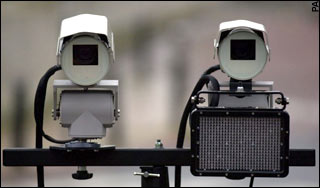

Images captured by road-side cameras will be made available to foreign authorities
Images of private cars, as well as registration numbers, could be sent outside to countries such as the USA

Yesterday, politicians and civil liberties groups accused the Home Secretary of keeping the plans to export pictures secret from Parliament when she announced last year that British anti-terrorism police could access “real time” images from cameras used in the running of London’s congestion charge.

A statement by Miss Smith to Parliament on July 17, 2007, detailing the exemptions for police from the 1998 Data Protection Act, did not mention other changes that would permit material to be sent outside the European Economic Area (EEA) to the authorities in the US and elsewhere.

Her permission to do so was hidden away in an earlier “special certificate” signed by the Home Secretary on July 4.

The certificate specifically sets out the level of data that can be sent to enforcement authorities outside the European Economic Area (the EU plus Iceland, Liechtenstein and Norway) by anti-terrorist officers from the Metropolitan Police. It says:

“The certificate relates to the processing of the images taken by the camera, personal data derived from the images, including vehicle registration mark, date, time and camera location.”
advertisement

A spokesman for Richard Thomas, the information commissioner, confirmed that the certificate had been worded so that the images of private cars, as well as registration numbers, could be sent outside to countries such as the USA.

Officers from the Metropolitan Police have been given the right to view in “real time” any CCTV images from cameras that are meant to be enforcing the congestion charge.

Sources said that officers would access the cameras on behalf of overseas authorities if they were informed about a terrorism threat in the UK or elsewhere. They would then share the images, which can be held for five years before being destroyed, if necessary.

Last night, Nick Clegg, the Liberal Democrat leader, said: “This confirms that this Government is happy to hand over potentially huge amounts of information on British citizens under the catch-all pretext of ‘national security’.”

Civil liberties campaigners said they were appalled that images of innocent people’s journeys could end up in the hands of the British police, let alone foreign investigators.

They feared that it was a move towards the US-style system of “data mining” - in which powerful computers sifted millions of pieces of information as they tried to build patterns of behaviour and match them to material about suspects.

Gus Hosein, who runs Privacy International, said he was making a complaint to the information commissioner having obtained a copy of the certificate.

However, the Home Office defended the powers in the certificate, which was signed specifically for the purposes of counter terrorism and national security.

A spokesman declined to say how many times images had been sent from London to other countries.

However, he added: “We would like to reassure the public that robust controls have been put in place to control and safeguard access to, and use of, the information.”

By Toby Helm and Christopher Hope
Last Updated: 3:06am BST 21/04/2008

Source: Telegraph

Tags: , , , , , , ,