Dec 03

Vatican clergy and employees will be issued with an identity card complete with a microchip-tracking device in sweeping new security measures designed to prevent a repeat of the Vatileaks scandal.

- Vatican introduces new security measures after Vatileaks scandal (Telegraph, Dec 2, 2012):

Much tighter controls have already been introduced for anyone seeking access or photocopies of the Holy See’s archives, dossiers and documents.

The Papal Apartments, which include the living quarters of Pope Benedict XVI and the offices of his personal staff inside the Apostolic Palace, are totally off limits to anyone without strict authorisation.

Slovenian priest, Mitja Leskovar, an anti-espionage expert nicknamed ‘Monsignor 007′, is in charge of implementing the new security procedures with the identity cards expected to be introduced from January 1.

Continue reading »

Tags: , , , , , , , ,

Nov 22

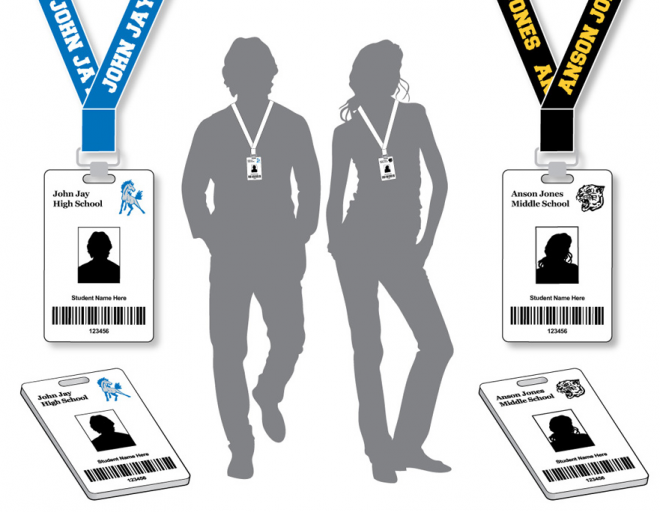
Student body ID cards with RFID-embedded chips. Image: Northside Independent School District

- Student Suspended for Refusing to Wear a School-Issued RFID Tracker (Wired, Nov 21, 2012):

2:30 p.m. PST UPDATE: A local Texas judge on Wednesday tentatively blocked the suspension, pending further hearings next week.

A Texas high school student is being suspended for refusing to wear a student ID card implanted with a radio-frequency identification chip.

Northside Independent School District in San Antonio began issuing the RFID-chip-laden student-body cards when the semester began in the fall. The ID badge has a bar code associated with a student’s Social Security number, and the RFID chip monitors pupils’ movements on campus, from when they arrive until when they leave.

Radio-frequency identification devices are a daily part of the electronic age — found in passports, and library and payment cards. Eventually they’re expected to replace bar-code labels on consumer goods. Now schools across the nation are slowly adopting them as well.

The suspended student, sophomore Andrea Hernandez, was notified by the Northside Independent School District in San Antonio that she won’t be able to continue attending John Jay High School unless she wears the badge around her neck, which she has been refusing to do. The district said the girl, who objects on privacy and religious grounds, beginning Monday would have to attend another high school in the district that does not yet employ the RFID tags.

Continue reading »

Tags: , , , , , , , , , , ,

Oct 10

- Big Brother Invades Our Classrooms (Salon, Oct 8, 2012):

Schools across the country are adopting frightening new methods to monitor their students in school and out

The digital tracking and surveillance of school-aged kids has been growing.

Much attention has been given to the phenomenon of corporate tracking of kids’ online activities, activities that violate the Children’s Online Privacy Protection Act (COPPA).  The law, originally adopted in 1998, requires Web sites aimed at kids to get parental consent befoSre gathering information about those users who are under 13 years.  Many companies, including a Disney subsidiary, have violated it. Corporate marketing interests, most notably Facebook, are fighting proposed revisions to COPPA.

A second front in the tracking of young people has gotten far less attention. Schools across the country are adopting a variety of different tools to monitor students both in school and outside school. Among these tools are RFID (Radio Frequency Identification) tags embedded in school ID cards, GPS tracking software in computers, and even CCTV video camera systems. According to school authorities, these tools are being adopted not to simply increase security, but to prevent truancy, cut down on theft and even improve students’ eating habits.

* * *

The RFID tag system popularly known as “Tag and Track” is being sold to schools system across the country by a variety of vendors, including AIM Truancy Solutions, ID Card Group and DataCard.

In general, these systems consist of a school photo ID card affixed to a lanyard that is worn around the student’s neck. The ID has a RFID chip embedded in it. The tag includes a digit number assigned to each student. As a student enters the school or pass beneath a doorway equipped with an RFID reader, the tag ID is read, recorded and sent to a server in the school’s administrative office. The captured data not only provides an attendance list (sent to the teacher’s PDA), but tracks the student’s movement throughout the day. Continue reading »

Tags: , , , , , , , , , , , , , , , , , , , , ,

Oct 04

- National ‘virtual ID card’ scheme set for launch (Is there anything that could possibly go wrong?) (Independent, Oct 4, 2012):

Central online identity scheme ‘will be a target for criminals’

The Government will announce details this month of a controversial national identity scheme which will allow people to use their mobile phones and social media profiles as official identification documents for accessing public services.

People wishing to apply for services ranging from tax credits to fishing licences and passports will be asked to choose from a list of familiar online log-ins, including those they already use on social media sites, banks, and large retailers such as supermarkets, to prove their identity.

Once they have logged in correctly by computer or mobile phone, the site will send a message to the government agency authenticating that user’s identity.

The Cabinet Office is understood to have held discussions with the Post Office, high street banks, mobile phone companies and technology giants ranging from Facebook and Microsoft to Google, PayPal and BT.

Ministers are anxious that the identity programme is not denounced as a “Big Brother” national ID card by the back door, which is why data will not be kept centrally by any government department. Indeed, it is hoped the Identity Assurance Programme, which is being led by the Cabinet Office, will mean the end to any prospect of a physical national ID card being introduced in the UK.

Continue reading »

Tags: , , , , , , , , , , , ,

Sep 27


YouTube Added: 25.09.2011

Tags: , , , , , , , , , , ,

Apr 07

The head of INTERPOL has emphasized the need for a globally verifiable electronic identity card (e-ID) system for migrant workers at an international forum on citizen ID projects, e-passports, and border control management.

Speaking at the fourth Annual EMEA ID WORLD summit, INTERPOL Secretary General Ronald K. Noble said that regulating migration levels and managing borders presented security challenges for countries and for the world that INTERPOL was ideally-placed to help address.

Continue reading »

Tags: , , , , , , , ,

Mar 09

Hmmh.


Tags: , , , , , , , , , ,

Jan 30


For all those conspiracy theorists out there, 2012 just got a little more ominous. As required by legislation passed this last summer, Russia will adopt a universal ID card starting next year. The Universal Electronic Card (UEC) is intended to eventually replace all local, regional, and national forms of ID, providing a central database through which Russians can access everything from medical insurance to ATMs. According to the official website, the UEC will be adopted by around 1000 national and regional services along with about 10,000 commercial enterprises. The mayor of Moscow has already declared it will be able to handle public transportation there, and we can expect similar adoptions throughout the nation. Will all Russians be carrying a single form of ID that is their only passport to all public and private services? Looks like it. A similar project has started in India, and there are experiments for related concepts in Mexico. Universal ID is starting to catch on around the globe. Where will it spread to next?

Ostensibly, the UEC is designed to push the Russian ID system into the 21st century. Not only is the card to provide a way for citizens to easily make electronic purchases (in person and online) it is supposed to cut down on fraud. While it doesn’t seem to include any biometrics, the card has other security measures. All information (whether for public or commercial use) will be stored in a database, not on the card. The UEC will have a number, a ‘passcode’, that points the user to the appropriate record in the database. It’s unclear what kind of readers (RF, magnetic strip, etc) will be able to access the UEC, but the site says that at least one (perhaps the only one ) will be contactless. For financial transactions users will be able to set predefined limits so that the card can only withdraw a restricted amount of funds over a period of time. Each use of the UEC will require the entry of a personal identification number, and get this, everyone will be granted a fake PIN as well! If someone is coercing you into using your UEC, then enter the fake PIN. Authorities will be notified surreptitiously while the transaction appears to be continuing regularly. I’m sure we can think of a dozen ways to get around that, but still, pretty cloak and dagger there, Russia.


Examples of how the UEC will work. Translations welcome.

Starting in 2012, Russians will be able to carry the UEC and start connecting it to their bank accounts, credit cards, bus passes, etc. Due to the legal mandate most of the businesses and all of the local/regional/national services will be required to accept it. Convenient, yes. Potentially disastrous? Maybe so, but Russia’s not going to be alone in this. India is adopting a universal ID for national identity, and is going to encourage public institutions and commercial enterprises to accept it. That UID, however, will contain some pretty thorough biometrics. Programs in Mexico (powered by a company in the US) will experiment with iris-based identification for public and commercial purposes, albeit on a smaller scale. Universal ID, especially those with advanced security features, seem to be a rising trend on the global stage.

Continue reading »

Tags: , , , , , , , , ,

Jan 23

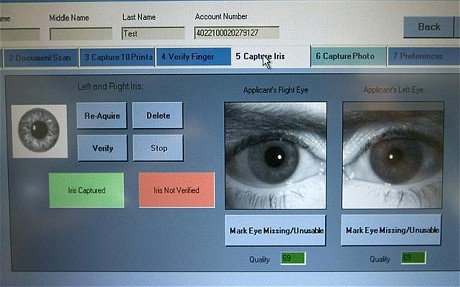
Mexico will on Monday become the first country to start using iris scans for identity cards, according to the government.


Iris recognition is increasingly used in airports, controlling access to restricted areas, and prisoner booking and release Photo: GETTY

The documents, which will include the eye’s image as well as fingerprints, a photo and signature, will be 99 per cent reliable, according to Felipe Zamora, who is responsible for legal affairs at the Mexican interior ministry.

“The legal, technical and financial conditions are ready to start the process of issuing this identity document,” Felipe Zamora, responsible for legal affairs at the Mexican Interior Ministry, told journalists Thursday.

Critics, including the National Human Rights Commission, have criticised the system, expressing concern that compiling personal data could violate individual rights.

The move will be introduced gradually, with some 28 million minors taking part in a first two-year stage, due to cost $25 million (£15.6 million).

Continue reading »

Tags: , , , , , , , , , , , ,

Sep 24

army-reveals-afghan-biometric-id-plan

Scanning prisoners’ irises is just Step 1. In Afghanistan, local and NATO forces are amassing biometric dossiers on hundreds of thousands of cops, crooks, soldiers, insurgents and ordinary citizens. And now, with NATO’s backing, the Kabul government is putting together a plan to issue biometrically backed identification cards to 1.65 million Afghans by next May.

The idea is to hinder militant movement around the country, and to keep Taliban infiltrators out of the army, NATO Training Mission-Afghanistan commander Lt. Gen. William Caldwell tells Danger Room. “The system allows the Afghans to thoroughly screen applicants and recruits for any potential negative past history or criminal linkages, while at the same time it provides an additional measure of security at checkpoints and major facilities to prevent possible entrance and access by malign actors in Afghanistan,” Caldwell e-mails.

It’s a high-tech upgrade to a classic counterinsurgency move – simultaneously taking a census of the population, culling security forces of double agents and cutting off guerrilla routes. (Plus, bombs and weapons can be swabbed for fingerprints to build files on insurgent suspects.) Gen. David Petraeus, now commander of the Afghan war effort, relied heavily on biometrics during his time in command of U.S. forces in Iraq.

Twenty to 25 Afghans a week are currently caught in the biometric sweep, military officials estimate. That number could grow significantly in the months to come. The “population registration division” of Afghanistan’s Ministry of Interior is “embarking on a program to develop, print and distribute biometrically enabled national ID cards,” e-mails Col. Craig Osbourne, the director of NATO’s Task Force Biometrics.

Continue reading »

Tags: , , , , , , , , , ,