Iowa State University researcher, Dr. Dong-Pyou Han, resigned after news broke of an investigation into the validity of his AIDS research. Han is believed to have tampered with research results for a possible AIDS vaccine.
“At Iowa State’s request, the research samples in question were examined by researchers at another university; they confirmed samples had been spiked,” ISU spokesman John McCarroll wrote in an email to the Des Moines Register. “He later admitted responsibility and resigned from Iowa State, effective Oct. 4, 2013.”
Case study: countries’ experiences of financial crisis – Greece
Suicides rose by 17% between 2007 and 2009 and to 25% in 2010, according to unofficial 2010 data (398). The Minister of Health reported a further 40% rise in the first half of 2011 compared with the same period in 2010. Suicide attempts have also increased, particularly among people reporting economic distress (610). Homicide and theft rates have doubled. HIV rates and heroin use have risen significantly, with about half of new HIV infections being self-inflicted to enable people to receive benefits of €700 per month and faster admission on to drug-substitution programmes. Prostitution has also risen, probably as a response to economic hardship. Health care access has declined as hospital budgets have been cut by about 40% (398) and it is estimated that 26 000 public health workers (9100 doctors) will lose their jobs (611). Further cuts are expected as a result of recent negotiations with the IMF and European Central Bank.
But the cure is not profitable and therefor worthless in the eyes of Big Pharma and its western medicine circus.
There are so many cures for cancer out there. Basically you only have to change your diet and any cancer starts to heal within two weeks as the body is getting more alkaline because the body is getting healthy food.
I have posted many articles and videos on how to heal cancer.
Doctors have successfully used a disabled version of HIV to modify a 7-year-old leukemia patient’s white blood cells to attack her cancer. The breakthrough procedure could potentially replace bone marrow transplant as a leukemia treatment.
Emma Whitehead was selected as a patient for the experimental technique after two years of battling with acute lymphoblastic leukemia, the New York Times reported. Chemotherapy failed to either cure the disease or result in a period of remission long enough for a bone marrow transplant.
The process was previously tested only on adult patients. In April, Whitehead became the first child to undergo the treatment, her medical team revealed during an annual meeting of the American Society of Hematology in Atlanta last weekend. She was also the first patient to be treated for her kind of leukemia.
Doctors from the University of Pennsylvania and the Children’s Hospital of Philadelphia manipulated Whitehead’s immune system to make it target cancer cells. They took a batch of her own T cells – a kind of white blood cell – and genetically engineered them to kill the B cells – another kind of white blood cell – responsible for her disease.
To do this, the doctors used a modified and disabled form of HIV, the virus responsible for AIDS, to alter the T cells’ genes, making them produce a protein called a chimeric antigen receptor on their surface. This artificial protein matches another protein encountered only on the surface of B cells. The alteration allows T cells to attach to B cells, and destroy them. The genetically engineered T cells were then injected back into Whitehead’s blood, where they could reproduce on their own.
The “War on Terror” is a complete fabrication. There is no terrorism other than what the government creates in order to sell its agenda of a police state takeover. Click here to read Paul Craig Roberts’ article that lays this out in brilliant detail.
The CDC’s war on West Nile virus is also a complete fabrication. There is no real West Nile virus threat. (Read article here.) The odds of being killed by West Nile are, much like with “terrorism,” even lower than the odds of being killed by a bee sting.
The “economic recovery” of America is a fairy tale. Over the last few days, the federal debt reached a jaw-dropping $16 trillion — nearly $5 trillion of that debt has been incurred under one person: President Obama. Unemployment is at record highs. Half the population is on federal aid of one form or another. Food stamp costs have skyrocketed.
“Obamacare” is a fiasco. Dubbed the “Affordable Care Act,” in reality health insurance costs have vastly increased after the passage of this ill-conceived law.
Bin Laden wasn’t killed by U.S. Navy Seals. The war is a fake. The news is faked. The media is completely, utterly faked, running totally fictional stories. CNN is actually an elaborate theater operation, faking sets, locations, sound effects and everything else you can imagine. Don’t believe me? Watch this totally faked CNN broadcast from the Gulf War, featuring “journalist” Charles Jaco: http://tv.naturalnews.com/v.asp?v=B55147E2052701412A47A9F2C9DA754C
The whole thing is so hilarious it’s almost an SNL skit! At one point, a fake air raid siren sounds off, indicating a biological weapons attack (total fear mongering on CNN), and one of the guests in the fake studio frantically straps on a HELMET! Yeah, because helmets are the defense of choice against biological attacks, it seems. See if you can actually watch this CNN video and not laugh out loud…
An Army sergeant who was falsely accused of being HIV positive, and who spent 240 days in pretrial custody as a result, has officially been acquitted of the charges levied against him. Thanks to the efforts of the Office of Medical and Scientific Justice (OMSJ), a private investigative agency that focuses on medical and scientific fraud, Sgt. “TD,” who was arrested in 2011 for HIV-related criminal charges, has been vindicated of his HIV-positive status, which has also caused the legitimacy of HIV tests to once again be called into question.
The savage cuts to Greece’s health service budget have led to a sharp rise in HIV/Aids and malaria in the beleaguered nation, said a leading aid organisation on Thursday.
The incidence of HIV/Aids among intravenous drug users in central Athens soared by 1,250% in the first 10 months of 2011 compared with the same period the previous year, according to the head of Médecins sans Frontières Greece, while malaria is becoming endemic in the south for the first time since the rule of the colonels, which ended in the 1970s.
A Centers for Disease Control and Prevention official was arrested Sunday and charged with two counts of child molestation and bestiality for sexual acts involving a 6-year-old boy.
According to a DeKalb County criminal warrant obtained Sunday, Kimberly Quinlan Lindsey’s boyfriend, Thomas Westerman, was also arrested on two counts of child molestation. Westerman works for the CDC as a night watchman, his LinkedIn profile states. The pair, who live together in Decatur, surrendered to authorities Sunday afternoon, said DeKalb police spokeswoman Pamela Kunz.
In this interview Dr. Maurice Hilleman reveals some astounding revelations. He admits that Merck drug company vaccines (Polio) had been deliberately contaminated with SV40, a cancer-causing monkey virus from 1953 – 63.
For years, researchers suggested that millions of vials of polio vaccine, contaminated with SV40, infected individuals which caused human tumors, and by 1999, molecular evidence of SV40 infections were showing up in children born after 1982. Some experts now suggest the virus may have remained in the polio vaccine until as late as 1999.
In 2002, the journal Lancet published compelling evidence that contaminated polio vaccine was responsible for up to half of the 55,000 non-Hodgkin’s lymphoma cases that were occurring each year. And there is the likelihood that there was an importing and spreading of the AIDS virus in the same manner, as revealed in the video.
At first no one could fathom how the virus had been transmitted into the human population, but this shocking video proves that it was deliberately added to the vaccine by Dr. Maurice Hilleman, which was “good science” at that time.
Just Who is Dr. Maurice Hilleman?
Now, for those of you who may think Dr. Hilleman was just another crackpot (he passed away in 2005), think again. He was, and still is, the leading vaccine pioneer in the history of vaccines. He developed more than three dozen vaccines—more than any other scientist in history—and was the developer of Merck’s vaccine program.
He was a member of the U.S. National Academy of Science, the Institute of Medicine, the American Academy of Arts and Sciences, and the American Philosophical Society, and received a special lifetime achievement award from the World Health Organization.
The world’s leading authority on vaccines admitted that the HIV virus was introduced to humans through the creation of vaccines using HIV-infected monkeys from Africa.
Dr. Maurice Hilleman also acknowledged that the SV40 virus, which causes cancer, is contained in vaccines.
Some researchers believe this is responsible for the dramatic rise in cancer.
(Drug companies claim that the SV40 virus has been removed, but there are sources who say otherwise.)
While Dr. Hilleman was the senior vaccine scientist at Merck, he personally discovered the presence of the cancer-causing virus in Merck’s vaccines, as well as the HIV virus in monkeys, however the company knowingly injected millions of people with both.
Dr. Hilleman has since died, but his testimony lives on in this interview.
Many people have heard that HIV came from monkeys in Africa, but they don’t know how.
Some vaccines are grown on monkey kidneys. As you’ll hear in this video, when it was discovered that the African green monkeys were contaminated with the (as yet unknown) HIV virus, their kidneys were used to make vaccines anyhow, despite believing that the virus would be harmful.
As a result, millions of people worldwide have now been given the HIV virus through vaccines.
Bayer Sells AIDS-Infected Drug Banned in U.S. in Europe, Asia – Unearthed documents show that the drug company Bayer sold millions of dollars worth of an injectable blood-clotting medicine — Factor VIII concentrate, intended for hemophiliacs — to Asian, Latin American, and some European countries in the mid-1980s, although they knew that it was tainted with AIDS.
Bayer knew about the fact that the drug was tainted and told the FDA to keep things under wraps while they made a profit off of a drug that infected its patients. If these allegations are true, then both Bayer and the FDA are at fault for this catastrophe.
FDA regulators helped to keep the continued sales hidden, asking the company that the problem be ”quietly solved without alerting the Congress, the medical community and the public,” according to the minutes of a 1985 meeting.
China is depriving poor countries of badly-needed cash to fight Aids, malaria and tuberculosis by exploiting a loophole to drain an aid fund, a former official has complained.
The global fund was set up for rich countries to pool their donations in the fight against three of the world’s deadliest diseases Photo: ALAMY
Despite its $2.4 trillion of foreign reserves, China is the fourth-largest recipient of aid money, worth $1 billion (£640 million), from the Global Fund to Fight Aids, Tuberculosis and Malaria, behind Ethiopia, India and Tanzania.
The fund was set up eight years ago for rich countries to pool their donations in the fight against three of the world’s deadliest diseases. “We imagined the bulk of the money ending up in places like Lesotho, Haiti and Uganda, where these three diseases have reached crisis levels,” said Jack Chow, the lead US negotiator in the founding of the fund, to Foreign Policy magazine.
Instead, he said, China had systematically exploited the set-up of the fund in order to win more aid grants than 29 African countries. “China has aggressively pursued Global Fund grants and has continued to win significant amounts with every passing year,” he said, adding: “Any grants that China wins reduce the remaining money available for all eligible countries.”
Despite recently becoming the world’s second-largest economy, and announcing more than $125 billion in new health spending for the countryside last year, China still receives three times as much to fight Aids and malaria than South Africa, one of the worst-afflicted countries.
“China has won malaria grant money totalling $149 million in a country where only 38 deaths from the illness were reported last year,” said Mr Chow. “That is more money than the Democratic Republic of Congo, which reported nearly 25,000 malaria deaths in the same period.”
Former Milwaukee Archbishop Rembert Weakland routinely shredded copies of weekly reports about sexual abuse by priests, according to formerly sealed testimony turned over to Milwaukee County’s district attorney on Thursday.
I know people that know how to get ‘Stage IV’ HIV/AIDS patients back to life.
Within weeks you see great improvements and within several months the patients get back to their normal weight.
All symptoms and signs of illness disappear and they test negative, which doesn’t mean a damn thing as we all know.
This is not an easy task to say the least and often times those people that are considered to be ‘beyond treatment’ don’t have any money left, which means that you treat them almost for free.
I know that for more than 12 years now. It’s about time for this documentary to show up in the cinemas.
You may say that can’t be true, but I know what happened to health practitioners that went public 12 years ago with hundreds of documented cases of cured HIV/AIDS patients.
They’ve got a visit from SWAT teams. All of their research has been confiscated and destroyed.
(NaturalNews) Brent Leung’s myth-shattering AIDS documentary, House of Numbers continues to roil conventional AIDS propagandists who cannot tolerate anyone questioning their “scientific” theories. (They’re not exactly “scientific” if they can’t stand up to a little questioning, are they?)
Adding to the searing-hot debate, Brent Leung has released exclusive interview footage to NaturalNews that calls into question conventional thinking about so-called “AIDS tests” (which don’t accurately detect HIV infections in the first place).
Here’s part of the exchange that takes place in this footage, in which Dr. Constantine tells filmmaker Brent Leung that the AIDS test he took is meaningless:
“I’m gonna ask you one last question that pertains to my HIV test that I took in Africa,” Brent Leung says.
“And you want this on air?” asks Dr. Constantine.
Brent answers, “Yes. I tested negative. It’s okay.”
“Now what if I tell you that the test you took was lousy and doesn’t mean a thing, does that make any difference for everybody to hear?” replies Dr. Constantine.
Also in this clip, Leung interviews Dr. Robin Weiss who reveals the failure of the so-called “Western Blot” test, which remains the mainstay “AIDS test” to this day.
“I don’t think the Western Blot is a useful diagnostic test, “says Dr. Weiss. “I don’t think it’s worth doing. Western Blots have been … promoted into some sort of Holy Grail.”
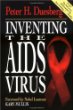
Duesberg (Molecular biology/Univ. of Calif., Berkeley), an early researcher in the field of retroviruses, asserts that HIV, like virtually all retroviruses, is harmless.
He finds that HIV meets none of the usual criteria (such as the six laws of virology) used to establish that a microbe causes disease. But if that is so, why do scientists persist in saying that AIDS is an epidemic caused by HIV?
As Duesberg tells it, the federal Centers for Disease Control and Prevention needed a serious epidemic to justify its continued existence, and by naming AIDS a single contagious disease, it created an atmosphere of public fear that brought it increased funding and power.
(Click on image to enlarge.)
(NaturalNews) Canadian filmmaker Brent Leung isn’t winning any friends in the pharmaceutical industry these days. His breakthrough documentary “House of Numbers” features jaw-dropping interviews with doctors, researchers and even the co-discoverer of HIV himself (Luc Montagnier), all of whom reveal startling information calling into question the “official” explanation of HIV and AIDS.
Trailers from ‘House of Numbers’:
– Nobel Laureate Montagnier: HIV Can Be Cleared Naturally – House of Numbers:
Professor Luc Montagnier, 2009 Nobel Laureate for the discovery of HIV, reveals his views on the treatment of HIV and its relationship to nutrition and profit with House of Numbers documentary Director, Brent Leung.
– The shocking truth about HIV and AIDS (trailer for House of Numbers film):
Because of the game-changing statements heard from numerous health authorities in this film, it threatens the very foundations of the HIV / AIDS industry. Pharmaceutical companies are fronting a specific mythology about AIDS that maximizes their profits from AIDS drugs and (failed) vaccines, but that mythology is about to be dismantled when House of Numbers is released in theaters nationwide over the next few months.
This could be the documentary that shatters Big Pharma’s false paradigms about HIV and AIDS.
The AIDS testing hoax
In the film, Brent Leung subjects himself to an HIV test and discovers that a “diagnosis” of being HIV positive has more to do with the answers you provide to lifestyle questions than any specific microbe appearing in your blood. The diagnosis of AIDS — as well as the very definition — is also apparently so wishy-washy that increasing numbers of well-trained scientists are now questioning whether AIDS exists at all.
“The presently available data does not prove the existence of HIV,” says one health expert interviewed for the film. Another expert says, “The more diseases they could lump into these AIDS categories, the more patients they could catch.”
“I think HIV totally has turned out not to be the cause of AIDS. HIV has turned out not to be!” says another interviewee.
“We can be exposed to HIV many times without being … infected,” says Dr Luc Montagnier, the Nobel prize-winning virologist credited with the co-discovery of HIV. “Our immune system creates [antibodies] within a few weeks, if you have a good immune system.”
The documentary film exposes the sharp contradictions in current scientific opinion about HIV / AIDS. “As I started questioning scientists and delving further into testing protocols and statistical modeling and science, I began to see a lot of the contradictions that they had amongst themselves,” said filmmaker Brent Leung. “One of the things that became apparent to me is how important it is to question everything that we’re told and not automatically accept any fact as truth.”
One bizarre thing the film exposes is the ever-shifting definition of “AIDS.” In the United States, the official definition has been rewritten three times, and definitions vary widely around the world. AIDS isn’t simply the presence of the HIV virus; it’s a fictitious disease label that’s attached to a list of symptoms that continues to expand as the drug companies attempt to ensnare yet more victims into the AIDS label trap.
The experts sound off
House of Numbers is not a “fringe” film featuring dissenting opinions from conspiracy theorists. Rather, it is a lucid, intelligent collection of conversations with some of the world’s top virologists and Nobel prize-winning scientists, including former experts from the CDC, the WHO and UNAIDS. Many are speaking out against the conventional AIDS mythology for the first time on camera. Those interviewed for the film include Dr. Robert Gallo, Dr. Luc Montagnier, Dr. Michael Gottlieb, Dr. Joe Sonnabend, Dr. Kary Mullis, James Curran, Dr. Peter Piot, Dr. James Chin, Dr. Peter Duesberg and many others.
The film has already received “Best Documentary” and other awards from the many film festivals where it has been featured. Momentum is building for the film, and mainstream distribution looks like a healthy possibility for 2010.
– Coconut Oil Against HIV & Aids (Natural News): Scientists in the Philippines researched the effects of coconut oil and lauric acid on patients with the HIV virus that causes Aids.The results were amazing. Most of the Aids patients showed a dramatic drop in the HIV virus count, in some cases to “undetectable” levels.
Scientists have made a breakthrough in understanding how HIV spreads through the human body after filming the process for the first time ever.
Researchers found that the virus is transferred from infected cells to healthy ones in a previously unknown way.
It is hoped that the discovery will help researchers create a vaccine to combat the virus, which has led to the deaths of more than 25 million people.
The study was made possible after experts created a molecular clone of infectious HIV and inserted a protein into its genetic code which glows green when exposed to blue light.
This allowed scientists to see the cells on digital video, and capture the way HIV-infected T-cells interact with uninfected ones.
They noted that when an infected cell came into contact with a healthy one, a bridge was created between them, called a virological synapse.
Researchers were then able to observe the fluorescent green viral particles moving towards the synapse and into the healthy cell.
(NaturalNews) Research indicates, animal fats have long chain saturated fat, while coconut oil contains healthy, healing, medium chain triglycerides (MCTs). This saturated fat is considered a rare and important building block of every cell in the human body, and can actually reduce cholesterol and heart disease.
This incredible food boosts immunity, kills bacteria and viruses, protects against cancer and other degenerative diseases, and prevents osteoporosis by promoting calcium absorption. It also slows down ageing and is good for skin radiance.
Weight Loss from Coconut Oil/Butter
American farmers attempted to plump up their cattle by feeding them coconut oil. Instead of gaining weight, their cows lost weight!
This is because:
1. The long-chain fats nearly always go to fat storage, while the MCFAs (medium chain fatty acids) are burned for energy… which is why you feel great after eating this coconut super food.
2. Coconut oil helps to stimulate the metabolism, so you burn more calories each day, which helps with weight loss and energy levels.
Coconut Oil/Butter is Packed with Lauric Acid
Coconut oil, like human breast milk, is rich in lauric acid, which boosts immunity and destroys harmful bacteria and viruses. In fact, coconut oil is one of the closest foods on the planet to breast milk.
Scientists in the Philippines researched the effects of coconut oil and lauric acid on patients with the HIV virus that causes Aids. The results were amazing. Most of the Aids patients showed a dramatic drop in the HIV virus count, in some cases to “undetectable” levels. While there needs to be a lot more research, there is certainly evidence to suggest that people with this virus would benefit from having a diet rich in coconut.
Preventive use of drugs raises human rights issues
Intervention with anti-Aids drugs before symptoms appear could reduce HIV rates to under 1% in 50 years, a study claims. Photograph: Adrees Latif/Reuters
A radical new strategy to stop the Aids epidemic in its tracks was proposed yesterday by World Health Organisation scientists but ran into immediate controversy over its implications for human rights.
The plan involves testing everybody for HIV every year in hard-hit areas like sub-Saharan Africa and immediately putting those who are positive on Aids drugs. It could slash dramatically the number of new infections, because Aids drugs lower the levels of virus in the body, making HIV transmission through unprotected sex much less likely.
But the strategy, expounded in a paper published online today by the Lancet medical journal, raises major issues both over implementation and over ethics.
Currently people who are HIV positive are not put on treatment until they need it, because of the toxicity and side-effects of antiretroviral drugs. It raises the prospect of subjecting people to potential medical harm for the public good, rather than their individual benefit. “We wouldn’t do that in the UK,” said John Howson of the International HIV/Aids Alliance. “These are huge issues.”
(NaturalNews) Herbs from the Lamiaceae family, also known as the mint family have been shown to drastically reduce the infectivity of HIV-1 virions, single infective viral particles. A research team from the University of Heidelberg has found that extracts of lemon balm, sage and peppermint work rapidly to produce their effects in amounts that display no toxicity. The extracts were seen to enhance the density of the virions prior to their surface engagement. They also displayed a strong activity against herpes simplex virus type 2.
The researchers examined water extracts from the leaves of lemon balm, sage and peppermint for their potency to inhibit infection by HIV-1. They found that the extracts exhibited a high and concentration-dependent activity against the infection of HIV-1 in T-cell lines, primary macrophages, and in ex vivo tonsil histocultures. This effect was produced at extract concentrations as low as 0.004% without affect to cell viability.
Doctors in Berlin are reporting that they cured a man of AIDS by giving him transplanted blood stem cells from a person naturally resistant to the virus.
But while the case has novel medical implications, experts say it will be of little immediate use in treating AIDS. Top American researchers called the treatment unthinkable for the millions infected in Africa and impractical even for insured patients in top research hospitals.
“It’s very nice, and it’s not even surprising,” said Dr. Anthony S. Fauci, director of the National Institute of Allergy and Infectious Diseases. “But it’s just off the table of practicality.”
The patient, a 42-year-old American resident in Germany, also has leukemia, which justified the high risk of a stem-cell transplant. Such transplants require wiping out a patient’s immune system, including bone marrow, with radiation and drugs; 10 to 30 percent of those getting them die.
“Frankly, I’d rather take the medicine,” said Dr. Robert C. Gallo, director of the Institute of Human Virology at the University of Maryland School of Medicine, referring to antiretroviral drugs.
CHINA: Clampdown on activists who expose surveillance through new technology
“WE HAVEN’T seen you before. Which media are you from?” a middle-aged woman asked a tall man operating a video camera outside a Beijing court.
“I’m from an independent newspaper,” the videographer replied with a slight smile on his face. The woman and her friend, who were queueing to take documents into the court, chuckled after hearing a statement that they all knew was false. “He’s police,” one of the women said a few minutes later.
The exchange outside the Beijing No.1 Intermediate People’s Court was a rare moment of levity in the normally serious, sometimes violent business of monitoring and controlling rights activists, dissidents, independent religious leaders, separatists and others deemed a threat to China’s state security.
The plain-clothes police officer was taking footage of petitioners, journalists, lawyers and supporters of dissident Hu Jia, who was sentenced that day in April to three and a half years in prison for subversion. “Surveillance is both overt and insidious,” said Phelim Kine, a Hong Kong-based researcher for Human Rights Watch. Overt surveillance in China is used “both to intimidate, and as a lesson to the neighbours”, Kine said.
Hu won the EU’s Sakharov Prize for Freedom of Thought last month. He and fellow activist Gao Zhisheng were also nominated for this year’s Nobel Peace Prize. Hu, 35, is the most prominent of a growing number of activists who have tried to reflect the intense glare of state surveillance back at those trying to monitor and control them.
The activists’ photographs, video, transcripts and diaries, usually distributed via the internet, have given outsiders rare glimpses into surveillance and abuses of power by China’s vast public security network. China tolerates some local activism but it confronts those who begin to operate at a national or international level. The relatively few national-level activists who have mastered the use of the internet and digital technology like Hu and his wife, Zeng Jinyan, are “desperately outnumbered” by the people watching them, Kine said.
“It tells you that those people like Hu Jia, who do master the technology and get the message out, are prey to retribution,” Kine. “What you see in China is that anyone who reaches a certain level of prominence, those people face serious consequences,” he said.
Report on HIV incidence in the U.S.
By CDC
Sep 12, 2008 – 8:05:27 AM
Subpopulation Estimates from the HIV Incidence Surveillance System — United States, 2006
CDC has created an HIV incidence surveillance system in selected areas of the United States as a component of its national human immunodeficiency virus/acquired immunodeficiency syndrome (HIV/AIDS) reporting system ( 1).
(NaturalNews) An HIV-positive homeless man has been sentenced to 35 years in prison for “harassing a public servant with a deadly weapon” by spitting at a police officer.
According to the prosecutors, police responded to a call that 42-year-old Willie Campbell was passed out in front of a Dallas building in May 2006. Police tried to arrest Campbell for public intoxication, and he became agitated. He allegedly kicked and spat at several police officers, telling them that he had HIV.
A friend who had been in military intelligence many years ago told me that he heard the following on the news yesterday:
According to the IEC (Independent Electoral Commission), 1 million voters “disappeared” from the voters rolls in the period 2004-2006.
Then he saw a news item about new statistics released from Stats SA. (NB: Stats SA is also not shy to hide and downplay figures to some degree – so their figures tend to be very conservative). According to Stats SA 40,000 people between the ages 25-49 die in South Africa per month, MOSTLY FROM HIV/AIDS AND RELATED DISEASES.
So, a quick calculation shows that that means close to 480,000 people die each year in South Africa from AIDS related diseases.
This website uses cookies to improve your experience. We'll assume you're ok with this, but you can opt-out if you wish.AcceptRejectRead More https://infiniteunknown.net/dsgvo/
Privacy & Cookies Policy
Privacy Overview
This website uses cookies to improve your experience while you navigate through the website. Out of these, the cookies that are categorized as necessary are stored on your browser as they are essential for the working of basic functionalities of the website. We also use third-party cookies that help us analyze and understand how you use this website. These cookies will be stored in your browser only with your consent. You also have the option to opt-out of these cookies. But opting out of some of these cookies may affect your browsing experience.
Necessary cookies are absolutely essential for the website to function properly. This category only includes cookies that ensures basic functionalities and security features of the website. These cookies do not store any personal information.
Any cookies that may not be particularly necessary for the website to function and is used specifically to collect user personal data via analytics, ads, other embedded contents are termed as non-necessary cookies. It is mandatory to procure user consent prior to running these cookies on your website.