Dec 03

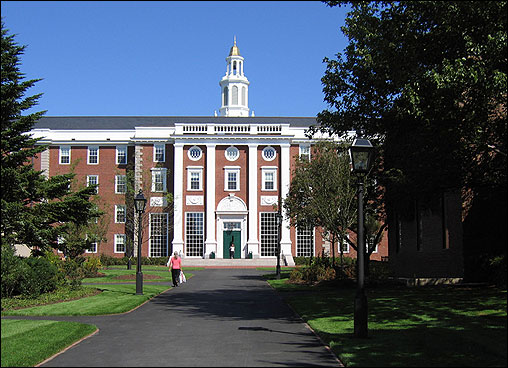
BOSTON (Reuters) - Harvard University’s endowment has lost 22 percent or roughly $8 billion in the last four months, leaving the world’s richest university on track to deliver its worst returns in 40 years.

Harvard President Drew Faust broke the news in a letter to top administrators on Tuesday, according the school’s website. Traditionally Harvard speaks about its investment returns only once a year.

“We continue to plan for a scenario in which our endowment is down 30 percent in value for the year,” Faust said in the letter.

She warned faculty, staff, students and alumni last month that the university is looking for ways to cut costs as the Ivy League School feels the impact of the worst financial crisis since the Great Depression.

The school’s endowment grew 8.6 percent for the fiscal year ended June 30, to a new high of $36.9 billion despite double-digit losses in the broader stock market.

Continue reading »

Tags: , ,

Nov 08

(NaturalNews) A congressional investigation has revealed that a group of Harvard psychiatrists, instrumental in pushing the diagnosis of bipolar disorder in children and its off-label treatment with antipsychotics, concealed from university officials the millions of dollars they earned in consulting fees for the companies that make those drugs.

Iowa Sen. Charles E. Grassley requested the financial disclosure reports that Drs. Joseph Biederman, Timothy E. Wilens and Thomas Spencer had filed with Harvard University between 2000 and 2007. He then asked a handful of pharmaceutical companies for their own records on how much had been paid to the researchers in that time.

The numbers reported by the drug companies were much higher than those on the researchers’ forms.

“Basically, these forms were a mess,” Grassley said. “Over the last seven years, it looked like they had taken a couple hundred thousand dollars.”

Upon being confronted with the discrepancies, the researchers admitted to having concealed certain consulting fees and upped their estimates. These new numbers still fell short of those reported by the drug companies.

Biederman, for example, originally told Harvard that he had received no money from Johnson & Johnson in 2001. When Grassley asked him to double check, Biederman admitted to receiving $3,500. The drug company’s records, however, recorded payments of $58,169 to Biederman in that year alone.

A more thorough investigation revealed that Biederman and Wilens had received at least $1.6 million from the pharmaceutical industry between 2000 and 2007, while Spencer had received at least $1 million.

Continue reading »

Tags: , , , , , , , , ,

Apr 18

Think U.S. health authorities have never conducted outrageous medical experiments on children, women, minorities, homosexuals and inmates? Think again: This timeline, originally put together by Dani Veracity (a NaturalNews reporter), has been edited and updated with recent vaccination experimentation programs in Maryland and New Jersey. Here’s what’s really happening in the United States when it comes to exploiting the public for medical experimentation:

(1845 - 1849) J. Marion Sims, later hailed as the “father of gynecology,” performs medical experiments on enslaved African women without anesthesia. These women would usually die of infection soon after surgery. Based on his belief that the movement of newborns’ skull bones during protracted births causes trismus, he also uses a shoemaker’s awl, a pointed tool shoemakers use to make holes in leather, to practice moving the skull bones of babies born to enslaved mothers (Brinker).

(1895)

New York pediatrician Henry Heiman infects a 4-year-old boy whom he calls “an idiot with chronic epilepsy” with gonorrhea as part of a medical experiment (“Human Experimentation: Before the Nazi Era and After”).

(1896)

Dr. Arthur Wentworth turns 29 children at Boston’s Children’s Hospital into human guinea pigs when he performs spinal taps on them, just to test whether the procedure is harmful (Sharav).

(1906)

Harvard professor Dr. Richard Strong infects prisoners in the Philippines with cholera to study the disease; 13 of them die. He compensates survivors with cigars and cigarettes. During the Nuremberg Trials, Nazi doctors cite this study to justify their own medical experiments (Greger, Sharav).

(1911)

Dr. Hideyo Noguchi of the Rockefeller Institute for Medical Research publishes data on injecting an inactive syphilis preparation into the skin of 146 hospital patients and normal children in an attempt to develop a skin test for syphilis. Later, in 1913, several of these children’s parents sue Dr. Noguchi for allegedly infecting their children with syphilis (“Reviews and Notes: History of Medicine: Subjected to Science: Human Experimentation in America before the Second World War”).

(1913)

Medical experimenters “test” 15 children at the children’s home St. Vincent’s House in Philadelphia with tuberculin, resulting in permanent blindness in some of the children. Though the Pennsylvania House of Representatives records the incident, the researchers are not punished for the experiments (“Human Experimentation: Before the Nazi Era and After”).

(1915)

Dr. Joseph Goldberger, under order of the U.S. Public Health Office, produces Pellagra, a debilitating disease that affects the central nervous system, in 12 Mississippi inmates to try to find a cure for the disease. One test subject later says that he had been through “a thousand hells.” In 1935, after millions die from the disease, the director of the U.S Public Health Office would finally admit that officials had known that it was caused by a niacin deficiency for some time, but did nothing about it because it mostly affected poor African-Americans. During the Nuremberg Trials, Nazi doctors used this study to try to justify their medical experiments on concentration camp inmates (Greger; Cockburn and St. Clair, eds.). Continue reading »

Tags: , , , , , , , , , , , , , , , , , , , , , , , , , , , , , , , , , , , , , , , , , , , , , , , , , , , , , , , , , , , , , , , , , , , , , , , , , , , , , , , , , , , , , , , , , , , , , , , , , , ,

Apr 06

Neuroscience and marketing had a love child a few years back. Its name - big surprise - is neuromarketing, and the ugly little fellow is growing up. Corporate pitchmen have always wanted to get inside our skulls. The more accurately they can predict how we’ll react to stimuli in the marketplace, from prices to packages to adverts, the more money they can pull from our pockets and transfer to their employers’ coffers.

But picking the brains of consumers hasn’t been easy. Marketers have had to rely on indirect methods to read our thoughts and feelings. They’ve watched what we do in stores or tracked how purchases rise or fall in response to promotional campaigns or changes in pricing. And they’ve carried out endless surveys and focus groups, asking us what we buy and why.

The results have been mixed at best. People, for one thing, don’t always know what they’re thinking, and even when they do, they’re not always honest in reporting it. Traditional market research is fraught with bias and imprecision, which forces companies to fall back on hunches and rules of thumb.

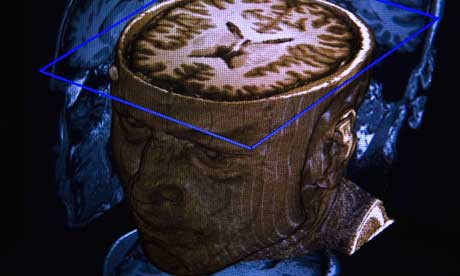
But thanks to recent breakthroughs in brain science, companies can now actually see what goes on inside our minds when we shop. Teams of academic and corporate neuromarketers have begun to hook people up to functional magnetic resonance imaging (fMRI) machines to map how their neurons respond to products and pitches. Continue reading »

Tags: , , , , , , , , , , , , , , ,