Mar 04

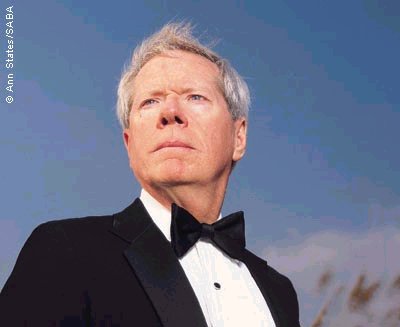
Paul Craig Roberts was Assistant Secretary of the Treasury during President Reagan’s first term. He was Associate Editor of the Wall Street Journal. He has held numerous academic appointments, including the William E. Simon Chair, Center for Strategic and International Studies, Georgetown University, and Senior Research Fellow, Hoover Institution, Stanford University.

paul-craig-roberts

This essay is about three recent books that explain how we lost our economy, the Constitution and our civil liberties, and how peace lost out to war.

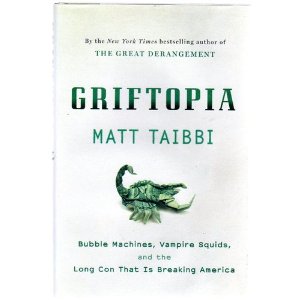
Matt Taibbi is the best–certainly the most entertaining–financial/political reporter in the country. There is no better book than Griftopia (2010) to which to turn to understand how stupidity, greed, and criminality, spread evenly among policymakers and Wall Street, created the financial crisis that has left Americans overburdened with both private and public debt. Taibbi walks the reader through the fraudulent financial instruments that littered the American, British, and European financial communities with toxic waste. He has figured it all out, and what in other hands might be an arcane account for MBAs is in Taibbi’s hands a highly readable and entertaining story.


Amazon.com: Griftopia: Bubble Machines, Vampire Squids, and the Long Con That Is Breaking America

Amazon.de: Griftopia: Bubble Machines, Vampire Squids, and the Long Con That Is Breaking America

For the first 65 pages Taibbi entertains the reader with the inability of the public and politicians to focus on any reality. The financial story begins on page 65 with Fed chairman Alan Greenspan undermining the Glass-Steagall Act leading to its repeal by three political stooges, Gramm-Leach-Bliley. This set the stage for the banksters to leverage debt upon debt until the house of cards collapsed. When Brooksley Born, head of the Commodity Futures Trading Commission, attempted to do her regulatory job and regulate derivatives, the Federal Reserve, Treasury, and Securities and Exchange Commission got her bounced out of office. To make certain that no other regulator could protect the financial system and its participants from what was coming, Congress deregulated the derivatives markets by passing the Commodity Futures Modernization Act.

Continue reading »

Tags: , , , , , , , , , , , , , , , , , , , , , , , , , , ,

Feb 20

- INSIDE JOB (Documentary – Official Trailer in HD):

Amazon.com:
-Inside Job
-
Inside Job [Blu-ray]

Only now does the Guardian report about this documentary. Just in time before the next crisis: The Greatest Depression.

See also:

- Former Governor Jesse Ventura Conspiracy Theory: Wall Street

- Former Assistant Secretary of Housing Catherine Austin Fitts: The Looting Of America


The film Inside Job brilliantly exposes the corruption in US banking that led to the 2008 crash. We ask four bankers for their verdict on this damning indictment of their world

Peter Bradshaw reviews Inside Job

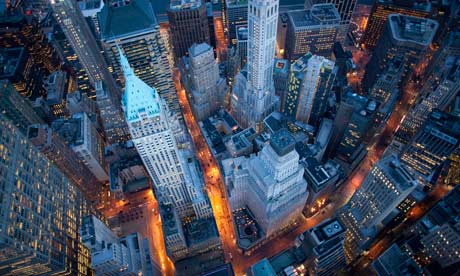
An aerial view of Wall Street, the heart of the global financial meltdown. Photograph: Cameron Davidson

When Michael Moore made his debut feature, Roger and Me, he set about vilifying the boss of General Motors, the now deceased Roger B Smith, for destroying his home town of Flint, Michigan. Charles Ferguson’s film Inside Job attempts to blame a wider cast list for the banking crash of 2008 and explains why so little has been done to reform the financial world or bring criminal prosecutions against the main protagonists.

His villainous lineup includes bankers, politicians (many of whom were previously bankers), regulators, the credit ratings agencies and academics. When Glenn Hubbard, George Bush’s chief economic adviser and dean of Columbia Business School, is shown as a partisan advocate of deregulation, we have one of the movie’s punch-the-air moments. During the interview, Hubbard, who denies he was corrupted by his paid-for relationships with government, angrily barks: “You’ve got five minutes, mister. Give it your best shot.”

The spotlight has largely bypassed academics in the UK. There are plenty of economists who believed the banks understood what they were doing and supported deregulation. Whether they took large slugs of cash for writing poorly researched, cheerleading reports on the economic miracle in Iceland (pre-crash), as former US central banker Frederic Mishkin is found doing, is less clear. Over here, the relationship between academia and business appears to be more arm’s length, though London Business School dean Sir Andrew Likierman sits on the Barclays board, while Howard Davies, who argued for light-touch regulation while head of the Financial Services Authority, has become director of the London School of Economics. The UK’s chief villian, however, is probably the disgraced, but largely unpunished, banker Sir Fred Goodwin, the former boss of Royal Bank of Scotland, once the fifth-largest bank in the world.

In Inside Job, the name that keeps cropping up is Larry Summers, a friend of President Bill Clinton and more recently Barack Obama. Summers exemplifies the links between cheerleaders in academia, Wall Street, supine regulators and an ignorant Capitol Hill that Ferguson stresses were at the root of the problem. It helps that Summers looks like a mafia boss, but the difficulties in making the case against him are shown by the need to explain financial products like credit default swaps and how securitisation was used by banks to increase their borrowing.

Continue reading »

Tags: , , , , , , , , , , , , , ,

Feb 14

Washington: In many ways, the personal injury lawsuit looked routine: In late 2001, a government employee and his family sued the agency he worked for, saying it had placed them in a mold-contaminated home that made them sick and required nearly all their possessions to be destroyed.

But this was no ordinary case. The employee, Kevin M. Shipp, was a veteran Central Intelligence Agency officer. His home was at Camp Stanley, an Army weapons depot just north of San Antonio, in an area where the drinking water was polluted with toxic chemicals. The post includes a secret C.I.A. facility.

Declaring that its need to protect state secrets outweighed the Shipps’ right to a day in court, the government persuaded a judge to seal the case and order the family and their lawyers not to discuss it, and to later dismiss the lawsuit without any hearing on the merits, Mr. Shipp said.

More than half a decade later, Mr. Shipp is going public with his story. He contends that the events broke up his marriage and destroyed his career, and that C.I.A. officials abused the State Secrets Privilege doctrine in an effort to cover up their own negligence.

Continue reading »

Tags: , , , , ,

Feb 13

Tags: , , , , , , , , , , , , , , , , , , , , , , , , , , , , , , , , , , , , , ,

Feb 08

State after state will go bankrupt, asking the even more bankrupt federal government for a bailout.


Dozens of Michigan’s municipalities and school districts could soon face major financial problems and an unnamed handful are on the brink of becoming insolvent, warns State Treasurer Andy Dillon.

To prepare for the onslaught, the state treasurer’s office will start training 50 emergency financial managers this week to help the state cope with an expected rise in communities facing financial collapse. The training will focus on helping local governments avoid a state financial takeover while emphasizing early intervention, Bond Buyer reports.

Continue reading »

Tags: , , , , , , , ,

Feb 07

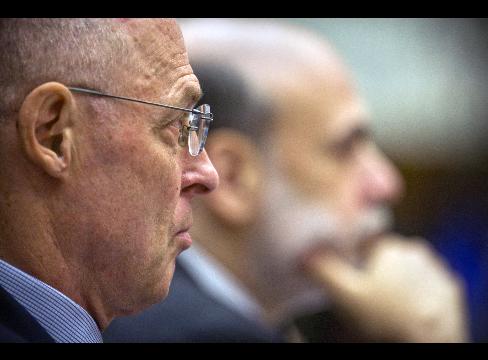
Among some of the discoveries of the financial crisis is that the entire financial system is now, following the Lehman bankruptcy, built entirely on fraud. And while Ken Lewis may spend the remainder of his days on some private island with stolen taxpayer money providing for his every last wish, it was he, in following the Fed’s and the Treasury’s orders to make a mockery of fiduciary responsibility, that was among the first people to confirm that there is no rule of low in America, or rather whatever law there is, it only applies to the less than immortal (i.e. the sub-banker class). Below, in an indication that Zero Hedge will never forget, we present the salient highlights from the Ken Lewis deposition on the MAC clause surrounding the Merrill transition, emphasizing the threats from Hank Paulson and Ben Bernanke. For as long as neither of these three is in jail for what is documented shareholder (and taxpayer) fraud, we fail to see why the remaining 300+ million Americans continue to diligently pay their share of taxes into a government that is now beyond (and in full documentation) corrupt. Also, how BofA’s lawyer Wachtell was not at all present during the discussion of the MAC clause, makes a complete mockery of the US legal process in its entirety. We wonder just when the official scribe of the kleptocracy, Andrew R. Sorkin, will write a book disclosing the truth of what happened, including a listing of all the laws broken with full premeditation by every single player, and not the watered down, PG13 (and rather expensive)version  that makes everyone come out like a law-abiding superman.

Full transcript highlights, presented without commentary: Continue reading »

Tags: , , , , , , , , , , , , , , , , , , ,

Feb 07

Make no mistake, the financial crisis has only just begun.

This is The Greatest Depression.


Paulson on Paulson

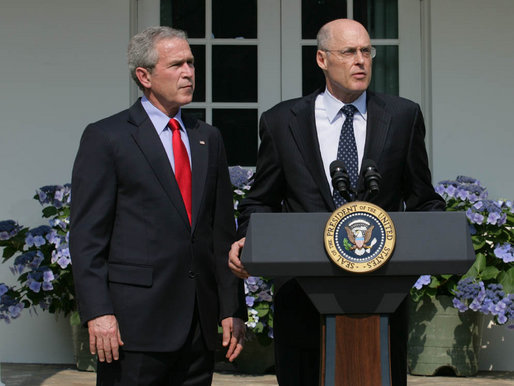
A friend sent me a collage of quotes from former Treasury Secretary Henry Paulson’s memoir of the financial crisis, On the Brink.  The quotes are particularly relevant in view of the Financial Crisis Inquiry Commission’s newly issued report which concludes that the 2008 financial crisis was badly mishandled by the government.

The collage paints a stunning picture of a confused and panicked government without a coherent strategy for getting in front of and containing the crisis.  Judge for yourself:

“I misread the cause, and the scale, of the coming disaster.  Notably absent from my presentation was any mention of problems in housing or mortgages.”  (p. 47)

“All of this led me in late April 2007 to say . . . that subprime mortgage problems were ‘largely contained.’  I repeated that line of thinking publicly for another couple of months. . . . We were just plain wrong.” (p. 66)

“Lehman’s UK bankruptcy administrator, PricewaterhouseCoopers, had frozen [Lehman’s] assets in the UK . . .  a completely unexpected  . . . jolt.” (p. 230)

“General Electric . . . was having problems selling commercial paper.  This stunned me.” (p. 172)

“I’d never expected to hear those troubles spreading like this to the corporate world. . . .” (p. 227)

“In a celebratory mood, [Rep.] Pelosi, [Sen.] Reid, [Sen.] Dodd, [Rep.] Frank, [Sen.] Schumer, and I walked together to Statuary Hall to announce the [TARP] deal. . . . Perhaps I should have foreseen the problems ahead . . . .” (p. 314)

“I expected [TARP] to be politically unpopular, but the intensity of the backlash astonished me.” (p. 370)

“I began to seriously doubt that our asset-buying program [TARP] could work.  This pained me, as I had sincerely promoted the [toxic asset] purchases to Congress and the public. . . .” (p. 385)

Continue reading »

Tags: , , , , , , , , , , ,

Feb 02

“It was intentional then. It went this far to further the war on terror, to get body scanners in the airports, to increase the TSA’s budget, to renew the Patriot Act and whatever other reasons you wanna list.”
- Lawyer Kurt Haskell


Added: 26. Januar 2011

I contend that this story is just the tip of the iceberg into the US government’s black operations to further the Patriot Act, funding for Homeland Security and the TSA, and to keep intensity up for the so called War on Terror.

Respected lawyer and community leader, Kurt Haskell, has nothing to gain from pointing his finger at the federal government.

He witnessed the underwear bomber, Umar Farouk Abdulmutallab, being whisked past security and led onto NorthWest Airlines flight 253, by a well-dressed man with an American accent- all without the passenger’s proper visa and passport documentation.

What the news piece doesn’t mention is that the State Dept did indeed put Mutallab on the plane, at the behest of “an unnamed US intelligence agency.”

Undersecretary Patrick F. Kennedy (Detroit news article was removed from web!).

THIS is why we are being groped, molested, and body scanned at the airport by the TSA! Because the government claims the underwear bomber is a real threat! Stand up America- the politicians say our rhetoric is dangerous. Maybe the government itself is terribly dangerous….

28/01/2011 – 13:34 by cybe

Source: 100777

The US government is Al-Qaeda or better Al-CIAda:

- Al Qaeda Doesn’t Exist or How The US Created Al Qaeda (Documentary)

“The truth is, there is no Islamic army or terrorist group called Al Qaeda. And any informed intelligence officer knows this. But there is a propaganda campaign to make the public believe in the presence of an identified entity representing the ‘devil’ only in order to drive the TV watcher to accept a unified international leadership for a war against terrorism. The country behind this propaganda is the US.”
- Robin Cook, Former British Foreign Secretary


Tags: , , , , , , , , , , , ,

Jan 28

Our food supply is in jeopardy. Not only from outside forces such as poisons from China, but from within. The very people that we look to for guidance seem to be working together to lead us straight into global food governance in the form of Codex Alimentarius. This is especially alarming when you consider that the very organizations such as the USDA and FDA, that are charged with the safeguarding and regulation of our food supply are at the forefront of the battle, leading us straight into worldwide genocide using food as a weapon.

But the USDA and FDA do not stand alone. There are others who consider food to be “fair game” in this war against the people, and they just happen to control some very large purse strings. So, who holds the purse strings behind the push to obliterate any food safeguards we may have? Let’s just pick two – Rockefeller and Merck, then take a closer look at a few of the “trusted” organizations that they fund.

The Purse Strings

Rockefeller

Let’s take a look at just a part of what the Rockefeller crime family is involved in concerning our food supply.

Today, the Rockefellers use coercive population control tactics and food as a weapon through a front organization, CGIAR (Consultative Group on Agricultural Resources) as the Rockefellers are trying to distance themselves from public- just like the Rothschild clan has done. Engdahl reports that CGIAR operates under the umbrella of the UN World Bank, and its primary focus is the spread of GMO crops. CGIAR was created by the Rockefellers and the Ford Foundation, along with the UN World Bank in 1971 with $350 million dollars a year in funding. (MorphCity)

Financed by generous Rockefeller and Ford Foundation study grants, CGIAR saw to it that leading Third World agriculture scientists and agronomists were brought to the US to master the concepts of modern agribusiness production, in order to carry it back to their homeland. In the process they created an invaluable network of influence for US agribusiness promotion in those countries, most especially promotion of the GMO Gene Revolution in developing countries, all in the name of science and efficient, free market agriculture.(InformationLiberation)

The Rockefeller Foundation spent more than $100 million for the advance of the GMO revolution. (Engdahl – Seeds of Destruction)

Part of the Rockefeller dynasty includes a group known as Rockefeller Philanthropy Advisors:

Rockefeller Philanthropy Advisors is a 501(c)(3) nonprofit organization that advises donors in their philanthropic endeavors throughout the world. The foundation is headquartered in New York City and adheres to John D. Rockefeller Sr.’s practice of managing philanthropy “as if it were a business.”[1] Rockefeller Philanthropy Advisors currently advises on and manages more than $200 million in annual giving in more than 60 countries.[2] (Wikipedia)

Philanthropy can be used by business to advance a corporate image that is acceptable to certain groups of people in order to put up a benevolent facade while all the time conducting business as usual, which may or may not be so benevolent.

Merck

Now let’s take a peek at Merck: Continue reading »

Tags: , , , , , , , , , , , , , , , , , , , ,

Jan 26

The Financial Crisis Inquiry Commission is releasing its report Thursday.

The New York Times has a preview of the report, which shows that the Commission will slam the right people for causing the financial crisis.

Barry Ritholtz gives a good summary of the Times’ article:

The many causal factors highlighted in the FCIC report:

• Alan Greenspan’s malfeasance — his refusal to perform his regulatory duties because he did not believe in them — allowed the credit bubble to expand, driving housing prices to dangerously unsustainable levels; Greenspan’s advocacy for financial deregulation was a “pivotal failure to stem the flow of toxic mortgages” and “the prime example” of government negligence;

• Ben S. Bernanke failed to foresee the crisis;

• The Bush administration’s “inconsistent response” — saving Bear, but allowing Lehman to crater — “added to the uncertainty and panic in the financial markets.”

• Bush Treasury secretary Henry M. Paulson Jr. wrongly predicted in 2007 that subprime meltdown would be contained.

• The Clinton White House, including then Treasury Secretary Lawrence Summers, made a crucial error in “shielding over-the-counter derivatives from regulation [CFMA]. This was “a key turning point in the march toward the financial crisis.”

• Then NY Fed President, now Treasury secretary Timothy F. Geithner failed to “clamp down on excesses by Citigroup in the lead-up to the crisis;” Further, a month before Lehman’s collapse, Geithner was still in the dark about Lehman’s derivative exposure;

• Low interest rates brought about by the Fed after the 2001 recession “created increased risks” but were not chiefly to blame, according to the FCIC (I place some more weight on Ultra-low rates than they do);

• The financial sector spent $2.7 billion on lobbying from 1999 to 2008, while individuals and committees affiliated with the industry made more than $1 billion in campaign contributions. The impact of which an incestuous relationship between bankers and regulators, Congress and bankers, and classic regulatory capture by the industry.

• The credit-rating agencies “cogs in the wheel of financial destruction.”

• The Securities and Exchange Commission allowed the 5 biggest banks to ramp up their leverage, hold insufficient capital, and engage in risky practices.

• Leverage at the nation’s five largest investment banks was wildly excessive: They kept only $1 in capital to cover losses for about every $40 in assets;

• The Office of the Comptroller of the Currency along with the Office of Thrift Supervision, “federally pre-empted” (blocked) state regulators from reining in lending abuses;

• The report documents “questionable practices by mortgage lenders and careless betting by banks;”

• The report portrays the “bumbling incompetence among corporate chieftains” as to the risk and operations of their own firms:

-Citigroup executives admitting that they paid little attention to the risks associated with mortgage securities.
-AIG executives were blind to its $79 billion exposure to credit default swaps;
-Merrill Lynch top managers were surprised when mortgage investments suddenly resulted in billions of dollars in losses;

Continue reading »

Tags: , , , , , , , , , , , , ,