Body Scanners
The Biggest Crooks In America Are Now The Cops
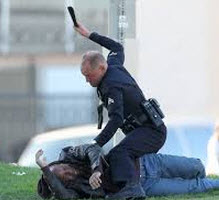
– The Biggest Crooks In America Are Now The Cops (ZeroHedge, June 13, 2015):
Submitted by Bill Bonner via Bonner & Partners,
The TSA Is a Complete Waste of Time
Today, we continue our series “The Good, the Bad and the Ugly.” As you’ll recall, our premise is that in a world where everyone is a lawbreaker, it’s hard to spot the real criminals.
Below, we turn to the bad …
Judge Orders NYPD To Release Records On Backscatter Vans
‘Designed’ to destroy your DNA …
Flashback:
– TSA Naked Body Scanners Are Not Safe
– Inside TSA Body Scanners: How Terahertz Waves Tear Apart Human DNA
– How Body Scanner Terahertz Waves Can Tear Apart DNA
– Review of the TSA X-ray backscatter body scanner safety report: hide your kids, hide your wife
– Dr. Russell Blaylock: Body Scanners More Dangerous Than Feds Admit
Related info:
– DNA-Destroying Chip Being Embedded Into Mobile Phones
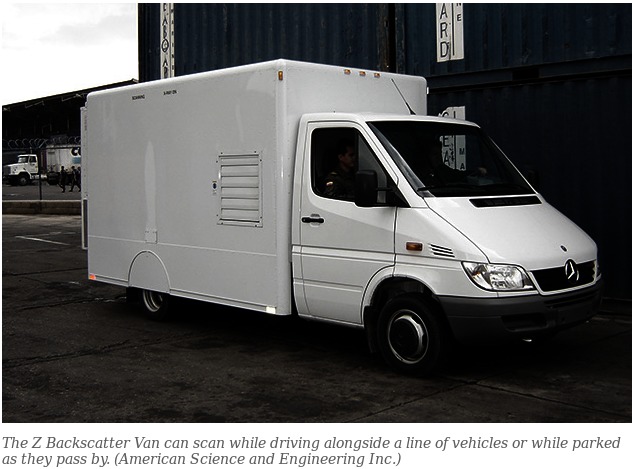
– Judge Orders NYPD to Release Records on X-ray Vans (ProPublica, Jan 9, 2015):
The NYPD has a secretive program that uses unmarked vans with X-ray machines designed to detect bombs. ProPublica tried to find out more about it, but the NYPD refused to answer for three years.
This story was updated at 12:55 p.m.
A state judge has ordered the New York City Police Department to release records on a secretive program that uses unmarked vans equipped with X-ray machines to detect bombs.
The ruling follows a nearly three-year legal battle by ProPublica, which had requested police reports, training materials, contracts and any health and safety tests on the vans under the state’s Freedom of Information Law.
Read moreJudge Orders NYPD To Release Records On Backscatter Vans
Nude Body Scan Social Experiment Prank (Explicit Language) (Video)
YouTube Added: 27.10.2013
Description:
Please help SHARE this prank & social expirement! This full body scanning prank and practical joke is based on a sad reality. We used a mobile scanner from http://www.inteli-tech.com to see how far we can take this trick on victims who were simply trying to do some shopping. SUBSCRIBE! http://bit.ly/10GNiYs #nudebodyscan #youhavenorights
We set up this prank downtown San Luis Obispo with a real body wand, hidden microphones and cameras. The goal was to see how far we could take this scanning and if people would let us! To our surprise, most people didn’t put up much of a fight and went along with the person ahead of them in line… which was our plant that we actual scanned again and again. People along the sidelines were freaking out as well and not sure how to intervene. Of course, once the gag was pushed to the limit, we all let the customer know it was a prank and and it was all love, hugs, high fives and laughs! 100% loved to be involved… but it does make you think!
NO! The last guy in the outtakes was NOT A PLANT. He was certainly a funny character who popped up on the radar that afternoon for sure. “Isn’t America free?” Awesome.
Read moreNude Body Scan Social Experiment Prank (Explicit Language) (Video)
NYPD To Begin Testing New High-Tech Device That Scans For Concealed Weapons … And Can Tear Apart Your DNA
Related info:
– TSA Naked Body Scanners Are Not Safe
– DNA-Destroying Chip Being Embedded Into Mobile Phones
– Inside TSA Body Scanners: How Terahertz Waves Tear Apart Human DNA
– How Body Scanner Terahertz Waves Can Tear Apart DNA
– NYPD Commissioner says department will begin testing a new high-tech device that scans for concealed weapons (NY Daily News, Jan 23, 2013):
The device, which tests for terahertz radiation, is small enough to be placed in a police vehicle or stationed at a street corner where gunplay is common
Get ready for scan-and-frisk.
The NYPD will soon deploy new technology allowing police to detect guns carried by criminals without using the typical pat-down procedure, Police Commissioner Raymond Kelly said Wednesday.
The department just received a machine that reads terahertz — the natural energy emitted by people and inanimate objects — and allows police to view concealed weapons from a distance.
TSA OPT OUT & FILM: DEPUTY SHERIFF PROTECTS 1ST AMENDMENT AT ALBANY AIRPORT (Video)
YouTube Added: 27.11.2012
Description:
Ashley Jessica and Jason Bermas visit Albany International on Black Friday to educate people about opting out of dangerous body scanners and filming intrusive pat downs.
US: Major Airports To Remove Invasive X-ray, Body Scanners
– Major Airports to Remove Invasive X-ray, Body Scanners (CNBC, Oct 23, 2012):
TSA introduced the so-called Backscatter scanners, sometimes referred to as the “naked” X-ray machines, at U.S. airports in 2009. Many travelers were not happy that naked images of themselves were displayed to TSA officers in a nearby room. In addition to privacy concerns, travelers were concerned about radiation exposure.
Read moreUS: Major Airports To Remove Invasive X-ray, Body Scanners
TSA Naked Body Scanners Are Not Safe
– There is ‘no safe dose of radiation’ from TSA naked body scanners (Natural News, Aug 8, 2012):
Besides the fact that they are being operated by an agency that demonstrates on a daily basis a disdain and disregard for discretion, privacy, and professionalism, the Transportation Security Administration’s full-body backscatter x-ray machines are just not safe.
That’s the diagnosis of Dr. Dong Kim, the neurosurgeon who treated U.S. Rep. Gabrielle Giffords, D-Ariz., when she was shot in the head in January 2011 by a crazed gunman in Tucson.
“There is really no absolutely safe dose of radiation,” said Kim, chair of the department of neurosurgery at the University of Texas Medical School. “Each exposure is additive, and there is no need to incur any extra radiation when there is an alternative.”
In fact, Kim says he doesn’t allow the TSA to irradiate him when he travels; he always opts for the individual pat down when passing through airport security.
U.S. Court Demands TSA Explain Why It Is Defying Nude Body Scanner Order
– Court Demands TSA Explain Why It Is Defying Nude Body Scanner Order (Wired, Aug 1, 2012):
A federal appeals court Wednesday ordered the Transportation Security Administration to explain why it hasn’t complied with the court’s year-old decision demanding the agency hold public hearings concerning the rules and regulations pertaining to the so-called nude body scanners installed in U.S. airport security checkpoints.
The U.S. Circuit Court of Appeals for the District of Columbia Circuit’s brief order came in response to the third request by the Electronic Privacy Information Center for the court to enforce its order.
A year ago, the circuit court, in a lawsuit brought by EPIC, set aside a constitutional challenge trying to stop the government from using intrusive body scanners across U.S. airports. But the decision on July 15, 2011 also ordered TSA “to act promptly” and hold public hearings and publicly adopt rules and regulations about the scanners’ use, which it has not done.
Read moreU.S. Court Demands TSA Explain Why It Is Defying Nude Body Scanner Order
Dr. Helen Caldicott (Co-Founder Of Physicians For Social Responsibility): Pacific Northwest Got Whacked Hard By Fallout From The Fukushima Disaster With Radiation Rates Hundreds Of Thousands Of Times Higher Than Normal Background Radiation (Video – April 2, 2012)
MUST-SEE!
Watch the video here:
– Dr. Helen Caldicott (Co-Founder Of Physicians For Social Responsibility): What We Learned From Fukushima (Video – April 2, 2012)
Dr. Helen Caldicott (Co-Founder Of Physicians For Social Responsibility): If Spent Fuel Pool No. 4 Collapses I Am Evacuating My Family From Boston (Video – April 2, 2012)
MUST-SEE!
Watch the video here:
– Dr. Helen Caldicott (Co-Founder Of Physicians For Social Responsibility): What We Learned From Fukushima (Video – April 2, 2012)
TSA Bars Security Expert Bruce Schneier From Testifying In Front Of Congress On Full Body Scanners
See also:
– Blogger Exposes Loophole In TSA Body Scanners – How To Get Anything Through TSA Nude Body Scanners (Daily Mail – Video)
Flashback:
– Israeli Airport Security Expert: Full-Body Scanners Are Waste of Money (Vancouver Sun, Apr 23, 2010)
– TSA bars security guru from perv scanner testimony (The Register, Mar 26, 2012):
Security expert Bruce Schneier was been banned at the last minute from testifying in front of congress on the efficacy – or otherwise – of the US Transportation Security Administration’s (TSA) much-maligned perv scanners.
Schneier is a long-time critic of the TSA’s policies for screening travelers, and was formally invited to appear before the House Committee on Oversight and Government Reform and the Committee on Transportation and Infrastructure hearings. However, the TSA objected to his presence because he is currently involved in a legal case over the use of said scanners in US airports.
“I was looking forward to sitting next to a TSA person and challenging some of their statements. That would have been interesting,” Schneier told The Register. “The request to appear came from the committee itself, because they’d been reading my stuff on this and thought it would be interesting.”
Blogger Exposes Loophole In TSA Body Scanners – How To Get Anything Through TSA Nude Body Scanners (Video)
Flashback:
– Israeli Airport Security Expert: Full-Body Scanners Are Waste of Money (Vancouver Sun, Apr 23, 2010)
A leading Israeli airport security expert says the Canadian government has wasted millions of dollars to install “useless” imaging machines at airports across the country.
“I don’t know why everybody is running to buy these expensive and useless machines. I can overcome the body scanners with enough explosives to bring down a Boeing 747,” Rafi Sela told parliamentarians probing the state of aviation safety in Canada.
“That’s why we haven’t put them in our airport,” Sela said, referring to Tel Aviv’s Ben Gurion International Airport, which has some of the toughest security in the world.
Description:
Transcript on Official Blog: http://tsaoutofourpants.wordpress.com/
Media / Official Inquiries: See Below for Contact
This video is here to demonstrate that the TSA’s insistence that the nude body scanner program is effective and necessary is nothing but a fraud, just like their claims that the program is safe (radiation what?) and non-invasive (nude pictures who?). This video is not intended to teach anyone how to commit criminal acts, nor is intended to help “the terrorists” — if I could figure this out, I’m sure they’ve long figured it out, and by exposing it to the public, we now have an opportunity to correct it. The scanners are now effectively worthless, as anyone can beat them with virtually no effort. The TSA has been provided this video in advance of it being made public to give them an opportunity to turn off the scanners and revert to the metal detectors. I personally believe they now have no choice but to turn them off.
Please share this video with your family, friends, and most importantly, elected officials in federal government. Make sure they understand that your vote is contingent on them fixing the abuse that 200,000 passengers face from the TSA on a daily basis.
– ??How to get ANYTHING through TSA nude body scanners: Blogger exposes loophole in $1billion fleet (Daily Mail, Mar 7, 2012):
Controversial nude body scanners used at U.S. airports have come under fire again – after a blogger claimed he could easily smuggle explosives through them onto a plane.
Engineer Jonathan Corbett has published a video where he shows how he took a small metal case through two of the TSA’s $1billion fleet in a special side pocket stitched into his shirt.
This is because, he suggests, the scanners blend metallic areas into the dark background – so if an object is not directly placed on the body, it will not show up on the scan.
The metallic box, he claims, would have set off an alarm had he passed through the old detecting system.
His revelation comes just weeks after Europe banned the ‘airport strip-searches’ over fears the X-ray technology could cause cancer.
Australia: No Opt-Out Rule For Airport Body Scanners!

See also:
– Australia: Immunize Your Children Or Lose Benefits, Parents Told (ABC News, Nov. 25, 2011)
– No opt-out rule for airport body scanners (ABC Melbourne, Feb. 6, 2012):
Civil libertarians are worried by proposed legislation meaning passengers will not be able to opt out of undergoing full body scans at Australian airports.
The Federal Government will introduce legislation this week so the technology can be rolled out in all of Australia’s international airports.
Read moreAustralia: No Opt-Out Rule For Airport Body Scanners!
Senator Rand Paul On FOX News Describing His TSA Detainment (Video)
YouTube Added: 24.01.2012
NYPD Testing X-Ray Body Scanner Technology To Scan People For Concealed Guns
These criminals are destroying your health (and your DNA):
– Prof. John Sedat On DHS’ X-ray Scanners: ‘Society Will Pay A Huge Price In CANCER Because Of This’
– US Government Glossed Over Cancer Concerns As It Rolled Out Airport X-Ray Scanners
– TSA Full Body Scanner Radiation Safety Tests Were Rigged
– TSA Body Scanners Show Radiation Levels 10 Times Higher Than Expected
– Inside TSA Body Scanners: How Terahertz Waves Tear Apart Human DNA
– Review of the TSA X-ray backscatter body scanner safety report: hide your kids, hide your wife
– Dr. Russell Blaylock: Body Scanners More Dangerous Than Feds Admit
– Airport Body Scanners: Why You should REJECT ‘Routine’ NON-Diagnostic X-ray
– How Body Scanner Terahertz Waves Can Tear Apart DNA
– Full-Body Scanners Emitting ‘High-Energy’ Radiation Increase Cancer Risk
– US prisoners forced to submit to radiation experiments for private foreign companies
In case you still don’t know who to vote for:
– Rep. Ron Paul to TSA: Stop Irradiating Our Bodies and Fondling Our Children!

The NYPD and Department of Defense are working together testing Terahertz Imaging Detection, a new way to get concealed illegal weapons off the streets. (Photo courtesy: NYPD)
– NYPD, Feds Testing Gun-Scanning Technology, But Civil Liberties Groups Up In Arms (CBS News, Jan. 17, 2012):
NEW YORK (CBSNewYork) – The NYPD is stepping up their war against illegal guns, with a new tool that could detect weapons on someone as they walk down the street.
But is it violating your right to privacy?
Police, along with the U.S. Department of Defense, are researching new technology in a scanner placed on police vehicles that can detect concealed weapons.
Read moreNYPD Testing X-Ray Body Scanner Technology To Scan People For Concealed Guns
Prof. John Sedat On DHS’ X-ray Scanners: ‘Society Will Pay A Huge Price In CANCER Because Of This’
Flashback:
– US Government Glossed Over Cancer Concerns As It Rolled Out Airport X-Ray Scanners
– TSA Full Body Scanner Radiation Safety Tests Were Rigged
– TSA Body Scanners Show Radiation Levels 10 Times Higher Than Expected
– Inside TSA Body Scanners: How Terahertz Waves Tear Apart Human DNA
– Review of the TSA X-ray backscatter body scanner safety report: hide your kids, hide your wife
– Dr. Russell Blaylock: Body Scanners More Dangerous Than Feds Admit
– Airport Body Scanners: Why You should REJECT ‘Routine’ NON-Diagnostic X-ray
– How Body Scanner Terahertz Waves Can Tear Apart DNA
– Full-Body Scanners Emitting ‘High-Energy’ Radiation Increase Cancer Risk
– US prisoners forced to submit to radiation experiments for private foreign companies
– DHS’ X-ray scanners could be cancer risk to border crossers (CNET News, Jan. 12, 2012):
Even though a public outcry has prompted Homeland Security to move away from adding X-ray machines to airports–it purchased 300 body scanners last year that used alternative technology instead–it appears to be embracing them at U.S.-Mexico land border crossings as an efficient way to detect drugs, currency, and explosives.
A 63-page set of specifications (PDF), heavily redacted, obtained by the Electronic Privacy Information Center through the Freedom of Information Act, says the scanners must “be based on X-Ray or gamma technology,” which use potentially dangerous ionizing radiation at high energies, and “shall be capable of scanning cars, SUVs, motorcycles and busses.”
“Society will pay a huge price in cancer because of this,” John Sedat, professor of biochemistry and biophysics at the University of California at San Francisco, told CNET. Sedat has raised concerns about the health risks of X-ray scanners, and the European Commission in November prohibited their use in European airports.
TSA Screenings Aren’t Just For Airports Anymore
See also:
– Here Is What DHS Does With It’s $98.8 Billion Budget
Roving security teams increasingly visit train stations, subways and other mass transit sites to deter terrorism. Critics say it’s largely political theater.
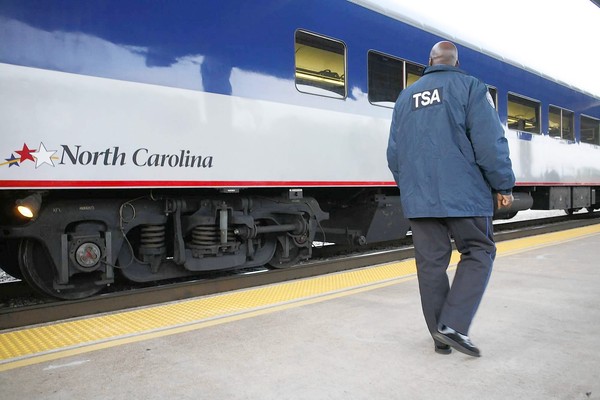
A Transportation Security Administration behavior-detection officer patrols a train station in Charlotte, N.C. (Brian Bennett, Los Angeles Times / December 11, 2011)
– TSA screenings aren’t just for airports anymore (Los Angeles Times, Dec. 20, 2011):
Reporting from Charlotte, N.C. — Rick Vetter was rushing to board the Amtrak train in Charlotte, N.C., on a recent Sunday afternoon when a canine officer suddenly blocked the way.
Three federal air marshals in bulletproof vests and two officers trained to spot suspicious behavior watched closely as Seiko, a German shepherd, nosed Vetter’s trousers for chemical traces of a bomb. Radiation detectors carried by the marshals scanned the 57-year-old lawyer for concealed nuclear materials.
US Government Glossed Over Cancer Concerns As It Rolled Out Airport X-Ray Scanners
See also:
– TSA Full Body Scanner Radiation Safety Tests Were Rigged
– TSA Body Scanners Show Radiation Levels 10 Times Higher Than Expected
– Inside TSA Body Scanners: How Terahertz Waves Tear Apart Human DNA
– Review of the TSA X-ray backscatter body scanner safety report: hide your kids, hide your wife
– Dr. Russell Blaylock: Body Scanners More Dangerous Than Feds Admit
– Airport Body Scanners: Why You should REJECT ‘Routine’ NON-Diagnostic X-ray
– How Body Scanner Terahertz Waves Can Tear Apart DNA
– Full-Body Scanners Emitting ‘High-Energy’ Radiation Increase Cancer Risk
– US prisoners forced to submit to radiation experiments for private foreign companies

A sign at a Transportation Security Administration (TSA) checkpoint instructs passengers about the use of the full-body scanner at O’Hare International Airport. (Getty Images)
– U.S. Government Glossed Over Cancer Concerns As It Rolled Out Airport X-Ray Scanners (ProPublica, Nov. 1, 2011):
Update (11/01): This story has been updated with a comment from The Chertoff Group, from which ProPublica had sought comment before publication.
Look for a PBS NewsHour story on X-ray body scanners, reported in conjunction with ProPublica, to air later this month.
On Sept. 23, 1998, a panel of radiation safety experts gathered at a Hilton hotel in Maryland to evaluate a new device that could detect hidden weapons and contraband. The machine, known as the Secure 1000, beamed X-rays at people to see underneath their clothing.
One after another, the experts convened by the Food and Drug Administration raised questions about the machine because it violated a longstanding principle in radiation safety — that humans shouldn’t be X-rayed unless there is a medical benefit.
“I think this is really a slippery slope,” said Jill Lipoti, who was the director of New Jersey’s radiation protection program. The device was already deployed in prisons; what was next, she and others asked — courthouses, schools, airports? “I am concerned … with expanding this type of product for the traveling public,” said another panelist, Stanley Savic, the vice president for safety at a large electronics company. “I think that would take this thing to an entirely different level of public health risk.”
The machine’s inventor, Steven W. Smith, assured the panelists that it was highly unlikely that the device would see widespread use in the near future. At the time, only 20 machines were in operation in the entire country.
“The places I think you are not going to see these in the next five years is lower-security facilities, particularly power plants, embassies, courthouses, airports and governments,” Smith said. “I would be extremely surprised in the next five to 10 years if the Secure 1000 is sold to any of these.”
Today, the United States has begun marching millions of airline passengers through the X-ray body scanners, parting ways with countries in Europe and elsewhere that have concluded that such widespread use of even low-level radiation poses an unacceptable health risk. The government is rolling out the X-ray scanners despite having a safer alternative that the Transportation Security Administration says is also highly effective.
Read moreUS Government Glossed Over Cancer Concerns As It Rolled Out Airport X-Ray Scanners
Fascism We Can Believe In: Blackout On DHS Backscatter Vans And Body-Scanners
– Redacting all but your privacy – DHS Voyeurism, Backscatter Vans and Body-scanners (Activist Post, August 18, 2011):
Apparently public information can be redacted into an unaccountable oblivion, and the only boundary to black-marks are your private parts where they end for the sake of voyeurism. EPIC’s Freedom of Information Act request was answered with what looks more like a Hubble malfunction than a document regarding body-scanners and mobile X-ray (Backscatter) vans. See PDF.
“ZBV” – Z Backscatter Van
YouTube
The implication of such things are many, and it is not surprising that the very agency vigilantly attempting to criminalize normal civilians would want to keep these technologies as private as possible while applying them on the public. The good news – however hopeless – is that EPIC has filed suit to force disclosure of these documents. If it is the public who are to be the subjects of this technology, then it is the public who should be thoroughly informed of it. The DHS clearly opposes this, and seeks to covertly employ their spyware wherever they can. We really must ask where this will stop if left unchecked. The likeliest answer is that it will not.
The Eccentric Intelligence Agency: Helping the Ouroboros finish itself.
Read moreFascism We Can Believe In: Blackout On DHS Backscatter Vans And Body-Scanners
TSA Body Scanners Show Radiation Levels 10 Times Higher Than Expected
Don’t miss:
– Inside TSA Body Scanners: How Terahertz Waves Tear Apart Human DNA
– Review of the TSA X-ray backscatter body scanner safety report: hide your kids, hide your wife
– Dr. Russell Blaylock: Body Scanners More Dangerous Than Feds Admit
– Airport Body Scanners: Why You should REJECT ‘Routine’ NON-Diagnostic X-ray
– How Body Scanner Terahertz Waves Can Tear Apart DNA
– Full-Body Scanners Emitting ‘High-Energy’ Radiation Increase Cancer Risk
– US prisoners forced to submit to radiation experiments for private foreign companies
TSA to retest airport body scanners for radiation
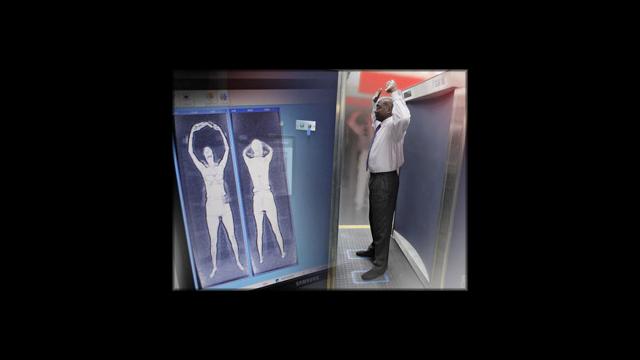
The Transportation Security Administration announced Friday that it would retest every full-body X-ray scanner that emits ionizing radiation – 247 machines at 38 airports – after maintenance records on some of the devices showed radiation levels 10 times higher than expected.
The TSA says that the records reflect math mistakes and that all the machines are safe. Indeed, even the highest readings listed on some of the records – the numbers that the TSA says were mistakes – appear to be many times less than what the agency says a person absorbs through one day of natural background radiation.
Even so, the TSA has ordered the new tests out of “an abundance of caution to reassure the public,” spokesman Nicholas Kimball says. The tests will be finished by the end of the month, and the results will be released “as they are completed,” the agency said on its website.
Read moreTSA Body Scanners Show Radiation Levels 10 Times Higher Than Expected
Rep. David Simpson: If We Don’t Fight, TSA-Like Security Coming To ‘Sidewalks,’ ‘Football Games’
See also:
– Homeland Security Paid Contractors Millions of Dollars to Develop And Study Covert Body Scans
– Documents Reveal TSA Research Proposal To Use Body-Scanners On Pedestrians, Train Passengers
– Unconstitutional: After Touching Your Junk, TSA Now Wants To Scan And Harvest Your DNA
– Police State Update: TSA Pat Downs, Bag Searches AFTER Passengers Get Off Trains (Video)
– New Hampshire Bill Would Make Some Airport Screening Sexual Assault
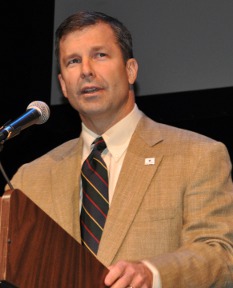
The lawmaker behind a bill Texas that would levy felony charges against overly-touchy security personnel may be staunchly Republican, but he truly believes his cause isn’t one tied to the political left or right.
“We’re talking about what would be a criminal act in any other place,” Rep. David Simpson (R) told Raw Story on Monday. “If you viewed someone naked without their permission or consent, or as a condition of travel, it would be sexual harassment or vouyerism. If you touched people’s privates, that would be sexual assault.
“This is not a left or right issue,” he added. “They are treating American citizens with great indignity, and we’ve got to make this right.”
Though unlikely to pass — even with a GOP supermajority in the Texas legislature — Simpson’s proposal has become a cause célèbre for civil libertarians, many of whom adamantly oppose the TSA’s screening procedures.
The bill would amend a Texas statute pertaining to “the offensive touching of persons,” extending it to security personnel who conduct a search “without probable cause.”
That’s actually the exact wording used in the Constitution in the section outlining prohibitions on unreasonable search and seizure. The legal standard for a lawful search is probable cause: a requirement that law enforcement must meet before most judges will issue search warrants.
European Parliament Spent £600,000 On Six Body Scanners That Were Never Used Because MEPs Argued It Would Be An Infringement Of Privacy
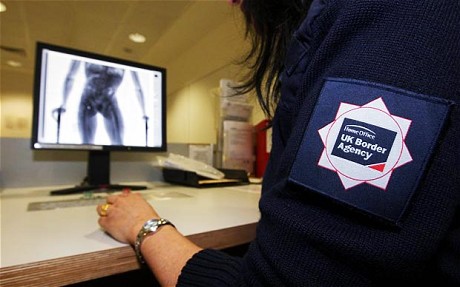
MEPs led the campaign to stop the use of the scanners in the Parliament yet they are in use in 70 airports across Europe, including London Heathrow Photo: PA
The body scanners, bought in 2005 at a cost of £100,000 each, are “rotting” in the basement of the building in Brussels and have never been used.
When the scanners, which create an image of a person’s nude body, were eventually delivered to the Parliament in the autumn of 2005 MEPs objected to them being used in the building on privacy grounds.
Nikki Sinclair, a British independent MEP, said the Parliament tried to sell the machines but failed to do so.
Homeland Security Paid Contractors Millions of Dollars to Develop And Study Covert Body Scans
See also:
–Documents Reveal TSA Research Proposal To Use Body-Scanners On Pedestrians, Train Passengers (Forbes)
– Homeland Security Secretary Janet Napolitano Proposes Full-Body Scanners For Trains, Boats, Metro (The Hill)
– US: Full-Body Scanners Popping Up At Courthouses (AP)

The Homeland Security Department paid contractors millions of dollars to develop and study surveillance systems that could covertly track pedestrians and check under people’s clothing with airport-style body scanners as they enter train stations, bus depots or major events, newly released documents show.
Two contracts the department signed in 2005 and 2006 were part of its effort to acquire technology to find suicide bombers in a crowd of moving people, according to documents given to the Electronic Privacy Information Center (EPIC), a privacy-rights group that is suing Homeland Security.
The department dropped the projects in a “very early” phase after testing showed flaws, Homeland Security spokesman Bobby Whithorne says.
EPIC lawyer Ginger McCall says the project is disturbing nonetheless because it shows the department “obviously believed that this level of surveillance is acceptable when in fact it is not at all acceptable.”
A $1.9 million contract with Rapiscan Systems, which makes airport body scanners, asked the company to develop similar machines for “covert inspection of moving subjects” and to find explosives on suicide bombers “through clothing, backpacks and other packages.” The contract was signed in 2005.
Rapiscan’s airport body scanners require subjects to stand still while the machines create an image of passengers underneath their clothing to reveal hidden weapons. EPIC has sued the department to stop their use, saying the machines violate privacy.