Feb 11

From the article:

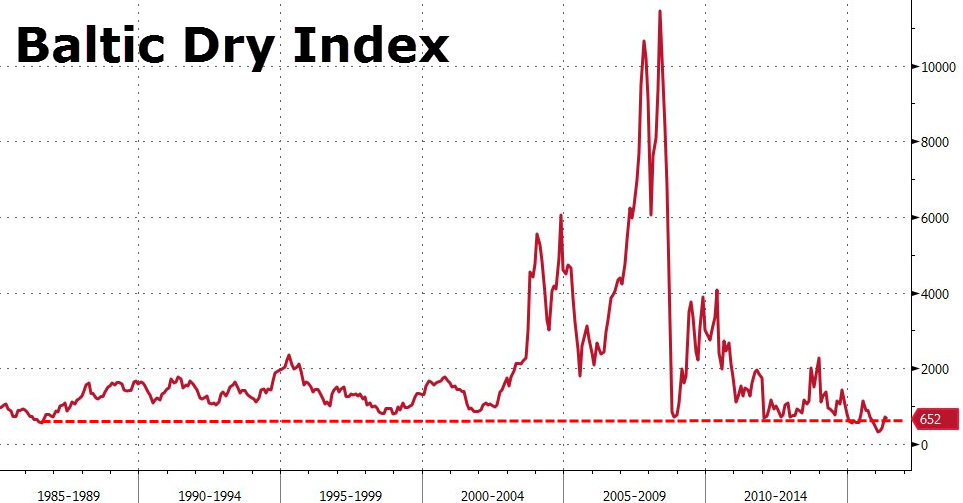
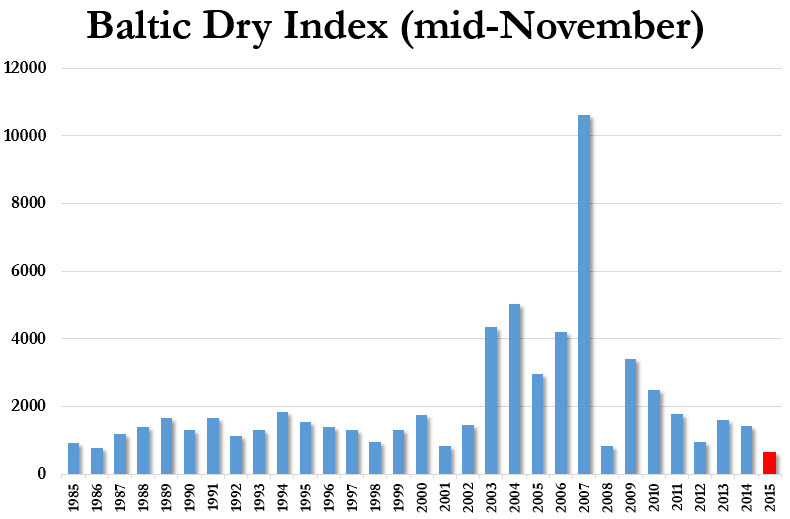
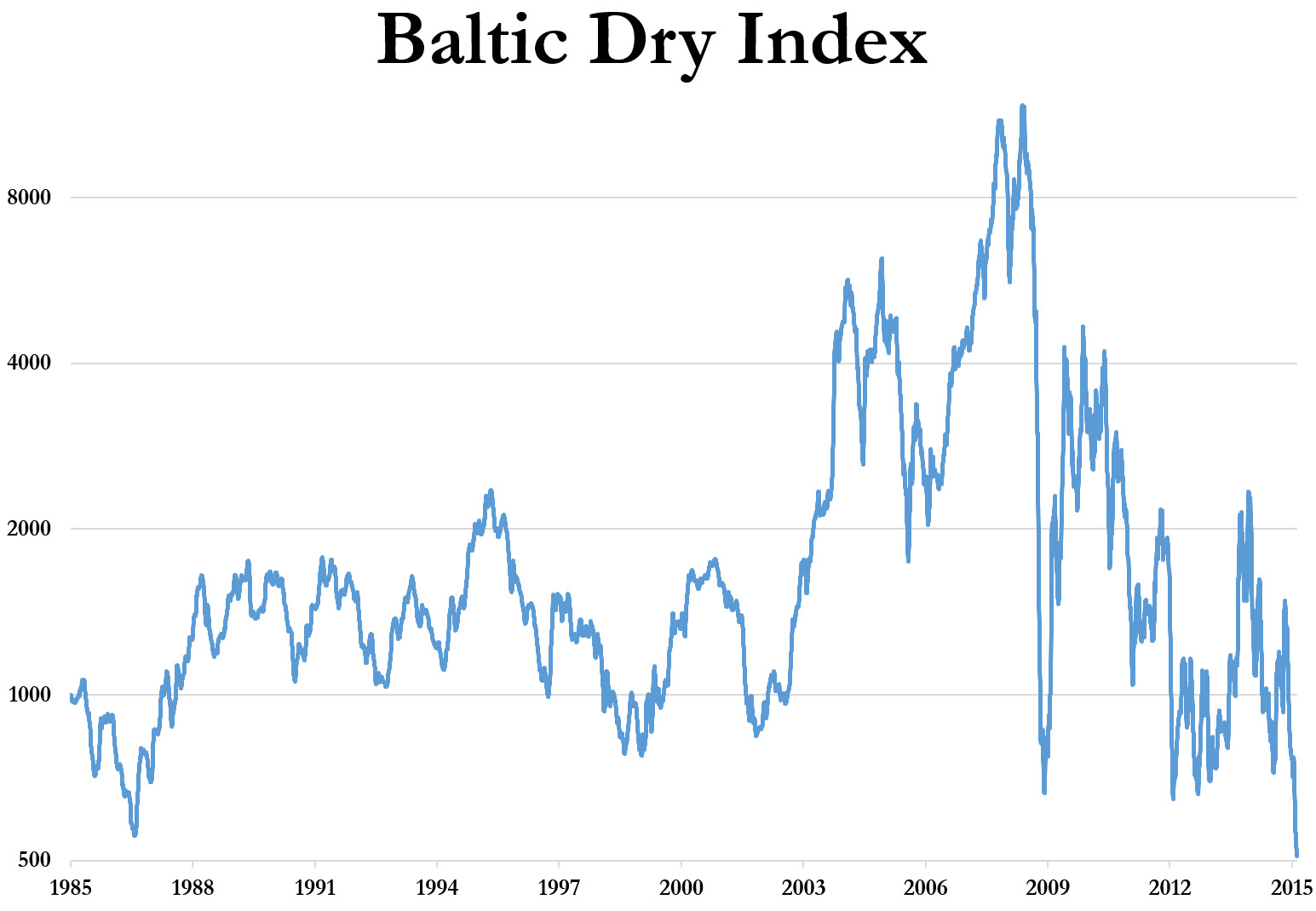
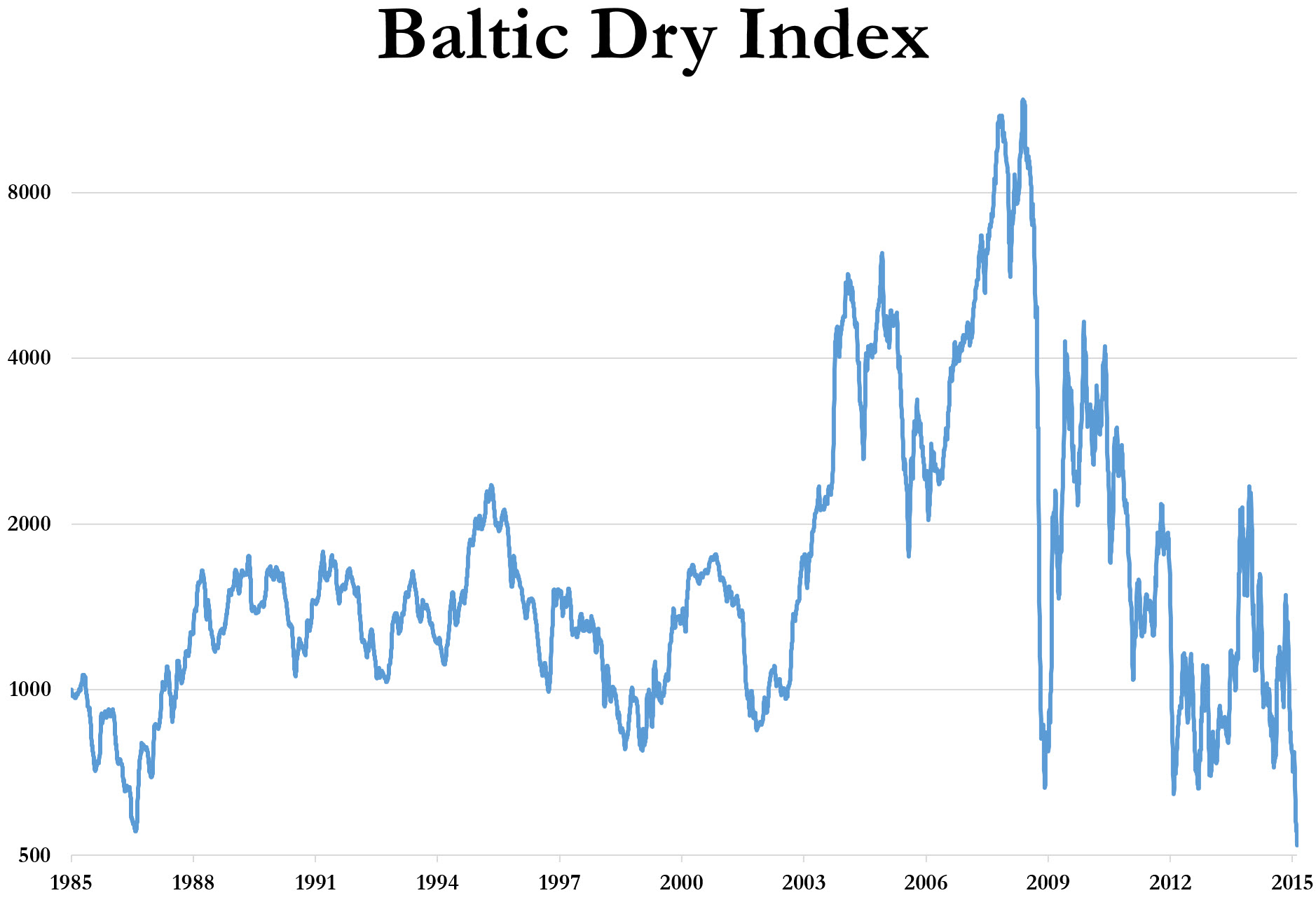
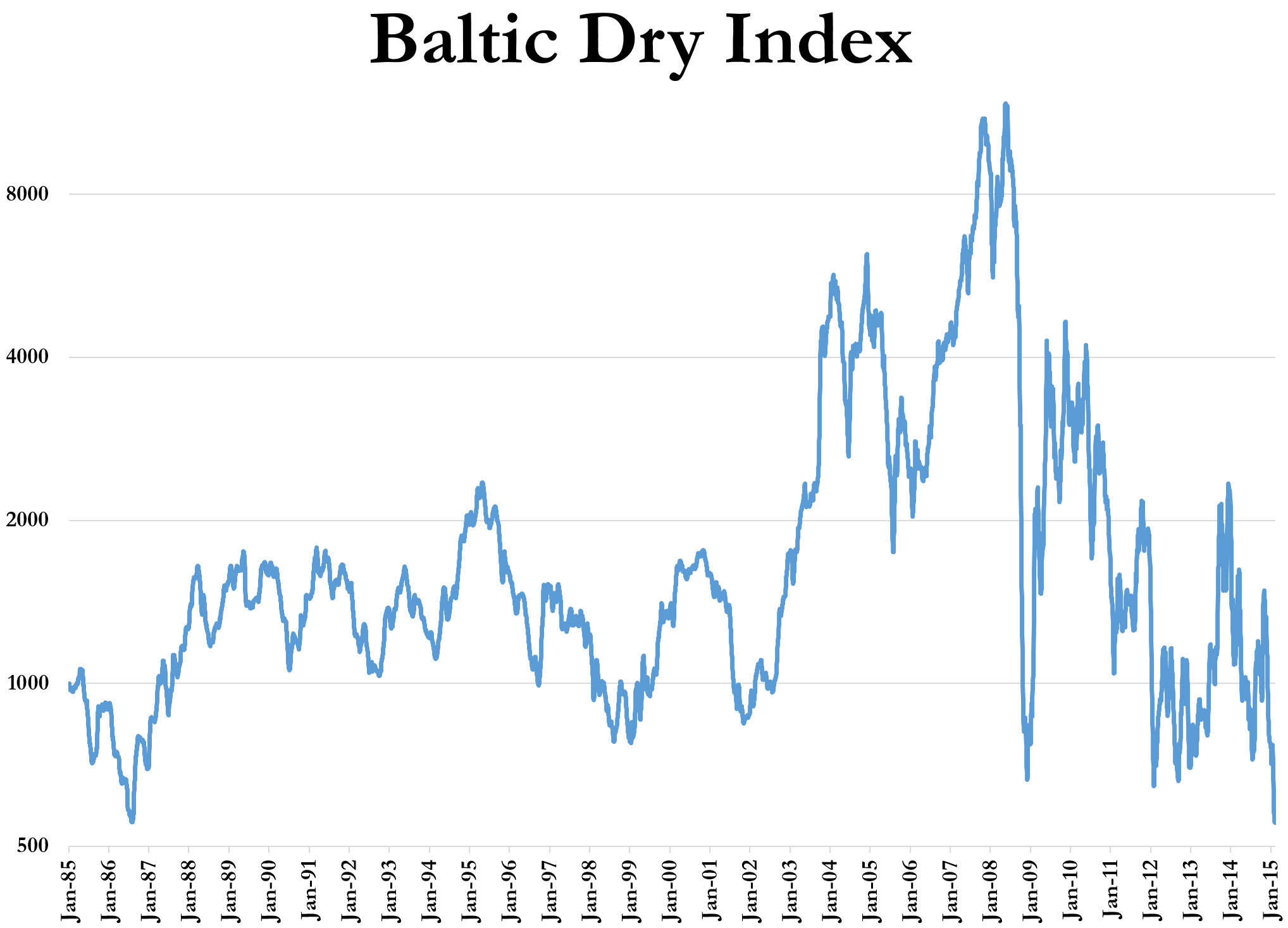
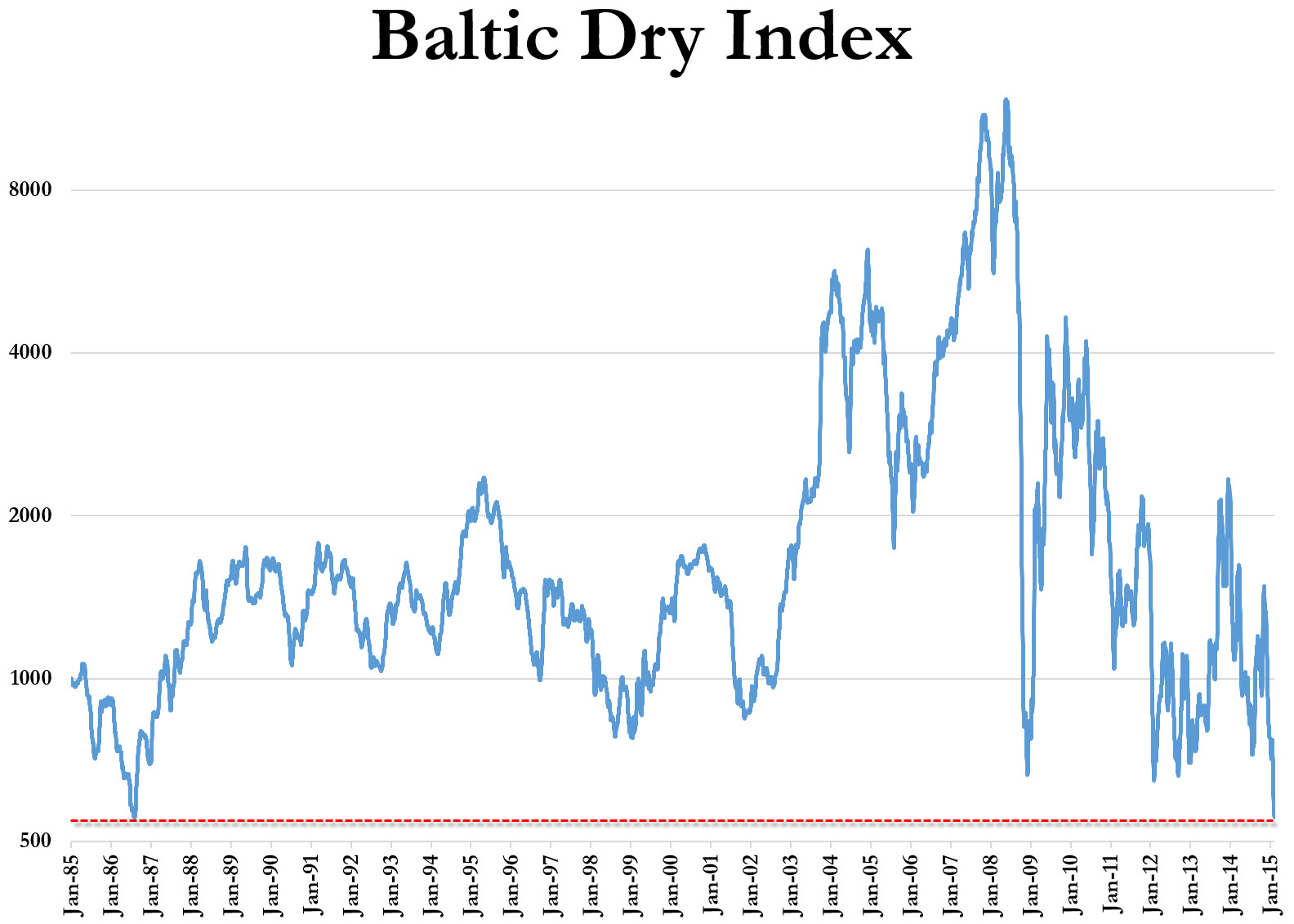
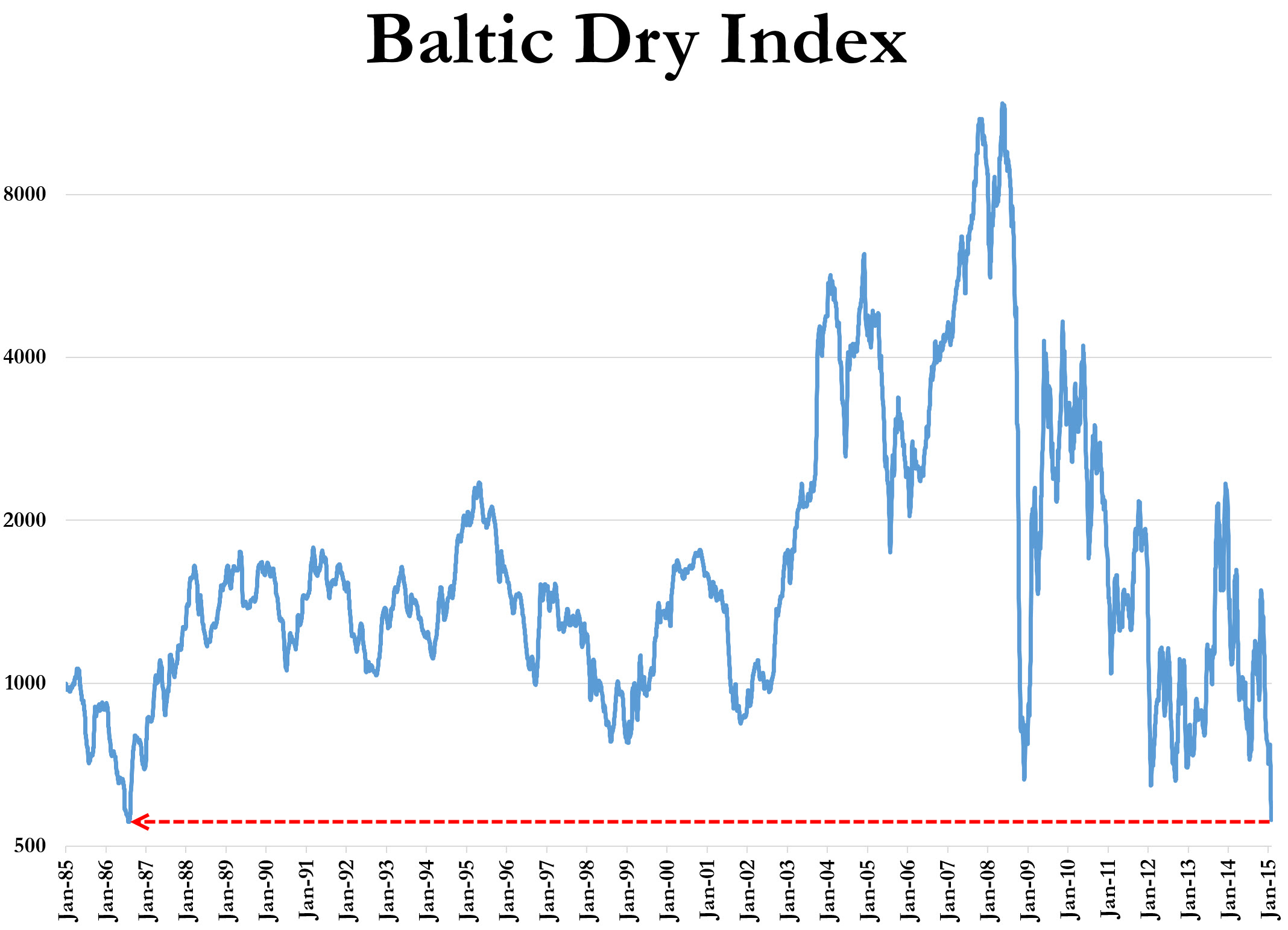
“The downturn in consumption and industry also seems to be supported by the Baltic Dry Index, a measure of global shipping and rates.  The BDI has fallen to near historic lows THREE TIMES in the past year, which to my knowledge, has never happened before.  In the past, the BDI has been a strong prophetic indicator of future market volatility.  Usually, around a year after a severe decline in the index, a dangerous economic event takes place.  The BDI made its first sharp drop to all time lows at the end of January 2012, exactly a year ago.”


- The U.S. Economy Is Now Dangerously Detached From Reality (Alt-Market, Feb 8, 2013):

Recently I was asked to give a presentation on the current state of the global economy to a local group of concerned citizens here in Northwest Montana.  I was happy to oblige but when composing my bullet points I realized that, in truth, there were no legitimate economic numbers to examine anymore.  You see, financial analysts have traditionally used multiple indicators of employment, profit, savings, credit, supply, and demand in their efforts to divine the often obscured facts of our financial system.  The problem is, nearly every index we used in the past, every measure of capital flow and industry, is absolutely useless today.

We now live in an entirely fabricated fiscal environment.  Every aspect of it is filtered, muddled, molded, and manipulated before our eyes ever get to study the stats.  The metaphor may be overused, but our economic system has become an absolute “matrix”.  All that we see and hear has been homogenized and all truth has been sterilized away.  There is nothing to investigate anymore.  It is like awaking in the middle of a vast and hallucinatory live action theater production, complete with performers, props, and sound effects, all designed to confuse us and do us harm.  In the end, trying to make sense of the illusion is a waste of time.  All we can do is look for the exits…

Continue reading »

Tags: , , , , , , , , , , , , , ,

Jan 08

From Bloomberg, Jan 8, 2013:

The glut in Panamaxes extends across the fleet. The Baltic Dry Index, a measure of rates for four classes of dry-bulk commodity carriers, slumped 60 percent last year. The Baltic Dirty Tanker Index of oil-shipping rates retreated 18 percent and a measure of charges for six types of containers declined 14 percent, according to the Hamburg Shipbrokers’ Association.

Tags: , , ,

Feb 06

- Shipping Rates Go… Negative (ZeroHedge, Feb. 6, 2012):

Following the endless collapse in the Baltic Dry, it was only a matter of time before the shipping industry one-upped the Chairsatan, and was the first to introduce, dum dum dum, negative rates. That’s right: you are now paid to hire a ship. Via Bloomberg:

  • GLENCORE HIRES SHIP AT MINUS $2,000 A DAY, GMI SAYS
  • GMI TO CONTRIBUTE $2,000 A DAY TO GLENCORE’S FUEL COSTS
  • GLOBAL MARITIME’S U.K. MD STEVE RODLEY CONFIRMS DEAL BY PHONE

Why is this happening? Perhaps because ships have to be kept seaworthy and in motion or else they become scrappage in as little time as 3 months. Think sharks. Needless to say, this will play havoc with shipping company (and affiliated entities’) liquidity, as the biggest default wave in the history of the industry is about to be unleashed and tens if not hundreds of billions of European secured loans are about to be “impaired.”

Tags: , , ,

Feb 05

See also:

- RED ALERT: Baltic Dry Index Continues To CRASH! (Jan. 30, 2012)

And opinions like this one from economist Dennis Gartman

- The Irrelevance Of The Baltic Freight Index

… are – in my opinion – only ‘partially’ correct.

Compare this:

- (Dec. 13, 2011): Business Week — Gold is in the “beginnings of a real bear market,” economist Dennis Gartman said today in his daily Gartman Letter.

.. to this …

- (Jan. 31, 2012): Silver Surges 21 Percent in January, Demand Is ‘Diminishing A Supply Surplus’:

Dennis Gartman, economist and newsletter writer, said he is buying more gold priced in euros after he “returned to this trade” last week. It is “time to add to the trade and we are doing so this morning,” he said today in his daily Gartman Letter.

Looks like he ‘knows’ what he talking about! He sounds like the Mitt Romney of economists!

Gold and silver (‘usually’) bottom out around (‘directly after’) Christmas.

The sheeple buy iPads and iPhones and we buy gold and silver!

Prepare for collapse!


- Global Shipping Prices Face More Choppy Waters (Wall Street Journal, Feb. 2, 2012)

Times are tough for the shipping market.

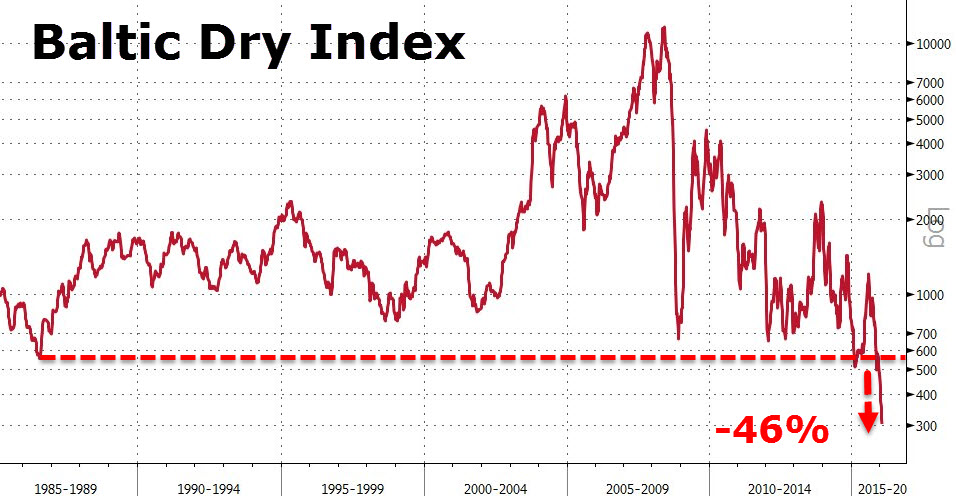
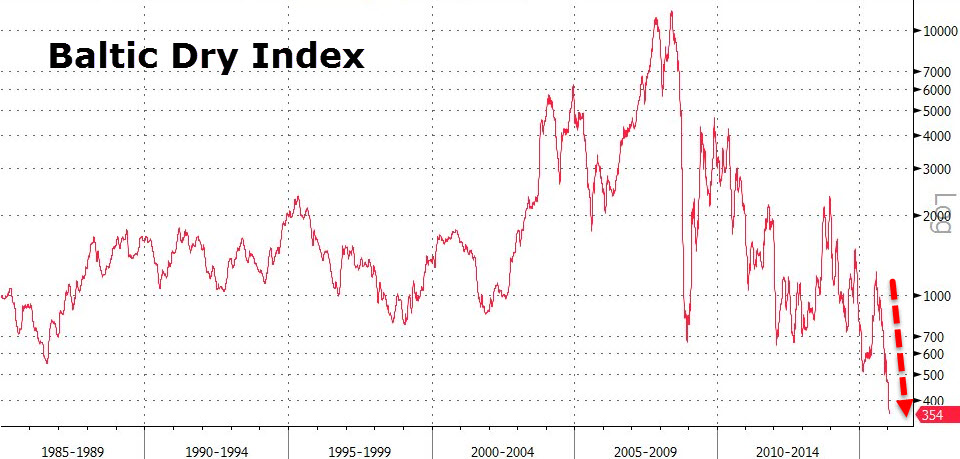
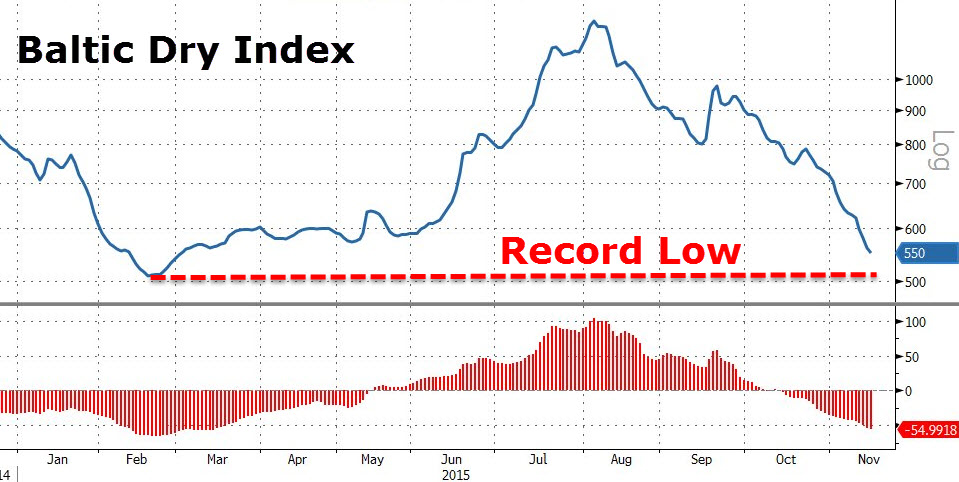
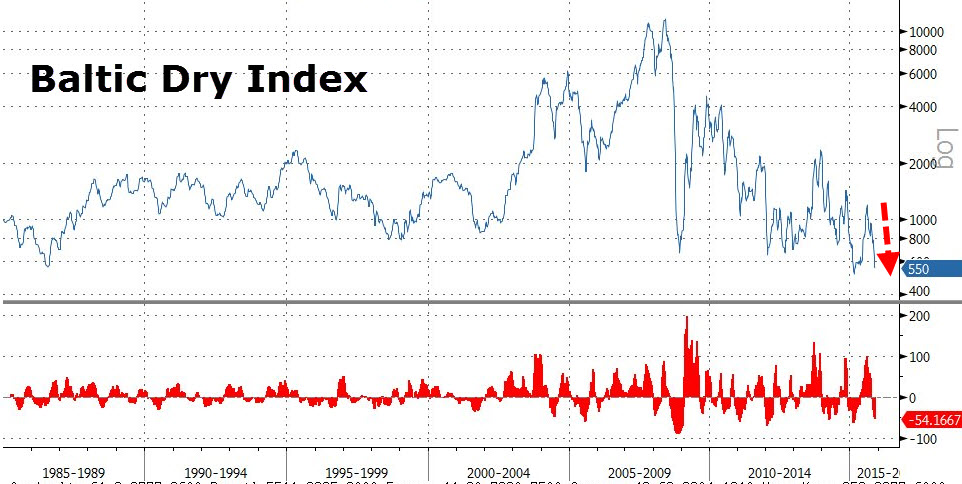
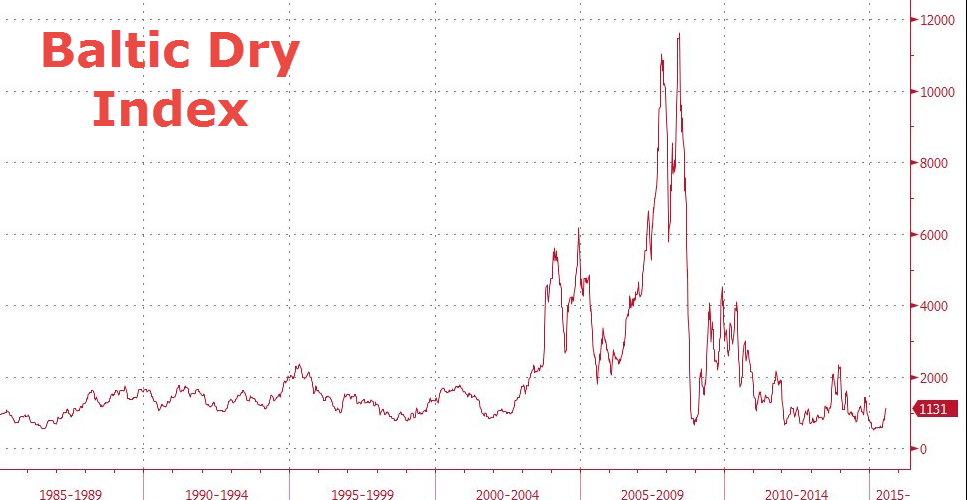
Freight rates hit a record low Wednesday on weak demand for iron ore, poor weather conditions in mining regions and a glut of shipping capacity. The Baltic Dry Index, a composite of commodity shipping costs around the world, fell for a 32nd consecutive session to 662. The previous low, of 663, came in December 2008, during the depths of the credit crunch.

But unlike three years ago, this slump reflects more than a sluggish global economy. A conflation of seasonal, environmental and demand-side factors has accelerated the index’s decline in recent months and could tip it further into the red. The index has plunged 59% this year alone and is down 94% from the peak hit just before the crisis hit.

Continue reading »

Tags: , ,

Jan 31

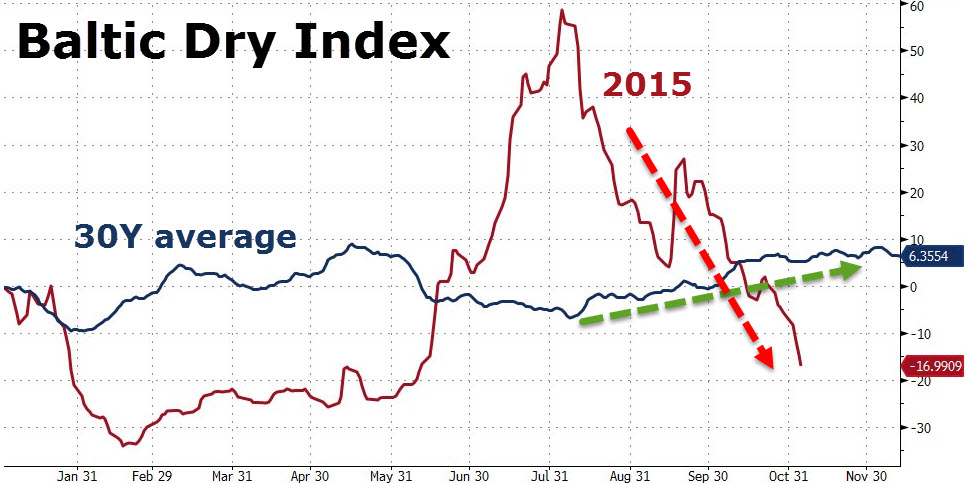
The BDI is plummeting (and is going down faster than the Titanic) and will soon hit record lows.

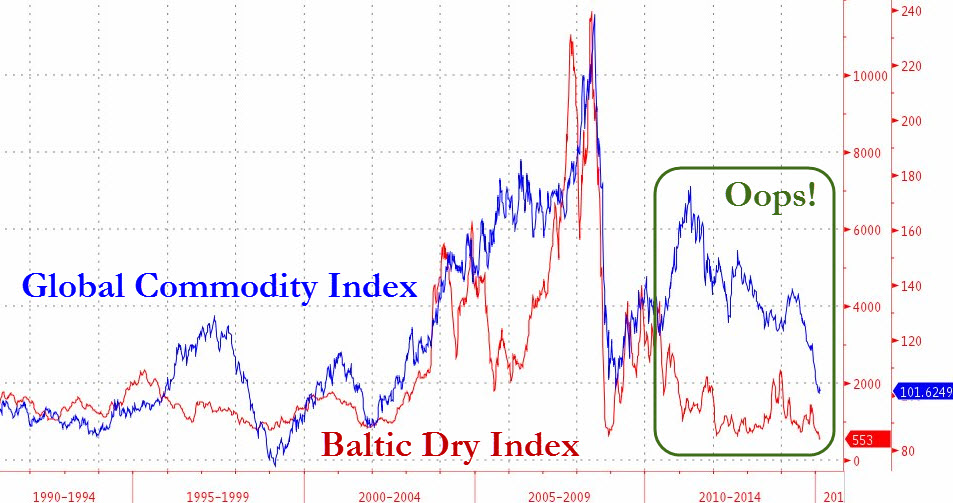
Compare past market crashes and economic turmoil to the BDI and to no surprise you’ll find that there is more than just a ‘correlation’.

Shipping rates never recovered from the 2008 collapse and in just one month the BDI crashed from 1600 to 702, or more than 66%!

Soon everything will come to a standstill, AGAIN. But this time it will be worse, much worse than 2008.

One just has to look at the $1600 trillion (estimated notional value of the worldwide derivatives market) derivative tsunami versus  $60 trillion of  world GDP to get ‘a little concerned’.

Here is a ‘good’ example:

- Accordingly, it sure is a good thing that the world’s biggest derivatives player – J.P. Morgan – has ‘seemingly’ NEVER, EVER made a bet even ’1 % wrong’ with their 80 Trillion derivatives book. The Morgue has a Market Cap of roughly $180 billion. A wrong bet of a mere 1% on their ‘book’ would translate to a loss of $800 billion dollars eviscerating their entire capital base more than four times over. The knock on effect from such an event would trigger multiple tsunamis reverberating through the global financial system. Sounds absurd, but it’s pure math.

And knowing that this is just one piece of the puzzle, it’s safe to say that not one stone will be left upon another.

The greatest financial collapse in world history is coming! (Maybe not right now, but soon enough!)

Got gold, silver, food, water, full survival gear etc.?

Prepare for collapse!

Source: Bloomberg

Tags: , , , ,

Jan 28

We are getting very close to the record lows of 2008!

The Baltic Dry Index cannot be manipulated!

Prepare for collapse!

Source: Bloomberg


Tags: , , ,

Jan 18

Looks like we might be getting close to the next leg down  in the markets.

See the interactive chart here: http://www.bloomberg.com/apps/quote?ticker=BDIY:IND#chart

More charts here: http://investmenttools.com/futures/bdi_baltic_dry_index.htm#bdi

Also prepare yourself for the coming collapse, the greatest collapse in financial history.

How?

Have enough food and water for extended periods of time.

Grow your own organic garden. More  here, here and here.

Got silver and gold?

Silver:

- US Mint Reports Unprecedented Buying Spree Of Physical Silver

- BullionVault.com Runs Out Of Silver In Germany

- Silver: Shortage This Decade, Will Be Worth More Than Gold

- Silver Derivatives – China and JP Morgan

- Max Keiser: Want JP Morgan to Crash? Buy Silver!

- Max Keiser: Crash JP Morgan – Buy Silver!

- JPMorgan Silver Manipulation Explained (Must-See!)

Gold:

- George Soros’ and John Paulson’s Biggest Holding Is GOLD

- China, Russia, Iran are Dumping the Dollar, Buy Gold And Silver

- Gold and Gold Mining Shares As a Percentage of Global Assets or ‘The Once In a Lifetime Ride’

And don’t forget to do this (!!!):

- James G. Rickards of Omnis Inc.: Get Your Gold Out Of The Banking System

Tags: , ,

Jul 12

The Bank of International Settlements is the central banks of central banks controlled by the same elite criminals that have created the entire financial crisis.

Whatever game they can play to suppress the ‘price of gold’ – their greatest enemy – they will do it..

See also:

- BIS: Currency Collapse May Stimulate Economic Expansion

- Renaissance 2.0: Lesson 5 – The Emerging Global Empire – The New World Order

Interestingly enough this article mentions the Baltic Dry Index, which has been a really good indicator of what is coming, because it cannot be manipulated (that easily). Prepare for collapse.


It takes a lot to spook the solid old gold market. But when it emerged last week that one or more banks had lent 380 tonnes of gold to the Bank of International Settlements in return for foreign currencies, there was widespread surprise and confusion

gold-bars_123
Secret gold swap has spooked the market

The news that a mystery bank has just pawned the family jewels gave traders a jolt – nervous about the sudden transfer of almost 20pc of the world’s annual gold production and the possibility of a sell-off.

In a tiny footnote in its annual report, the bank disclosed its unusually large holding of gold, compared with nothing the year before. The disclosure was a large factor in the correction of the gold price this week, which fell below $1,200 for the first time in more than a month.

Concerns hinged on whether the BIS could potentially sell on this vast cache of bullion in the event of a default, flooding the market with liquidity. It appears to have raised $14bn for whoever’s been doing the swapping – small fry on the currency markets, but serious liquidity in the gold market.

Denominated in euros, gold has fallen 8pc since the beginning of the month and is now trading at a seven-week low of €937 per troy ounce.

The big gold exchange traded funds (ETFs) – having peaked at record inflows in May – have also been showing net outflows over the past few days.

Meanwhile, economists and gold market-watchers were determined to hunt down which bank is short of cash – curious about who is using their stash of precious metal for what looks suspiciously like a secret bailout.

At first it looked like the BIS was swapping gold with a troubled central bank. After all, the institution is the central bankers’ bank and its purpose to conduct transactions with national monetary authorities.

Central banks in the troubled southern zone of Europe were considered the most likely perpetrators.

According to the World Gold Council, central banks in Greece, Spain and Portugal held 112.2, 281.6 and 382.5 tons of gold respectively in June – leading analysts to point fingers at Portugal, or a combination of the three.

But Edel Tully, an analyst from UBS, noted that eurozone central banks would be severely limited with what they could do with the influx of extra cash – unable to transfer it straight to governments or make use of the primary bond markets.

She then listed the only other potential monetary authorities with enough gold as the US, China, Switzerland, Japan, Russia, India and Taiwan – and the International Monetary Fund.

This led to musings that the counterparty was the IMF, making sense because the lender of last resort is historically prone to cash shortages and has been quietly selling off gold in the first half of the year.

Renowned gold expert Jim Sinclair adopted this explanation. The panic came when people mistook a lease for a swap, he argues. Far from being a big release of gold into the market, it is simply a commercial arrangement between the IMF and BIS with a favourable rate of interest paid for the foreign currency. Continue reading »

Tags: , , , , , , , ,

Aug 12

Baltic Exchange Dry Index (BDI)

20 day exponential average in red.

200 day exponential average in green.

bdi

I expect the next leg down in the markets any time soon.

After all those banks have invested their bailout/taxpayer money in the stock market it is about time that investors are coming back to their senses and take a look at the fundamentals, realizing that the Fed and the US government have just created another even bigger bubble. Now we have even several bubbles that are about to burst.

The biggest Ponzi scheme in the world is run by the Federal Reserve and not by China.

The Baltic Dry Index is an excellent indicator, because it can’t be (that easily) manipulated.

China is also in trouble, partly because it has also applied the dead wrong US bailout/stimulus policies, but when the world realizes that the US has entered into the Greatest Depression, China – or better China’s elite – will greatly benefit from that.
The people will of course suffer.

China has effectively ‘written off’ its investment in US Treasuries. China is not stupid.

Be prepared.

(Note: This is not an investment advice.)


China’s loan growth plunged in July while exports fell 23pc from a year ago after grinding lower for nine months as consumers in the West tighten their belts further.

Labourers work on a scaffolding at a construction site in Wuhan
Can the world rely on China’s growth miracle to power recovery?

The data raise fresh doubts about the strength of global trade and whether the world can rely on China’s growth miracle to power recovery.

Separately, the Baltic Dry Index – measuring freight rates for bulk goods – has tipped over, dropping 25pc since late July. The shipping figures buttress reports that China has stopped building up stocks of metals and other commodities after a spate of frantic buying over the early summer.

(China does not have stopped building up stocks of metals and other commodities. It is also buying mining companies or at least stakes in them.
- Coal Miner in Australia Agrees to Chinese Bid (New York Times)
-
China Hunger for Australia’s Minerals Undeterred by Hu Dispute (Bloomberg)
That trend will continue, because it is China’s best way to diversify itself further away from the soon to be worthless US dollar. :-) )

China’s central bank said loan growth fell to $52bn (£31bn) from $248bn a month earlier, although it is too early to tell whether Beijing has begun to rein in credit after the explosion of bank loans in the first half of the year.

The loan figures are being watched closely by analysts and traders in the City. Excess liquidity in China has been a key driver of global markets since the rally began in March.

Beijing is walking a tightrope by trying to offset the collapse in exports – almost 40pc of GDP – with an investment blitz in roads, railways, and industry through state-owned companies.

The real economy cannot absorb the money, so it is leaking into asset speculation. The central bank estimates that 20pc of fresh credit has ended up in equity markets. The Shanghai index is up 80pc this year, though profits have fallen by almost a third. The pattern echoes the final phase of Japan’s Nikkei bubble in 1989.

“China is a big fat tail risk for world markets,” said Hans Redeker, currency chief at BNP Paribas. “Shanghai equities have reached the same extreme as in late 2007. The country will have to cut credit growth, and when this happens, Shanghai equities and commodities will suffer. That is what could bring this global rally to a halt.”

China Construction Bank, the number two lender, is cutting loans by 70pc over the second half of the year. “We noticed that some loans didn’t go into the real economy. Housing prices are rising too fast,” said the bank’s president, Zhang Jianguo.

Andy Xie, a leading consultant, said China’s boom was a “giant Ponzi scheme” that was likely to “bring very bad consequences” for the country.

“The stock market is in a final frenzy again. The most ignorant retail investors are being sucked in by rising momentum,” he said. Equities are overvalued by 50pc to 100pc.

Continue reading »

Tags: , , , , , , , ,

Jan 30

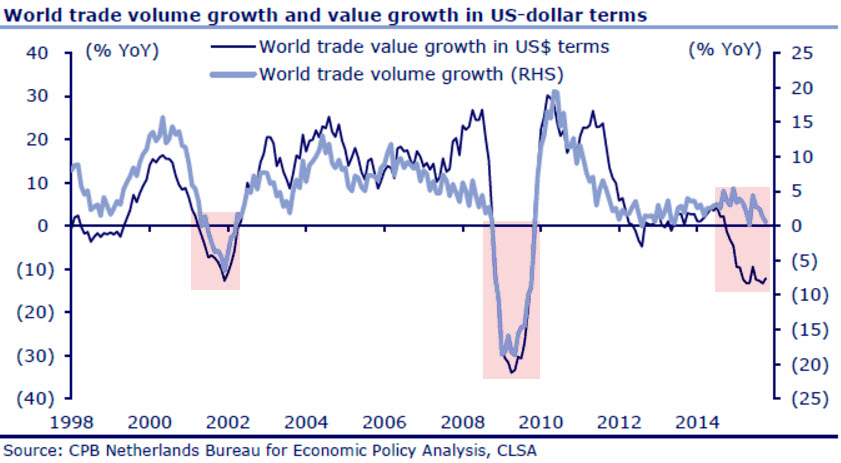
The airline industry reported on Thursday an “unprecedented and shocking” plunge in global air cargo traffic.

Air freight accounts for 35 per cent of the value of goods traded internationally and the International Air Transport Association said traffic volumes had fallen by 22.6 per cent year-on-year in December.

Giovanni Bisignani, Iata director general, said, “there is no clearer description of the slowdown in world trade. Even in September 2001 (after the 9/11 terrorist attacks in the US), when much of the global fleet was grounded, the decline was only 13.9 per cent.”


“there is no clearer description of the slowdown in world trade,” … oh, wait a minute:

- Investmenttools.com
- In German: Baltic Dry Index crasht
- Baltic Dry Index (Wikipedia)

US to be CUT OFF from World – Baltic Dry Index Falls 93%

Source: YouTube


International passenger traffic fell in December by 4.6 per cent. Iata said the drop was less dramatic than in cargo, as volumes had been supported by year-end leisure travel that had been booked in advance.

Continue reading »

Tags: , ,