Jan 04

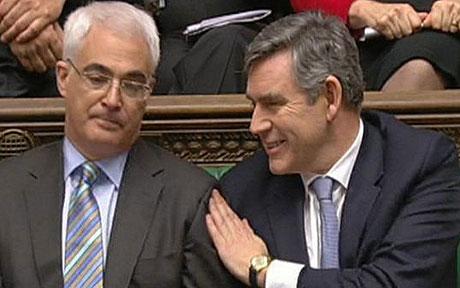
GORDON BROWN’S “DECISIVE” strategy to recapitalise Britain’s banks and get them lending again with a £37 billion bail-out, which he claimed has been copied all over the world, has not worked - and the Treasury has no plan B yet.

“The government’s plan A has not worked, and there is, as yet, no firm plan B,” a government source told the Sunday Herald. However, a senior adviser to chancellor Alistair Darling insisted that lending shouldn’t be taken as the sole measure of success: “Plan A has not failed, because the banks are still standing.”

But although UK banks are open for business, Britain is still facing a lending drought with banks and building societies continuing to reduce the amount of credit available to businesses and would-be homebuyers.
advertisement

This has left Darling with a dilemma: does he throw more money at the banks, effectively admitting that £37bn of taxpayers’ money wasn’t enough, or does he wait?

Continue reading »

Tags: , , , , , , , , ,

Jan 03

Billions may be needed as lending squeeze tightens

Alistair Darling has been forced to consider a second bailout for banks as the lending drought worsens.

The Chancellor will decide within weeks whether to pump billions more into the economy as evidence mounts that the £37 billion part-nationalisation last year has failed to keep credit flowing. Options include cash injections, offering banks cheaper state guarantees to raise money privately or buying up “toxic assets”, The Times has learnt.

The Bank of England revealed yesterday that, despite intense pressure, the banks curbed lending in the final quarter of last year and plan even tighter restrictions in the coming months. Its findings will alarm the Treasury.

The Bank is expected to take yet more aggressive action this week by cutting the base rate from its current level of 2 per cent. Doing so would reduce the cost of borrowing but have little effect on the availability of loans.

Continue reading »

Tags: , , , , , , , , ,

Dec 21

With such people in top positions around the world … prepare for the worst.
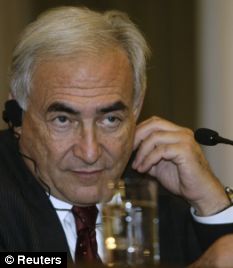
Thanks to their debt and inflation creating policies they have assured that “The whole society is going to suffer.” (IMF boss Dominique Strauss-Kahn).
They are creating the worst depression ever.


‘The whole society is going to suffer,’ warns IMF boss Dominique Strauss-Kahn

Billions more will have to be pumped into the economy to avoid it spiralling into an even ‘darker’ recession, the head of the International Monetary Fund has warned.

Britain and other leading economies will need to double their economic bailout packages during 2009, which is shaping up to be a ‘really bad year’, according to Dominique Strauss-Kahn.

‘I’m specially concerned by the fact that our forecast, already very dark . . . will be even darker if not enough fiscal stimulus is implemented,’ Mr Strauss-Kahn told BBC Radio 4.

The IMF, which oversees the world’s economic system, is urging governments around the world to splurge a staggering £80trillion in a co-ordinated war against recession.

That would represent around 2 per cent of global annual economic output.

But Chancellor Alistair Darling’s stimulus package accounts for just 1 per cent of Britain’s national income.

Continue reading »

Tags: , , , , , , , , ,

Dec 19

Just as Bernard Madoff is alleged to have relied on payments in from new investors to pay out returns and promote a $50 billion (£33 billion) fund that scarcely existed, our Government continues to issue promises which it hopes future generations will honour.


The biggest Ponzi scheme: Bernard Madoff’s or our Government’s? Photo: BLOOMBERG

Christmas came early this week for 95,000 public sector pensioners. After questioning in the House of Commons, Cabinet Office Minister Liam Byrne admitted that they had been overpaid a total of £126m since 1978 but emphasised that they would not be required to pay the money back.

Particularly at this time of year, it makes a pleasant change to see some pensioners actually gaining from the sort of bureaucratic bungling with which we are now so wearily familiar and utterly fed up. All things considered, most people will be willing to set aside any Scrooge-like tendency to ponder upon who is paying for the politician to pose as Father Christmas.

However, a slight chill is placed on this cheery scene when you consider the uncertainty which these pensioners now face over what they will have to live on next year after their incomes are cut to the correct level. Perhaps equally galling, from the point of view of the majority who live in England, is the news from Scotland that the minority who are in receipt of overpayments north of the border will continue to be overpaid for as long as they live.

Continue reading »

Tags: , , , , ,

Dec 13


The Vauxhall factory at Ellesmere Port, Cheshire, yesterday. The struggling company has offered all 4,500 workers at the plant a sabbatical of up to nine months on 30 per cent pay

A financial rescue package for Britain’s motor industry was being put together last night, mirroring efforts in Washington to save America’s three big carmakers from collapse.

Lord Mandelson, the Business Secretary, and Alistair Darling, the Chancellor, may offer bridging loans on commercial terms to vehicle and component manufacturers and wider guarantees for loans from banks.

The peer is in regular contact with the industry, which has reached a crisis point. Several carmakers plan extended shutdowns over Christmas, leaving them with vastly reduced sales income but with salaries and other bills still to pay.

Suppliers, many of them small companies, are demanding weekly payments to secure their cashflows and stay in business. One firm, Wagon, has gone into administration with the loss of 500 jobs. If the supply chain crumbles, tens of thousands of jobs will be lost. The components industry supports 115,000 workers, while manufacturing employs 190,000 and the whole industry, including retail, 850,000.

Continue reading »

Tags: , , , , ,

Dec 10

The government and the Bank(sters) of England are intentionally ruining what is left of the economy and what is left of trust in the currency. Britain has become a worse credit risk than McDonald’s. The U.S. will fail and the U.K. is doing everything to follow suit. Who will pay for those billions of pounds? The government has to raise taxes or has to issue more bonds, which are nothing more than a promise to raise taxes in the future, because that money has to be paid back plus interest. Creating billions of pounds out of ‘thin air’ will further weaken the pound and will create massive inflation, which is nothing more than a ‘hidden tax’. The taxpayers will have to pay for all of it until the taxpayers will finally fail.
_________________________________________________________________________


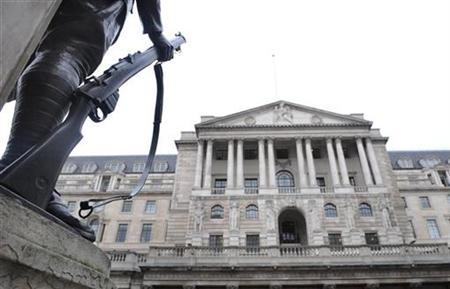
The Bank of England

Dec. 10 (Bloomberg) — The U.K. government and central bank are considering plans to pump billions of pounds into the economy as the bank rescue package and the lowest interest rates since 1951 fail to halt a slide into recession.

The Bank of England and the Treasury are weighing a strategy known as “quantitative easing” where authorities increase money supply to boost bank reserves. The initiative was last used by Japan at the start of the decade.

Prime Minister Gordon Brown’s government is frustrated that banks are rationing credit after tapping the Treasury for cash and guarantees to prop up their own balance sheets. Policy makers both in the U.K. and the U.S. Federal Reserve are looking beyond traditional interest-rate tools to revive the economy.

Continue reading »

Tags: , , , , , , ,

Nov 09

HOW WOULD YOU FEEL, RUNNING A MODEST business, if the money fairy came along and promised you would never, ever go bust? How much of a spring would it put in your step if the nice imp then said she had cast a spell guaranteeing all your lending, all your borrowing, and 98% of your customers’ cash? “Yes,” you might just say, clapping your sticky little hands, “I do believe in fairies!”

This hard-to-swallow tale has more than one happy ending. While your godmother hopes you will become a good little banker one day, she doesn’t want to be too stern. It’s not her place. So if she sprinkles some of her magic dust and shrinks the cost of money, she won’t force you to share your good luck with anyone. She’ll “urge” you instead. But only a very naughty banker would ignore that, surely?

After all, you owe the good fairy something. In fact, you owe her billions of things. They are the reasons why you are still able to frolic as a happy little banker. They also explain why you are still looking forward to big Christmas presents and the chance, some time very soon, to tell fairy godmother where to stick her advice and all those tiresome homilies on the need to be nice to poor folk.

Whatever Alistair Darling was waving at the bankers during a breakfast meeting on Friday morning, it was not a magic wand. He can urge to his heart’s content, but they intend to go on treating the Bank of England, its base rate and its monetary policy committee (MPC) as fictions only children would believe. Most may have buckled, belatedly, under an avalanche of bad publicity, but the chancellor doesn’t frighten them.

Continue reading »

Tags: , , , , ,

Nov 09

The financial crisis will result in tax revenues from City bonuses alone falling by as much as £4bn next year, according to one of Britain’s most influential economic forecasting firms.


Restrictions on bonuses at the banks which the Government is helping to rescue will also have the unintended consequence of lowering tax revenues Photo: MICHAEL WALTER

As investment banks, hedge funds and private equity firms - three of the principal drivers of the Square Mile’s explosive growth of recent years - cut tens of thousands of jobs, the Centre for Economics and Business Research (CEBR) expects the Treasury to face an overall City-generated taxation “black hole” of more than £10bn.

The CEBR believes the Government will collect around £5bn less than previously-estimated in corporation tax, while tax generated by bonuses, National Insurance contributions and base salaries is likely to fall by around £6bn.

The bleak forecasts underline the many ways in which cutbacks in the City, which has become a crucial engine of national economic growth, will contribute to an expected recession in Britain.

Restrictions on bonuses at the banks which the Government is helping to rescue will also have the unintended consequence of lowering tax revenues from City firms.

The deficit means Alistair Darling, the Chancellor, may need to borrow up to £110bn in the next financial year to plug the hole in the national balance sheet - almost three times the estimate of the £38bn forecast in his Budget statement last March.

Continue reading »

Tags: , , , , , , , ,

Nov 07

Alistair Darling summoned the chief executives of Britain’s biggest banks to Downing Street today to demand that they immediately pass on the Bank of England’s interest rate cut to their customers.

Treasury sources confirmed to The Times that the Chancellor told the heads of all Britain’s big high street lenders - including HSBC, Barclays, Lloyds TSB, HBOS Nationwide and Abbey - to implement rate cuts immediately.

Yesterday, the Bank of England slashed interest rates by 1.5 per cent to 3 per cent, the lowest level in 54 years, and today, the shock reduction helped to ease the strain in nervous money markets.

Libor, which is the rate at which banks lend to each other and is key for pricing mortgages, fell by more than one per cent from 5.561 per cent to 4.496 per cent.

However, the figure remains almost 1.5 per cent higher than the official interest rate.

The spread between the Bank of England’s borrowing cost and the rate that banks charge to borrow money over a three-month period - a key measure in the wholesale money market - is the widest since October 22. The day before, Mervyn King, the Governor of the Bank of England, publicly acknowledged for the first time that a recession in the UK is now likely.

Continue reading »

Tags: , , , , , , , , , , , , , , ,

Nov 06

Business Secretary Peter Mandelson, is being urged to do more to help small businesses

Hundreds of small firms will go bust by the end of the year if ministers fail to deliver quickly on their pledge to increase bank lending, business leaders have warned.

Despite repeated calls for action from Gordon Brown and Chancellor Alistair Darling, it emerged that companies were still suffering from banks doubling overdraft charges and increasing interest rates.

The squeeze on bank lending puts huge pressure on the Government amid public expectation of a return for its £37 billion bailout with taxpayer cash.

Abbey yesterday increased rates by half a percentage point and Mr Brown was facing further embarrassment today as the nationalised northern Rock was expected to axe its tracker mortgages.

As Business Secretary Lord Mandelson prepared for a grilling by the House Of Lords, it emerged he had been personally warned by business leaders yesterday that firms were facing bankruptcy before Christmas.

Continue reading »

Tags: , , , , , , , ,