Sep 21

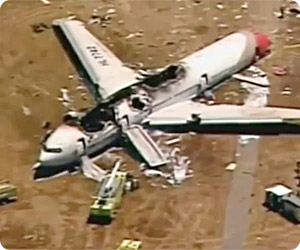
ROME: Alitalia might stop flying within a week if unions don’t change course and accept a rescue plan offered by Italian investors, Italy’s transport minister said Sunday.

The only hope for the survival of Italy’s bankrupt flagship airline is for union leaders to agree to the investors’ terms, and for the government to convince the investors to put the deal back on the table, Minister Altero Matteoli told Sky TG24 TV.

“Alitalia has only very few days left, surely less than a week,” unless a deal is made, he said.

The investors withdrew their offer to acquire some of Alitalia’s more potentially profitable assets after some unions, including pilots’ representatives, rebuffed the deal.

Other unions for Alitalia employees have accepted the plan, which calls for some 3,250 layoffs among the airline’s 20,000 workers, the elimination or reduction of loss-making routes and the sale of many aircraft.

Continue reading »

Tags: , , , ,

Jul 04

Investors are fleeing from the U.S. stock market, Sending the Dow to Worst June Since Depression, looking for places to secure their wealth.

There is an unprecedented cash flow of ‘hot money’, which is usually defined as short-term global speculative funds moving among financial markets in search of the highest short-term return, moving into China:
Is China flooded with ‘hot money’ because of an expected meltdown in the U.S.?

Let’s further examine the prospects that we would experience a total crash of the entire financial system:

- Fortis Bank Predicts US Financial Market Meltdown Within Weeks

We have seen the Dow suffering it’s worst 1st half since ‘70 accompanied by a lot of bad news for the economy like:
- US: Big Trouble for General Motors, Crysler and Ford
- America’s Aviation System About To Collapse
- Starbucks to cut as many as 12,000 positions
And now the corporations are cheating you at the supermarkets: America’s Shrinking Groceries

The Dollar is being destroyed by the Federal Reserve, which has created in the last three years 4 Trillion Dollars of new money out of thin air: Ron Paul on Iran and Energy June 26, 2008

Ron Paul is further warning that: This coming crisis is bigger than the world has ever experienced
and that: We are at the beginning of a huge Dollar bubble.

The US Federal Reserve intentionally created inflation and that is why its credibility has fallen “below zero” and that is why Barclays warns of a financial storm as Federal Reserve’s credibility crumbles.

More dire warnings:
- RBS issues global stock and credit crash alert
- Morgan Stanley warns of ‘catastrophic event’ as ECB fights Federal Reserve
- Central bank body warns of Great Depression
- Credit crisis expands, hitting all kinds of consumer loans
- How Low Can The Dollar Go? Zero Value

Investors like Jim Rogers are telling us to “Avoid The Dollar At All Costs” and have told us that the Federal Reserve will fail and that Bernanke should be fired (alhough that isn’t possible because of his contract), because he has created the worst recession in the end and thats why he said: “Abolish the FED” on CNBC 2008.03.12.

The Fed is only doing good for the big corporations on Wall Street. If you would continuously come close to bankruptcy, because you have irresponsibly wasted your money, who will continuously give you billions of Dollars and bail you out, because you might fail? So I agree totally with Marc Faber: ‘Misleading’ Fed Should Let Banks Fail.

Well those corporations are said to be to “Big to Fail”, but they eventually will fail, because the entire system will fail and the Dollar is being destroyed in the process and so the people will end up with nothing, because their life savings are worthless paper. You are already paying the price for this policy, but maybe you haven’t looked at it that way:
The Price Of Food: 2007 - 2008
What inflation really is, is a taxation on monetary assets. And guess who is paying for all of that?

I just love this video. A must see:
The Stock Market and the Monetary System are on the verge of collapse!

Continue reading »

Tags: , , , , , , , , , , , , , , , , , , , , , , , , , , , , , , , , , , , , , , , , , , , , , ,

Jun 27


Vincent Quinones works on the floor of the New York Stock Exchange Wednesday after the Federal Reserve issued a mixed assessment of the economy. Yesterday, the Dow Jones industrial average closed down 358 points. (By Andrew Harrer — Bloomberg News)

So much for that second-half rebound.

Truth be told, that was always more of a wish than a serious forecast, happy talk from the Fed and Wall Street desperate to get things back to normal.

It ain’t gonna happen. Not this summer. Not this fall. Not even next winter.

This thing’s going down, fast and hard. Corporate bankruptcies, bond defaults, bank failures, hedge fund meltdowns and 6 percent unemployment. We’re caught in one of those vicious, downward spirals that, once it gets going, is very hard to pull out of.

Only this will be a different kind of recession — a recession with an overlay of inflation. That combo puts the Federal Reserve in a Catch-22 — whatever it does to solve one problem only makes the other worse. Emerging from a two-day meeting this week, Fed officials signaled that further recession-fighting rate cuts are unlikely and that their next move will be to raise rates to contain inflationary expectations.

Since last June, we’ve seen a fairly consistent pattern to the economic mood swings. Every three months or so, there’s a round of bad news about housing, followed by warnings of more bank write-offs and then a string of disappointing corporate earnings reports. Eventually, things stabilize and there are hints that the worst may be behind us. Stocks regain some of their lost ground, bonds fall and then — bam — the whole cycle starts again.

It was only in November that the Dow had recovered from the panicked summer sell-off and hit a record, just above 14,000. By March, it had fallen below 12,000. By May, it climbed above 13,000. Now it’s heading for a new floor at 11,000. Officially, that’s bear market territory. We’ll be lucky if that’s the floor.

In explaining why that second-half rebound never occurred, the Fed and the Treasury and the Wall Street machers will say that nobody could have foreseen $140 a barrel oil. As excuses go, blaming it on an oil shock is a hardy perennial. That’s what Jimmy Carter and Fed Chairman Arthur Burns did in the late ’70s, and what George H.W. Bush and Alan Greenspan did in the early ’90s. Don’t believe it.

Truth is, there are always price or supply shocks of one sort or another. The real problem is that the underlying fundamentals had gotten badly out of whack, making the economy susceptible to a shock. The only way to make things better is to get those fundamentals back in balance. In this case, that means bringing what we consume in line with what we produce, letting the dollar fall to its natural level, wringing the excess capacity out of industries that overexpanded during the credit bubble and allowing real estate prices to fall in line with incomes.

The last hope for a second-half rebound began to fade earlier this month when Lehman Brothers reported that it wasn’t as immune to the credit-market downturn as it had led everyone to believe. Lehman scrambled to restore confidence by firing two top executives and raising billions in additional capital, but even that wasn’t enough to quiet speculation that it could be the next Bear Stearns.

Since then, there has been a steady drumbeat of worrisome news from nearly every sector of the economy.

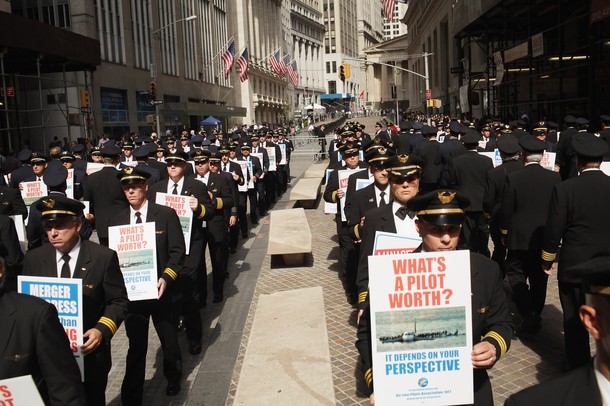
American Express and Discover warn that customers are falling further behind on their debts. UPS and Federal Express report a noticeable slowdown in shipments, while fuel costs are soaring. According to the Case-Shiller index, home prices in the top 20 markets fell 15 percent in April from the year before, and Fannie Mae and Freddie Mac report that mortgage delinquency rates doubled over the same period — and that’s for conventional home loans, not subprime. United Airlines accelerates the race to cut costs and capacity by laying off 950 pilots — 15 percent of its total — as a number of airlines retire planes and hint that they may delay delivery or cancel orders of new jets from Boeing and Airbus. Goldman Sachs, which has already had to withdraw its rosy forecast for stocks, now admits it was also too optimistic about junk bond defaults, and analysts warn that Citigroup and Merrill Lynch will also be forced to take additional big write-downs on their mortgage portfolios.

Continue reading »

Tags: , , , , , , , , , , , , , , , , , , , , , , , , , , , , ,

Jun 27

Industry officials and analysts urge Washington to act to avert a collapse.

New York - America’s aviation system could be at risk of collapsing by the beginning of next year.

That warning from aviation experts has prompted some industry leaders to call for re-regulation, something considered almost heresy until now. Others are urging Washington to do more to rein in the oil speculators pushing up fuel costs.

But there is agreement among airline officials and analysts that Washington and the two presidential candidates need to recognize the severity of the crisis and take some action now to avert an economically crippling collapse in the near future.

“Unless something is done to move toward some kind of fix, we’re going to see every one of our major airlines in bankruptcy,” says Robert Crandall, former chairman of American Airlines. “If that isn’t enough of a crisis to alert everybody, then I don’t know what it will take.”

As a result of the spike upward in oil prices, almost every major airline is now losing millions of dollars each quarter.

Unless the price of oil comes down, most are expected to run out of cash by the end of this year or the beginning of next. In a bid to stave off bankruptcy, they’re already retrenching. They plan to lay off an estimated 25,000 employees, park hundreds of planes, and cut the number of flights they offer.

In addition, a recent study by the Business Travel Coalition, which represents corporate travel managers, estimates that 100 regional and 50 major airports nationwide will lose some of or all their air service by the end of the year.

“I’ve been trying to turn on the emergency sirens to raise awareness in Washington and back home,” says Kevin Mitchell, chairman of the Business Travel Coalition in Radnor, Pa. “And I think people are finally beginning to [wake up].”

Airline officials visit Washington

Representatives of the major carriers were in Congress this week, urging action to discourage speculation in the oil markets. Some analysts blame that speculation for the almost doubling of the price of jet fuel in the past year.

Continue reading »

Tags: , , , , ,

May 08

The soaring oil price will drive “weaker” rivals out of business, easyJet claimed this morning, despite seeing its own losses treble over the last six months.

With oil hitting a new record of $122 a barrel yesterday, and Goldman Sachs forecasting it could hit $200 a barrel this year, easyJet predicted carnage in the airline industry.

“If the oil price stays high we will see a number of weaker airlines disappear over the next 12 to 24 months,” chief executive Andrew Harrison predicted.

The budget airline reported a 15% jump in passenger numbers for the six months to March 31, with revenue growing 24% to £892.2m. But its pre-tax losses spiralled to £57.5m, triple the loss it made a year ago. The loss, which was expected following the firm’s profit warning in March, was primarily caused by dearer jet fuel, which costs 80% more than a year ago.

Every $10 increase in the cost of a barrel of oil cuts around £2.5m off easyJet’s profits. Harrison claims the company’s relatively young fleet - its 157 planes are three years old on average - give it an edge.

“A quarter of Europe’s short-haul aircraft are at least 15 years old, so they burn 20% more fuel than our planes,” he said.

Rival airline Aer Lingus yesterday blamed fuel costs for an increase in its baggage charges. From tomorrow, it will cost £12 to check in a bag at the airport. Continue reading »

Tags: , , , ,

Apr 16
WASHINGTON — The Senate proclaimed a fierce bipartisan resolve two weeks ago to help American homeowners in danger of foreclosure. But while a bill that senators approved last week would take modest steps toward that goal, it would also provide billions of dollars in tax breaks — for automakers, airlines, alternative energy producers and other struggling industries, as well as home builders.

The tax provisions of the Foreclosure Prevention Act, which consumer groups and labor leaders say amount to government handouts to big business, show how the credit crisis, while rattling the housing and financial markets, has created beneficiaries in the power corridors of Washington.

It also shows how legislation with a populist imperative offers a chance for lobbyists to press their clients’ interests.

This has proved especially true on the housing legislation, which many lawmakers and lobbyists view as one of the last opportunities before Congress grinds to a halt amid election-year politics.

In the Senate bill, the nation’s biggest home builders, some now on the verge of bankruptcy, won a provision that would let them claim millions in tax refunds by charging their current losses against the huge profits they made three or four years ago. Other struggling industries would benefit from this provision.


Sen. Christopher J. Dodd, Democrat of Connecticut, was the main author of the Senate bill meant to help homeowners.

(The ones who will really benefit from this are, like always, the corporations.
And guess who will pay for these tax breaks in the end? - The Infinite Unknown)

Continue reading »

Tags: , , , , , , , , , , , , , , , , , , , , ,