There’s a bill currently up for debate in the US House of Representatives that would give companies and government agencies the right to share information when issues of cybersecurity were at stake. If the first thing you thought after reading that was “Wait, don’t we already do this,” the answer is “Yes, we do.” The Cyber Intelligence Sharing and Protection Act (CISPA) is drawing fire for certain provisions that drastically expand the definition of what data can be shared and for the way they handle existing data protections.
James Wesley Rawles is a former US Army intelligence officer who, for the last two decades, has authored bestselling books and top blogs on preparedness.
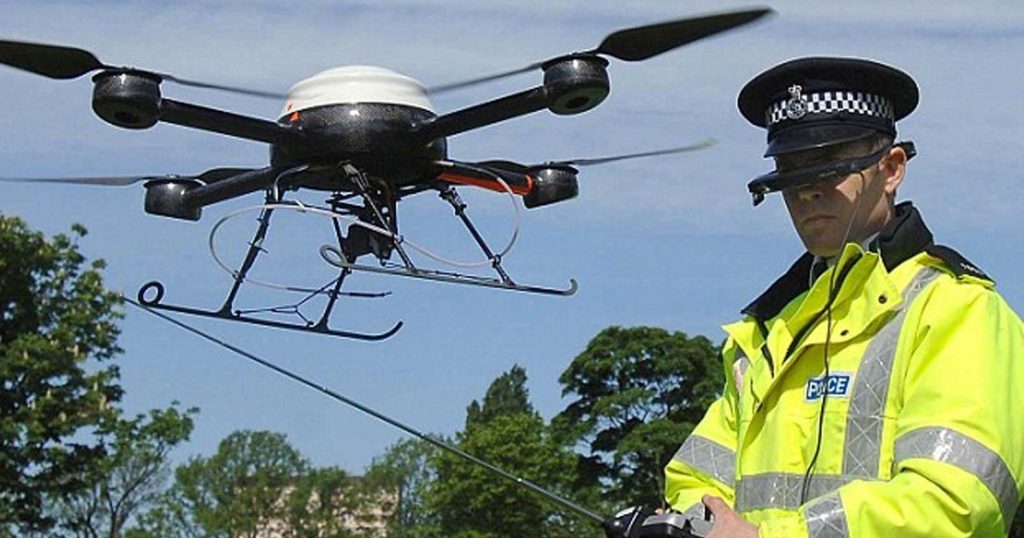
Police departments and universities nationwide have obtained licenses from the FAA to use drones, according to data obtained via Freedom of Information Act requests by the Electronic Frontier Foundation, an advocacy group. See a list of what groups have requested licenses, and the status of that request. Click on column headers to sort.
In his first television interview since he resigned from the National Security Agency over its domestic surveillance program, William Binney discusses the NSA’s massive power to spy on Americans and why the FBI raided his home after he became a whistleblower. Binney was a key source for investigative journalist James Bamford’s recent exposé in Wired Magazine about how the NSA is quietly building the largest spy center in the country in Bluffdale, Utah. The Utah spy center will contain near-bottomless databases to store all forms of communication collected by the agency, including private emails, cell phone calls, Google searches and other personal data.
Binney served in the NSA for over 30 years, including a time as technical director of the NSA’s World Geopolitical and Military Analysis Reporting Group. Since retiring from the NSA in 2001, he has warned that the NSA’s data-mining program has become so vast that it could “create an Orwellian state.” Today marks the first time Binney has spoken on national television about NSA surveillance. This interview is part of a 4-part special. Click here to see segment 2, 3, and 4. [includes rush transcript]
Guest:
William Binney, served in the NSA for over 30 years, including a time as director of the NSA’s World Geopolitical and Military Analysis Reporting Group. Since retiring from the NSA in 2001, he has warned that the NSA’s data-mining program has become so vast that it could “create an Orwellian state.”
(Rush) Transcript
JUAN GONZALEZ: Today we bring you a Democracy Now! special on the growing domestic surveillance state and the Department of Homeland Security’s efforts to spy on dissident journalists and activists. In a national broadcast exclusive, we’re joined by National Security Agency whistleblower William Binney. He was a key source for James Bamford’s recent [exposé] in Wired Magazine about the NSA—how the NSA is quietly building the largest spy center in the country in Bluffdale, Utah. The Utah spy center will contain nearly bottomless databases to store all forms of communication collected by the agency, including private emails, cell phone calls and Google searches and other personal data.
Binney served in the NSA for over 30 years, including a time as director of the NSA’s World Geopolitical and Military Analysis Reporting Group. Since retiring from the NSA in 2001, he has warned that the agency’s data-mining program has become so vast that it could, quote, “create an Orwellian state.” Today marks the first time Binney has spoken on national television about surveillance by the National Security Agency.
AMY GOODMAN: We’re also joined by two individuals who have been frequent targets of government surveillance: Laura Poitras, the Academy Award-nominated filmmaker, and Jacob Appelbaum, a computer security researcher who has volunteered with WikiLeaks. Poitras is the director of the documentary films My Country, My Country and The Oath. Both Poitras and Appelbaum have been repeatedly detained and interrogated by federal agents when entering the United States. Their laptops, cameras and cell phones have been seized, and presumably their data has been copied.
The Justice Department has also targeted Applebaum’s online communications. In November, a federal judge ordered Twitter to hand over information about his account. In October, the Wall Street Journal revealed the Justice Department had obtained a secret court order to force Google and the internet provider Sonic.net to turn over information about Appelbaum’s email accounts.
William Binney, Laura Poitras and Jacob Appelbaum will be speaking tonight at the Whitney Museum here in New York for a teach-in on surveillance. The three of them join us here in our studio together in a broadcast for the first time. We’re going to begin with William Binney.
You worked for the National Security Agency for more than three decades.
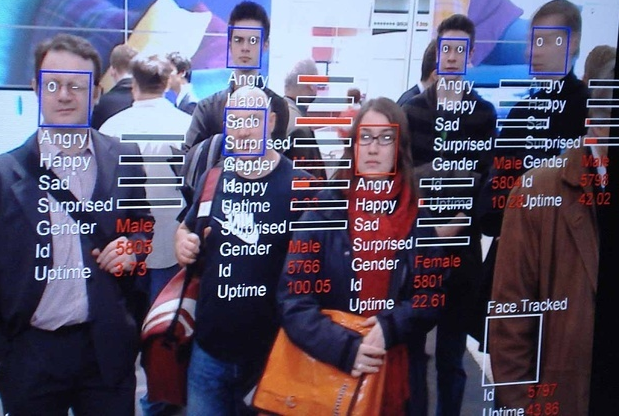
The U.S. Department of Homeland security is working on a project called FAST, the Future Attribute Screening Technology. FAST will remotely monitor physiological and behavioural signals like elevated heart rate, eye movement, body temperature, facial patterns, and body language, and analyse these signals algorithmically for statistical aberrance in an attempt to identify people with criminal or terroristic intentions.
It’s useful to briefly talk about a few of the practical problems that such a system would face.
Firstly, the level of accuracy in remote monitoring. Is it possible to engineer a system that can remotely tell you the heart-rate of a hundred passengers passing through a TSA checkpoint? Yes. Is it possible to do so accurately? That is much, much harder. The obvious conclusion is that such a system, were it to be deployed in the wilds of airports (and presumably, other locations where our ever-benevolent technocratic overlords determine “terrorists” or “criminals” may be operating) would — given a large enough number of scans — produce a lot of false positives stemming from erroneous data.
Under the guise of “cybersecurity,” the new all-purpose bogeyman to increase the secret state’s already-formidable reach, the Obama administration and their congressional allies are crafting legislation that will open new backdoors for even more intrusive government surveillance: portals into our lives that will never be shut.
As Antifascist Calling has frequently warned, with the endless “War on Terror” as a backdrop the federal government, most notably the 16 agencies that comprise the so-called “Intelligence Community” (IC), have been constructing vast centralized databases that scoop-up and store all things digital–from financial and medical records to the totality of our electronic communications online–and do so without benefit of a warrant or probable cause.
“A government big enough to give you everything you want, is strong enough to take everything you have” - Thomas Jefferson
Something odd and not quite as planned happened as America grew from its “City on a Hill” origins, on its way to becoming the world’s superpower: government grew. A lot. In fact, the government, which by definition does not create any wealth but merely reallocates it based on the whims of a select few, has transformed from a virtually invisible bystander in the economy, to the largest single employer, and a spending behemoth whose annual cash needs alone are nearly $4 trillion a year, and where tax revenues no longer cover even half the outflows. One can debate why this happened until one is blue in the face: the allures of encroaching central planning, the law of large numbers, and the corollary of corruption, inefficiency and greed, cheap credit, the transition to a welfare nanny state as America’s population grew older, sicker and lazier, you name it. The reality is that the reasons for government’s growth do not matter as much as realizing where we are, and deciding what has to be done: will America’s central planners be afforded ever more power to decide the fates of not only America’s population, but that of the world, or will the people reclaim the ideals that the founders of this once great country had when they set off on an experiment, which is now failing with every passing year?
As the following video created by New America Now, using content by Brandon Smith whose work has been featured extensively on the pages of Zero Hedge, notes, “we tend to view government as an inevitability of life, but the fact is government is not a force of nature. It is an imperfect creation of man and it can be dismantled by man just as easily as it can be established.” Unfortunately, the realization that absolute power corrupts absolutely, and absolute central planning leads to epic catastrophes without fail, seems a long way away: most seem content with their lot in life, with lies that their welfare money is safe, even as the future is plundered with greater fury and aggression every passing year, until one day the ability to transfer wealth (benefiting primarily the uber rich, to the detriment of the middle class which is pillaged on an hourly basis), from the future to the present is gone, manifesting in either a failed bond auction or hyperinflation. The timing or shape of the transition itself is irrelevant, what is certain is that America is now on collision course with certain collapse unless something changes. And one of the things that has to change for hope in the great American dream to be restored, is the role, composition and motivations of government, all of which have mutated to far beyond what anyone envisioned back in 1776. Because America is now saddled with a Government Out Of Control.
Watch the two clips below to understand just how and why we have gotten to where we are. Also watch it to, as rhetorically asked by the narrator, prompt us to question whether the government we now have is still useful to us and what kind of powers it should be allowed to wield.
Police and intelligence officers are to be handed the power to monitor people’s messages online in what has been described as an “attack on the privacy” of vast numbers of Britons.
The Home Secretary, Theresa May, intends to introduce legislation in next month’s Queen’s Speech which would allow law-enforcement agencies to check on citizens using Facebook, Twitter, online gaming forums and the video-chat service Skype.
Regional police forces, MI5 and GCHQ, the Government’s eavesdropping centre, would be given the right to know who speaks to whom “on demand” and in “real time”.
Technology is designed to increase flying time ‘from days to months’, along with power available for weapons systems
American scientists have drawn up plans for a new generation of nuclear-powered drones capable of flying over remote regions of the world for months on end without refuelling.
The blueprints for the new drones, which have been developed by Sandia National Laboratories – the US government’s principal nuclear research and development agency – and defence contractor Northrop Grumman, were designed to increase flying time “from days to months” while making more power available for operating equipment, according to a project summary published by Sandia.
“It’s pretty terrifying prospect,” said Chris Coles of Drone Wars UK, which campaigns against the increasing use of drones for both military and civilian purposes. “Drones are much less safe than other aircraft and tend to crash a lot. There is a major push by this industry to increase the use of drones and both the public and government are struggling to keep up with the implications.”
The highly sensitive research into what is termed “ultra-persistence technologies” set out to solve three problems associated with drones: insufficient “hang time” over a potential target; lack of power for running sophisticated surveillance and weapons systems; and lack of communications capacity.
New security checks are already in place – even for flights hundreds of miles from American airspace
One million British travellers planning to fly to Canada, the Caribbean and Mexico this year face the risk of being turned away at the airport – at the insistence of the US Department of Homeland Security.
New rules require British Airways and other airlines flying to certain airports outside America to submit passengers’ personal data to US authorities. The information is checked against a “No Fly” list containing tens of thousands of names. Even if the flight plan steers well clear of US territory, travellers whom the Americans regard as suspicious will be denied boarding.
Simon Hughes, the deputy leader of the Liberal Democrats, told The Independent: “The concern by the US for its own security is entirely understandable, but it seems to me it’s a whole different issue that American wishes should determine the rights and choices of people travelling between two countries neither of which is the US.”
For several years, every US-bound passenger has had to provide Advance Passenger Information (API) before departure. Washington has extended the obligation to air routes that over-fly US airspace, such as Heathrow to Mexico City or Gatwick to Havana.
Now the US is demanding passengers’ full names, dates of birth and gender from airlines, at least 72 hour before departure from the UK to Canada. The initial requirement is for flights to Toronto, Ottawa, Montreal and the Nova Scotia capital, Halifax – 150 miles from the nearest US territory. A similar stipulation is expected soon for the main airports in western Canada, Vancouver and Calgary.
Any passenger who refuses to comply will be denied boarding. Those who do supply details may find their trip could be abruptly cancelled by the Department of Homeland Security, which says it will “ake boarding pass determinations up until the time a flight leaves the gate … If a passenger successfully obtains a boarding pass, his/her name is not on the No Fly list.” In other words, travellers cannot find out whether they will be accepted on board until they reach the airport.