Mar 30

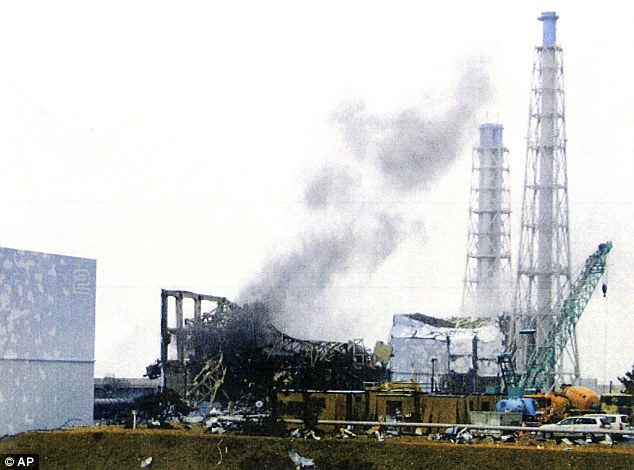
(Japan Times) — Radiology experts from Greenpeace urged the government Wednesday to expand the evacuation zone around the Fukushima No. 1 nuclear plant after they found high levels of radiation outside the 20-km mandatory no-go zone.

Jan van de Putte, the radioactivity safety adviser of the NGO, said the survey, taken on a road between the villages of Iitate and Tsushima in Fukushima Prefecture, saw a radiation level of 100 microsieverts per hour, despite being outside of the evacuation area.

One would reach the annual legal limit of 1,000 microsieverts — or 1 millisievert — of radiation in about 10 hours in such an environment, van de Putte said, adding that it is likely the people living in Iitate, about 9 km outside the no-go zone, “have surpassed that level” of exposure already.

Continue reading »

Tags: , , , , , , , , ,

Mar 30

First, the irrelevant news:

Today’s $29 billion 7 Year auction just closed at a yield of 2.895%, the highest since April 2010, just the time when QE1 was ending and everyone was certain there would be no follow through monetization. The Bid To Cover was 2.79, weaker compared to recent auctions, and 2 bps wider of the When Issued, implying the auction was not all that hot. Directs took down 8.76%, in line with the last year average, Indirects accounts for 49.41%, or the lowest foreign take down since November 2010, while PDs bought 41.83% of the auction. Altogether a weak auction but it’s not like the PDs would let it fail especially not with QB9 becoming the next “flip back to the Fed” bond for the PD community.

(Click on image to enlarge.)

Next, the relevant news:

Now bear with us for a second: the most recently disclosed total debt was 14,211,567,662,931.23 as of March 28. This excludes the settlement of all of this week’s auctions which amount to $35 + $35 + $29 billion (including today) or $99 billion. Adding the two amounts to $14,310,567,662,931.23. As a reminder the debt ceiling is $14,294,000,000,000.00. In other words, the total US debt just passed the debt limit – break out the Champagne! Granted there is a buffer of $52.2 billion between the total debt and the debt actually subject to the ceiling, meaning that America is not in default, yet.

Continue reading »

Tags: , , , , , , , , ,

Mar 30

(NaturalNews) The battle to save the Fukushima nuclear power plant now appears lost as the radioactive core from Reactor No. 2 has melted through the containment vessel and dropped into the concrete basement of the reactor structure. This is “raising fears of a major release of radiation at the site,” reports The Guardian, which broke the story (http://www.guardian.co.uk/world/201…). A former General Electric nuclear expert told The Guardian that Japan appears to have “lost the race” to save the reactor.

The only feasible interpretation from this analysis is that radiation emissions from Fukushima could suddenly become much greater. It is also now obvious that the radioactive fallout from Fukushima will last for decades, if not centuries.

Japan’s Prime Minister Naoto Kan last night admitted the situation at Fukushima remains “unpredictable.” Meanwhile, the presence of plutonium in soil samples is proof that the nuclear fuel rods have been compromised and are releasing material into the open atmosphere. (http://www.breitbart.com/article.ph…)

But don’t worry (and don’t prepare)

How many times were we told over the last two weeks that the Fukushima situation was solved? How many times were we assured there was “no danger” to the world? President Obama even went out of his way to tell Americans they should not prepare for anything, since there was nothing to worry about.

Don’t acquire any potassium iodide, people were told. The situation is completely under control and nuclear power is safe, clean and green!

Continue reading »

Tags: , , , , , , , ,

Mar 30

Don’t miss:

Japan Nuclear Meltdown Emergency: Fukushima Beyond Point Of No Return As Radioactive Core Melts Through Containment Vessel

And TEPCO tells us that plutonium is SAFE:

- Unbelievable: TEPCO: Plutonium Found On 5 Locations Around Fukushima Plant A Week Ago (But The Deadliest Substance On The Planet ‘Poses No Human Health Risk’!)

BUT:

“Plutonium is the deadliest substance on the planet since 1 molecule of Plutonium in your body guarantees the development of cancer, according to radiation medicine experts.”
- Dr. Rima Laibow


Added: 30.03.2011

See also:

Continue reading »

Tags: , , , , , , , , , ,

Mar 30

Almost forgot to post this.


Added: 25.03.2011

Tags: , , , , , , , ,

Mar 30

At least 15 states have found trace amounts of radiation from the crippled nuclear plant in Japan, but officials say the levels of radioactivity are much too low to prompt health concerns.

Very low concentrations of iodine-131 were found last week in a rainwater sample in Boston. “It is not a problem for public safety nor is it a threat to the drinking water supply,” said Massachusetts Energy and Environmental Affairs Secretary Richard Sullivan.

Sullivan ordered the collection of drinking water samples from 12 locations Sunday. Tests showed the water was “absolutely clean,” he said.

Continue reading »

Tags: , , , , , , ,

Mar 30

There is no Al-Qaeda (only Al-CIAda):

“The truth is, there is no Islamic army or terrorist group called Al Qaeda. And any informed intelligence officer knows this. But there is a propaganda campaign to make the public believe in the presence of an identified entity representing the ‘devil’ only in order to drive the TV watcher to accept a unified international leadership for a war against terrorism. The country behind this propaganda is the US.”
- Robin Cook, Former British Foreign Secretary

- Al Qaeda Doesn’t Exist or How The US Created Al Qaeda (Documentary)

See also:

- ‘CIA Spy’ Raymond Davis Was Giving Nuclear Bomb Material to Al-Qaeda, Says Report

- (FOX NEWS) Inside Job: ‘The US Government Escorted The Underwear Bomber Through Security Without A Passport To Board The Plane’, Say Two Attorneys, Eyewitnesses Who Were On Site

- How the US let Al-CIAda get its hands on an Iraqi weapons factory


US To Purchase Oil From Libyan Rebels, Thereby Funding “Flickers” Of Al Qaeda

Following recent news that the supremely organized Libyan rebels have established their own central bank and oil company (does anyone recall when rebels merely rebelled instead of immediately setting up an oil export infrastructure and a fiat counterfeiting authority… those were the days), we now learn that this impressively “impromptu” development may have actually been intended all along.From Reuters: “The United States on Monday gave a green light to sales of Libyan crude oil from rebel-held territory, giving a potential boost to forces battling Muammar Gaddafi. A U.S. Treasury Department official said Libyan rebels would not be subject to U.S. sanctions if they avoid entities linked to Gaddafi’s regime, which would allow them to sell oil under their control.” And confirming just hos hypocritical any international embargo attempts are, here is the Un confirming that when it comes to determining international priorities, the only word that matters is the one that did not figure once in Obama’s Libya speech yesterday: “There is no U.N. embargo on Libyan oil,” a U.N. Security Council diplomat told Reuters on condition of anonymity. “The rebels can sell oil. But they can’t do it through the Libyan National Oil Corporation.”" And the kicker: according to the US NATO leader among those profiting from this latest move of US desperation is none other than Al Qaeda.

From Reuters:

The rebels, who retook a number of oil fields and terminals in eastern Libya over the weekend and were advancing west toward Gaddafi’s hometown of Sirte, must first establish clear lines of control and payment systems that do not involve Libya’s National Oil Corp, its central bank nor any other government entity, the official said.

No special permission would be needed from the Security Council’s Libya sanctions committee, which oversees compliance with the sanctions, for the rebels to sell oil, envoys said.

The Treasury on February 25 banned U.S. transactions with Libya’s state oil producer, the central bank and other state entities in an effort to cut off revenues to Gaddafi’s regime, in line with sanctions imposed by the U.N. and European Union.

With the backing of Western air strikes, Libyan rebels have retaken the main oil terminal cities in eastern Libya, including Es Sider, Ras Lanuf, Brega, Zueitina and Tobruk.

A senior Libyan rebel official said on Monday that rebels were in “active discussions” to have sanctions lifted on sales of oil from east Libyan fields.

Ali Tarhouni, who is in charge of the rebels’ economic, financial and oil matters in Benghazi said the fields were capable of pumping 100,000 to 130,000 barrels per day of crude, and most of this would be exported because of low refining capacity in eastern Libya. Before the crisis began, Libya was producing about 1.6 million barrels per day.

“We hope they will be lifted for the liberated areas as quickly as possible,” Tarhouni said of the sanctions. “Not with everybody, but with some countries.”

While we will not comment on the apparent hypocrisy of this latest development by the light crude starved US administration (sorry Saudi Arabia, nobody buys your lies about excess capacity anymore – proof here), what we will comment on is that the next time Gaddafi’s forces retake any and all oil fields currently in rebel hands, and pumping on behalf of the US, they will likely not receive a very friendly treatment. Especially since it now appears that K-Daf was actually spot on when he argued that Al Qaeda is reinforcing the rebels:

There is a good chance NATO pressure will encourage Libyan tyrant Moammar Gadhafi to leave power, the U.S. NATO commander told Congress Tuesday, but the opposition that could come in the Libyan leader’s wake has “flickers” of al Qaeda.

While there is a wide range of possible outcomes in Libya, running from a static stalemate to Gadhafi cracking, there is a “more than reasonable” chance of Gadhafi leaving power, Adm. James Stavridis said before the Senate Armed Services Committee,

But potential “flickers” of al Qaeda and Hezbollah elements have been seen in intelligence regarding the Libyan opposition, which is poised to take power if Gadhafi leaves, Stavridis said. However, he added there is no evidence of a significant presence of al Qaeda or other terrorist groups. Stavridis is also the commander of U.S. European Command.

“The intelligence that I’m receiving at this point makes me feel that the leadership that I’m seeing are responsible men and women who are struggling against Col. Gadhafi,” Stavridis added.

There is probably “a sprinkling of extremists to perhaps include al Qaeda” in Libya among the rebels, “but no one should think the opposition is being led by al Qaeda or one of its affiliates,” the official said. Al Qaeda has had a presence in North Africa for years. It “wouldn’t be surprising if small numbers — a handful”– of extremists or al Qaeda are in Libya.

Thus in one easy step, the administration appears to have lost all its prior animosity toward Al Qaeda (and after all September 11 was so long ago…), and is now bypassing international embargoes to deal directly with them.

What next: we get confirmation that Al Qaeda is also providing crystal meth to Libya’s rebels?

Submitted by Tyler Durden on 03/29/2011 17:22 -0400

Source: ZeroHedge

Tags: , , , , , , , , , , , ,

Mar 30

As you can see this war is certainly not about oil and financial control and the rebels are ‘real rebels’.

This war has certainly nothing to do with the fact that Gaddafi wanted/threatened to nationalize the oil industry in Libya and to kick out foreign corporations.


Mar. 29 (Bloomberg) — Libyan rebels in Benghazi said they have created a new national oil company to replace the corporation controlled by leader Muammar Qaddafi whose assets were frozen by the United Nations Security Council.

The Transitional National Council released a statement announcing the decision made at a March 19 meeting to establish the “Libyan Oil Company as supervisory authority on oil production and policies in the country, based temporarily in Benghazi, and the appointment of an interim director general” of the company.

The Council also said it “designated the Central Bank of Benghazi as a monetary authority competent in monetary policies in Libya and the appointment of a governor to the Central Bank of Libya, with a temporary headquarters in Benghazi.”

The Security Council adopted a resolution on March 17 that froze the foreign assets of the Libyan National Oil Corp. and the Central Bank of Libya, both described in the text as “a potential source of funding” for Qaddafi’s regime.

Libya holds Africa’s largest oil reserve. Output has fallen to fewer than 400,000 barrels a day, Shokri Ghanem, chairman of the National Oil Corp., said on March 19. The country produced 1.59 million barrels a day in January, according to estimates compiled by Bloomberg. Exports may be halted for “many months” because of sanctions and unrest, the International Energy Agency said.


‘Extended Shutdown’

Continue reading »

Tags: , , , , , , ,

Mar 29

March 28 (Bloomberg) — Radiation levels that can prove fatal were detected outside reactor buildings at Japan’s Fukushima Dai-Ichi plant for the first time, complicating efforts to contain the worst disaster since Chernobyl in 1986.

Water in an underground trench outside the No. 2 reactor had levels exceeding 1 sievert an hour, a spokesman for plant operator Tokyo Electric Power Co. told reporters in the capital yesterday. Exposure to that dose for 30 minutes would trigger nausea and four hours might lead to death within two months, according to the U.S. Environmental Protection Agency.

Preventing the most-contaminated water from leaking into the ground or air is key to containing the spread of radiation beyond the plant. A partial meltdown of fuel rods in the No. 2 reactor probably caused a jump in the readings, Japan’s chief government spokesman said.

“There’s not much good news right now,” said Gennady Pshakin, a former IAEA official based in Obninsk, the site of Russia’s first nuclear power plant. “There’re questions arising on how much fuel will leak out, what isotopes will be carried and how quickly they will settle. It’s becoming less predictable.”

Continue reading »

Tags: , , , , , , , ,

Mar 29

Plutonium poses no human health risk??? Unbelievable!!!

“Plutonium is the deadliest substance on the planet since 1 molecule of Plutonium in your body guarantees the development of cancer, according to radiation medicine experts.”
- Dr. Rima Laibow

Take a close look at the half-lives of the plutonium isotopes below.

It is now safe to say that plutonium is much less dangerous to the health of the Japanese people than TEPCO and the government.

Now listen to total ignorance …


- TEPCO says plutonium found on quake-damaged plant grounds (CNN):

Tokyo (CNN) — Some plutonium found in soil on the grounds of the Fukushima Daiichi nuclear power plant may have come from its earthquake-damaged reactors, but it poses no human health risk, the plant’s owners reported Monday.

The element was found in soil samples taken March 21-22 from five locations around the plant, the Tokyo Electric Power Company told CNN late Monday. The company said it was equivalent to the amounts that fell on Japan following aboveground nuclear weapons tests by other countries in past decades.

“It is not a health risk to humans,” the company said. But it added, “Just in case, TEPCO will increase the monitoring of the nuclear plant grounds and the surrounding environment.”

Plutonium is a byproduct of nuclear reactions that is also part of the fuel mix at the plant’s No. 3 reactor. It can be a serious health hazard if inhaled or ingested, but external exposure poses little health risk, according to the U.S. Environmental Protection Agency.

Three plutonium isotopes — Pu-238, -239 and -240 — were found in soil at five different points inside the plant grounds, Tokyo Electric reported. It said that plutonium found in two of the samples could have come out of the reactors that were damaged by the March 11 earthquake and tsunami that ravaged northern Japan.

All three isotopes have long half-lives, with plutonium-239 taking 24,000 years to lose half its radioactivity. Plutonium-238 has an 87-year half-life, while plutonium-240′s is more than 6,500 years.

Continue reading »

Tags: , , , , , , ,